 RSS Subscribe
The Evolution of Modern Mining, a Great Reset – AOTH
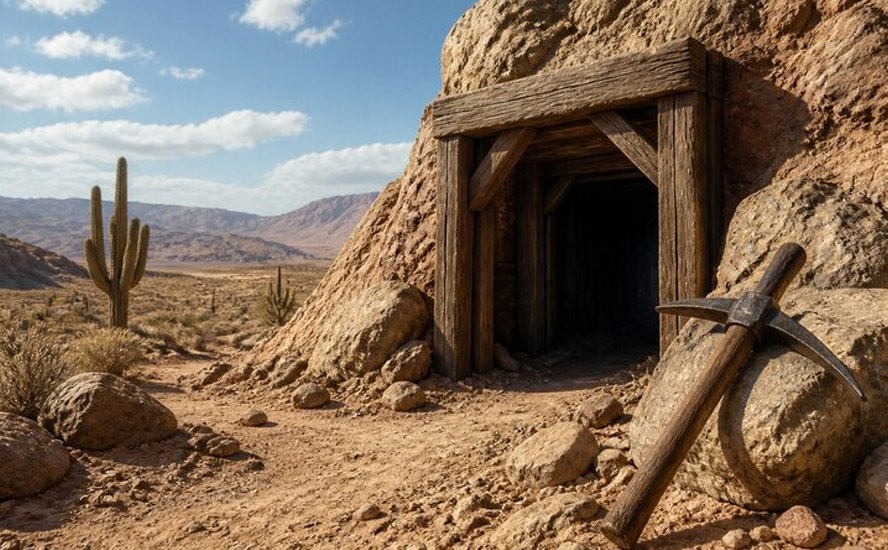
The energy transition has triggered an unprecedented surge in demand for critical minerals, copper, and rare earth elements.
The current record-breaking commodity environment—with gold trading above $4,000/oz, silver past $60/oz, and copper hovering well over $6lb has radically rewritten the economics of mining.
Miners are utilizing two primary levers to turn yesterday’s waste into today’s cash flow:
Lowering “Cutoff Grades” mathematically
Every mine has a cutoff grade which is the minimum amount of metal a ton of rock must contain to justify the cost of mining and processing it.
Historically, companies calculated these cuts using conservative assumptions (e.g., $1,800 to $2,500/oz gold).
Because spot prices are now massively higher, the math has fundamentally changed. Material previously designated as unprofitable waste rock or marginal ounces is automatically re-calculated as highly profitable ore.
Companies can now run lower-grade material through their existing processing plants without changing their basic layout, expanding the total lifespan and output of the mine overnight.
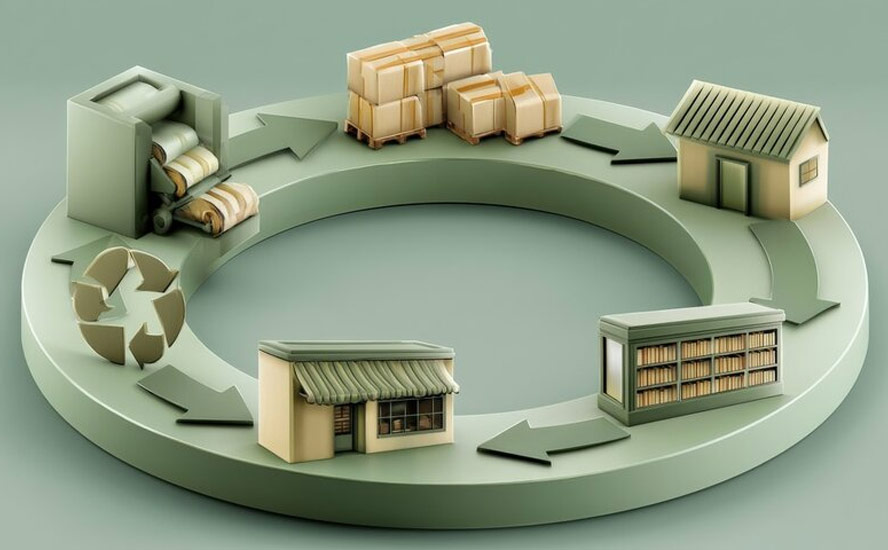
Shifting Ground: The Transformation of Mining, Circular Mining
Instead of treating tailings dams and waste piles as permanent environmental liabilities, miners are re-processing yesterday’s discarded earth to extract valuable, untapped minerals by converting bulk waste rock and stabilized tailings directly into industrial inputs, such as geopolymers, cement feedstocks, aggregates for road construction, and agricultural techno-soils.
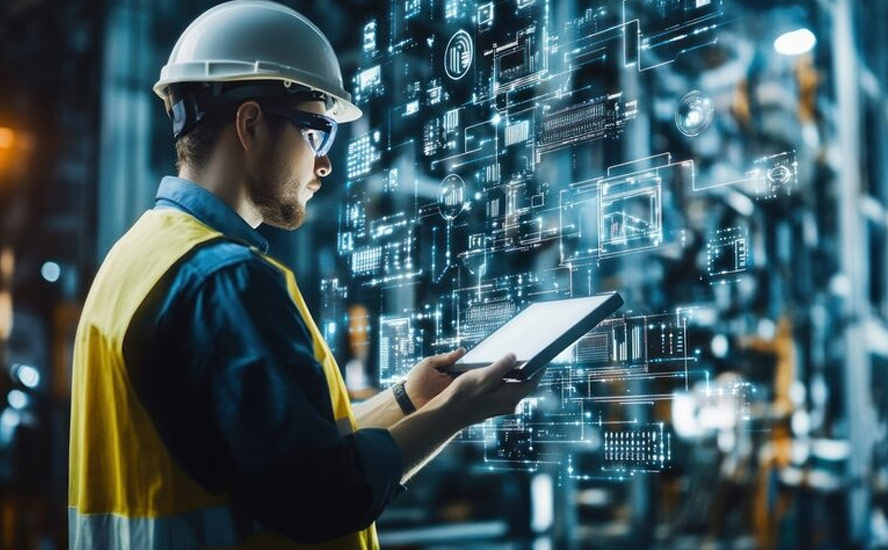
Digging into Data: The Tech Revolution in Mining
Advanced extraction technologies – such as bio-leaching, magnetic separation, and AI-driven processing – now make it economically viable to profitably recover metals from low-grade waste that was previously impossible to process. This provides a massive cash-flow stream without the massive upfront capital expenditures (CapEx) or decade-long regulatory timelines required to dig a new greenfield mine.
Mining companies like Vale and BHP are aggressively deploying these strategies due to a convergence of economic pressures, technological leaps, and structural shifts in global supply chains.
Rather than digging new pits, miners are targeting “surface liabilities”—old waste rock piles and tailings storage facilities.
Historic mines operated when technology was less efficient. For instance, older operations left behind waste rock containing high-grade gold and copper because the original cutoff targets were exceptionally high.
Today’s miners are using modern automated ore sorting, water-based extraction, and computerized scanning to re-filter old waste. This lets them pluck out valuable critical minerals, rare earths, and precious metals at a fraction of the infrastructure cost of building a new mine.
This practice satisfies ESG-conscious investors. By reprocessing old tailings, companies shrink their environmental footprint, reduce toxic runoff liabilities, and generate alternative revenue streams simultaneously.
The global circular economies mining market is expanding rapidly, projected to grow from USD 24.8 billion toUSD 60.2 billion. Major global mining companies are scaling these industrial-level efforts. For example, Brazilian mining giant Vale successfully extracted 26.3 million metric tons of iron ore exclusively from materials previously classified as waste or tailings.
Mining companies are utilizing four core technical levers to turn yesterday’s liabilities into modern assets:
Digging Deeper: How Mining is Changing for Good
Before minerals can be extracted from old waste piles, they must be freed at a microscopic level.
Companies use automated, AI-driven sorters equipped with near-infrared spectrometry, X-ray transmission, and laser sensors. As material moves along high-speed conveyors, lasers identify and air-jets blast high-grade rocks into collection bins, reducing the volume of solids feed entering downstream plants by up to 30%.
A Microwave-Assisted Breaking (e.g., CanMicro process) uses short blasts of high-power microwaves to selectively heat specific mineral phases inside the waste rock. The differential heating causes thermal stress and cracking along grain boundaries, lowering energy requirements for subsequent grinding by up to 70%.
Rather than using massive, power-hungry tumbling balls, modern recovery uses Stirred Milling (Vertimills and IsaMills). The internal abrasion strips away oxidized coatings on old tailings, exposing fresh mineral surfaces for chemical extraction.
Beneath the Surface: The Mining Revolution
When target minerals are locked inside complex, environmentally toxic chemical matrixes, liquid-based or organic extraction methods are used.
Bio-Leaching is considered green metallurgy, it introduces specialized microorganisms to “eat” the iron and sulfur compounds surrounding valuable metals. The bacteria dissolve the host rock, leaving behind a liquid stream rich in target metals like copper, cobalt, or nickel without harsh acids.
Companies like EnviroGold Global deploy compact, site-level chemical Modular Hydrometallurgical Circuits that physically alter the acid-generating potential of tailings. This renders the waste 90% less hazardous while cleanly exposing and recovering gold, silver, and copper.
Emerging Water-Based and Cyanide-Free Extraction systems combine water-based leaching agents with organic formulas to cleanly recover platinum group metals (PGMs) and critical minerals out of legacy waste, bypassing the need for highly toxic sodium cyanide.
Fine-Particle Concentration & Flotation
Traditional gravity methods fail when processing the ultra-fine mineral dust left behind in historical tailings dams:
- Advanced Micro-Bubble Flotation (Jameson Cells) flotation tanks generate high concentrations of microscopic air bubbles. Fine copper or nickel particles selectively attach to the bubbles and float to the surface as a collectable froth.
- Powerful High-Intensity Magnetic Separation matrices isolate weakly magnetic critical materials, like cobalt, iron, and rare earth elements, directly out of wet waste streams.
The Argument for a Commodities and Precious Metals Bull Market
Not Your Grandfather’s Mine
A key objective of circular mining is zero-waste mining, ensuring that the rock remaining after secondary extraction is transformed into a commercial byproduct.
Advanced thickeners compress reprocessed tailings to recover 80% to 85% of process water for immediate closed-loop reuse. This eliminates the need for high-risk liquid tailings ponds, transforming the leftover material into a stable, dry-stacked cake.
The remaining clean, inert mineral fractions are repurposed directly into industrial building sectors. Vale’s Pico mine block plant, for instance, upcycles this mineral waste to produce hundreds of thousands of paving blocks and millions of tons of sustainable sand for commercial infrastructure.
The transition to circular mining relies heavily on a specialized suite of advanced technological tools. These technologies solve the historical problem of waste processing: they efficiently handle ultra-low mineral grades, fine particle sizes, and complex chemical compositions that older machinery simply could not process.
Modern recovery and repurposing operations are driven by four core categories of technological tools:
Shifting Ground
Historical processing often missed extremely fine or weakly magnetic minerals, sending them straight to the tailings dam. Modern mechanical tools have changed that.
Using ultra-powerful superconducting magnets allows miners to capture weakly magnetic minerals from waste streams that were previously considered impossible to separate at scale.
High-Capacity Centrifuges & Spiral Concentrators exploit minute density differences in fine-grained materials. They allow operators to isolate valuable heavy minerals from lighter waste silicates with massive throughput.
Modern flotation systems (like the ultra-efficient Jameson Cell) use micro-bubble technologies to attach to and lift microscopic mineral particles out of older slurry waste.
The Future of Extraction
When mechanical separation is not enough, miners use advanced chemistry and biology to dissolve and capture targeted metals out of solid waste.
Bio-leaching or biomining uses naturally occurring, harmless microorganisms (bacteria) to literally “eat” away surrounding low-grade sulfides, leaving behind or dissolving metals like copper, cobalt, and nickel for easy collection.
Specialized systems (such as the SAVMIN or DESALX processes) use tailored chemical reactions or specialized resins to selectively pull heavy metals out of mining wastewater and acid mine drainage, turning toxic water treatment into a profitable mineral harvest.
The biggest hurdle in reprocessing old waste is that the material is highly unpredictable. One section of a tailings dam might look entirely different from another.
From Pickaxes to Pixels: The Digital Shift in Mining
Artificial intelligence algorithms are used to monitor incoming waste characteristics in real time, automatically adjusting chemical and mechanical settings to maximize mineral recovery rates on the fly.
Digital Material Passports & Blockchains are digital tools used to track the exact lifecycle, location, and chemical makeup of waste batches. This transparency gives downstream buyers (like battery manufacturers or construction firms) absolute certainty about the quality and tracking of the recycled material they are buying.
Copper mine replacement by acquisition
To address the second lever—turning bulk waste into material for other industries—miners rely on chemical synthesis tools.
Geopolymerization Reactors mix alkaline solutions with aluminosilicate-rich tailings or waste rock. The chemical reaction binds the waste at a molecular level, transforming slurry into high-strength, eco-friendly industrial bricks and cement alternatives without needing high-emission kilns.
Large-scale mechanical mixing systems combine benign mineral waste with organic byproducts to engineer custom “techno-soils”. These are used directly on-site to accelerate environmental rehabilitation and ecosystem restoration.
Technology in Action
A prime real-world example is Vale’s Gelado Project in Brazil. The operation deploys 100% electric dredges to safely scoop up iron ore tailings that have accumulated since 1985. The material is then run through advanced magnetic concentration systems to extract high-grade iron, while the residual silica is processed into commercial sand for the construction industry—simultaneously creating new revenue and shrinking the environmental footprint.
The chemical and biological side of mineral recovery, known broadly as biomining or bioleaching, is rapidly expanding from a niche laboratory technique into a highly valued global industry.
By deploying micro-organisms as microscopic “miners,” operators can selectively extract target elements from complex waste streams while completely avoiding the energy-intensive, heavy-emission smelting methods used in traditional processing.
The Biological Engine
Rather than manually “eating” the rock, the bacteria act as chemical catalysts. They derive their energy by breaking down the atomic bonds inside minerals.
Specialized acid-loving bacteria (such as Acidithiobacillus ferrooxidans or Leptospirillum ferriphilum) oxidize dissolved ferrous iron into ferric iron. This ferric iron chemically attacks the surrounding metal sulfide waste, causing target metals like copper or nickel to dissolve directly into a liquid solution.
As these bacteria metabolize the sulfur components trapped inside the waste, they naturally generate sulfuric acid. This creates a highly localized, low-pH environment that keeps the dissolved metals suspended in the liquid so they do not trap back into the rock.
Left alone in an open tailings pile, these exact reactions happen naturally over decades, causing devastating toxic runoff. By moving this process into controlled facilities, miners force the bacteria to do decades’ worth of work in a matter of days—harvesting the metals safely and leaving the remaining rock clean and neutralized.
Eco-Extraction
While copper and gold extraction historically relied on iron- and sulfur-oxidizing bacteria, modern critical mineral recovery (like lithium and rare earth elements) deals with different mineral structures like phosphates and silicates.
To solve this, researchers and startups are introducing fungi and specialized heterotrophic bacteria (like Aspergillus niger or Gluconobacter oxydans). These organisms secrete potent organic acids that chemically bond with and dissolve hard-to-reach magnets and battery materials—such as neodymium, lanthanum, and lithium—directly out of waste composites.
[ Tailings Waste Feed ] ➔ [ 1. Bioreactor Tank / Heap ] ➔ [ 2. Bacterial Action ] ➔ [ 3. Metal-Rich Liquid ] ➔ [ 4. Chemical Extraction (SX-EW) ] ➔ [ Pure Metal Cathode ]
The New Mining Standard
- Rio Tinto (Nuton Technology): Rio Tinto’s Nuton scale-up utilizes proprietary bio-lixiviant micro-organism blends to unlock copper from complex, primary sulfide ores and waste heaps, hitting its first commercial production milestones at sites like Arizona’s Johnson Camp.
- BacTech Environmental: Known for its Zero Tailings™ technology, BacTech pairs bio-oxidation loops with traditional downstream processing to completely break down harmful iron arsenic tailings, recovering gold and silver while leaving zero hazardous material behind.
- Critical Minerals Americas Inc. (CMAI): This regional innovator is actively consulting on commercializing large-scale black shale bioleaching in northern Alberta, looking to pull out up to 10 critical minerals and 15 rare earth metals using highly targeted biological cultures.
Copper
Because copper is 100% infinitely recyclable without any loss of performance, it is the ideal poster child for the circular economy. The industry is currently tackling the copper supply deficit through three distinct circular loops: reprocessing internal mining waste, recycling industrial processing waste, and scaling up “urban mining” for consumer end-of-life scrap.
Copper going forward: volatile but moving higher
These three circular methods bypass traditional, emissions-heavy primary smelting and reduce energy consumption by up to 85%.
Loop 1: Reprocessing Mining Waste & Slags (Upstream Circularity)
When copper ore grades are low, traditional mining generates 2.2 to 3 tons of toxic slag for every single ton of copper produced. Miners are using advanced hydrometallurgical closed loops to capture the copper left behind in these dumps.
Operators apply specialized acidic or biological leaching solutions (such as dilute sulfuric acid combined with Na2S2O5) to old tailings, slags, and smelter dusts. The copper dissolves into a liquid solution, which is filtered using Solvent Extraction and Electrowinning (SX/EW).
This process yields 99.99% pure copper cathodes straight from waste. Meanwhile, the cleaned, residual iron-silica slag is repurposed to replace sand and cement in concrete, increasing its strength by up to 27%.
Loop 2: Closed-Loop Industrial Wastewater Recovery (Midstream Circularity)
Manufacturing, etching, and finishing lines use heavy acid baths (pickling) to clean copper products, creating highly toxic, corrosive, and metal-rich wastewater streams.
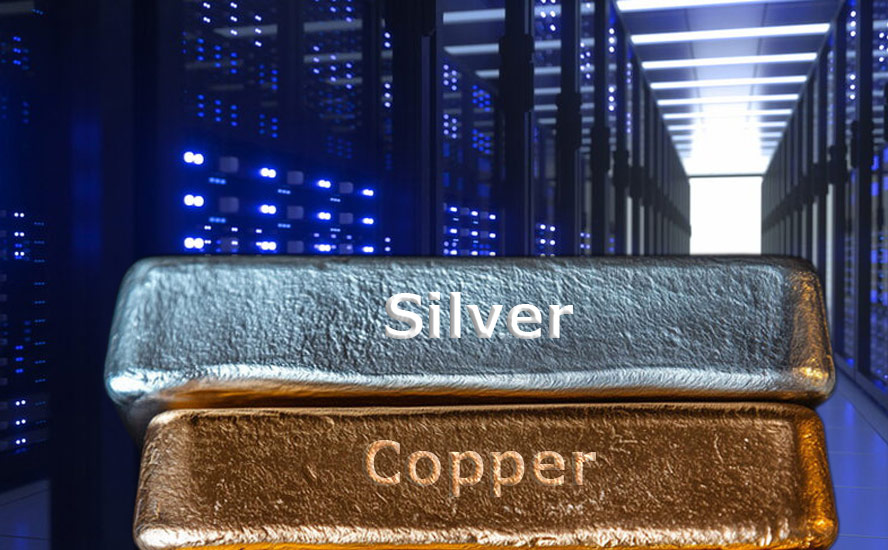
Copper and silver usage in data centers, robotics and solid state batteries
Instead of neutralizing the acid and treating it as a hazardous waste sludge, factories deploy automated advanced electrowinning systems (like emew technology) directly into the wastewater lines. An electric current plates out 100% of the dissolved copper as pure commercial metal sheets.
The copper is completely reclaimed, and the stripped acid is fed directly back into the factory’s finishing line. This achieves a true zero-waste, closed-loop cycle that eliminates chemical waste management costs entirely.
Copper production to decrease for first time in 9 years
Loop 3: Urban Mining & E-Waste Scrap Smelting (Downstream Circularity)
Instead of digging new holes in the ground, copper companies are treating the modern city as a high-grade mine. Global initiatives—such as China’s China Resource Recycling Group – are built specifically to reclaim copper from end-of-life electric vehicles, wind turbines, and electronic waste (WPCBs).
[ E-Waste & Vehicle Scrap ] ➔ [ Mechanical Shredding & Sorting ] ➔ [ Scrap Blending into Secondary Smelters ] ➔ [ Electro-Refining ] ➔ [ 99.99% Pure Copper Wire/Plates ]
Advanced optical and automated mechanical shredders separate copper wiring from plastics and aluminum. This copper scrap is fed directly into secondary smelting loops. Because the scrap is already metallic, it completely skips the energy-intensive crushing, milling, and froth flotation phases needed for raw rock.
Copper and gold senior merger and acquisition activity
Reclaiming copper from electronics uses 75% to 95% less energy and 80% less water than primary mining. Furthermore, melting down complex electronic scrap unlocks secondary circular loops for companion metals trapped in the tech, including gold, silver, nickel, and tin.
Conclusion
Managing traditional tailings dams has become an immense financial and legal risk for mining boards. By turning residual sludge and rock into commercial construction materials, companies accomplish two things at once: they eliminate the massive long-term liability costs associated with monitoring waste facilities, and they open entirely new, non-cyclical revenue streams solving the mining sector’s two biggest modern challenges: falling ore grades and soaring regulatory pressure.
By recovering metals from historical tailings and repurposing waste rock into industrial materials, Circular mining converts expensive environmental liabilities into highly profitable revenue streams.
Mining Green Gold for a Greener Tomorrow :
- Processing material that has already been blasted, crushed, and hauled cuts out the most expensive, energy-intensive phases of traditional mining.
- Reprocessing brownfield waste sites entirely bypasses the multi-year environmental permitting delays and massive capital investments required to build a new mine.
- Turning rock waste into commercial construction aggregates and techno-soils creates steady, non-cyclical cash flow that is insulated from volatile metal markets.
- Physically reducing the volume of active tailings storage facilities (TSFs) directly lowers the risk of catastrophic dam failures.
- Cleaning and neutralizing hazardous waste piles on-site significantly decreases long-term environmental monitoring expenses, legal liabilities, and insurance premiums.
- Circular recovery methods—like urban mining and secondary recycling—use up to 85% less energy and 80% less water than primary extraction.
- Decomposing ores biologically (bioleaching) or mechanically eliminates the heavy carbon emissions associated with traditional fossil-fueled smelting.

Legal Notice / Disclaimer
Ahead of the Herd newsletter, aheadoftheherd.com, hereafter known as AOTH.Please read the entire Disclaimer carefully before you use this website or read the newsletter. If you do not agree to all the AOTH/Richard Mills Disclaimer, do not access/read this website/newsletter/article, or any of its pages. By reading/using this AOTH/Richard Mills website/newsletter/article, and whether you actually read this Disclaimer, you are deemed to have accepted it.