 RSS Subscribe
The Argument for a Commodities and Precious Metals Bull Market – Richard Mills
2026.09.12
On the left-hand side, mine depletion, grade decline, deeper underground, population growth, urbanisation, supply underinvestment—that remains the same as it was over the last ten years.
If you think about it, mining and energy now is the intersection of AI, hyper-scalers capex, defence spending, infrastructure, electrification, decarbonisation.
Virtually all resources are now scarce. Now is the time to own scarcity. Charlie Aitken
A commodities and precious metals bull market is supported by severe supply shortages, soaring global debt, and intense geopolitical conflicts that push investors toward tangible real-world assets.
Mining projects face long permitting delays and fewer major new discoveries. Global conflicts, such as the wars in Russia-Ukraine and the Middle East, disrupt energy, refinery, and fertilizer production.
The world is currently facing an unprecedented maritime crisis as three vital seas are under simultaneous siege, severely disrupting the global movement of commodities. Ongoing conflicts have effectively blocked or choked off the Strait of Hormuz, the Red Sea, and the Black Sea, creating massive supply chain bottlenecks for energy, grains, and fertilizers.
In the Strait of Hormuz weekly commercial traffic has plummeted by about 90% below prewar levels. This is the world’s most critical artery for crude oil and liquefied natural gas (LNG), forcing more than 150 tankers to idle, anchor, or turn back.
Following a brief period of calm, the crisis has escalated dramatically. Houthi forces have seized coastal areas, renewed drone and missile strikes and declared a maritime blockade against Saudi Arabian ports.
The critical Bab al-Mandeb strait—which normally handles 12% of global seaborne traded oil and 8% of grain—is no longer reliably open. Ships are forced to bypass the Suez Canal entirely and take the long, expensive route around Africa’s Cape of Good Hope, adding 10 to 14 days to transit times.
There are no longer safe alternative water routes between Asia, Europe, and the Middle East.
The Russia-Ukraine war has seen a deadly summer escalation. Both nations have intensified drone and missile strikes directly targeting oil tankers, commercial grain vessels, and port terminals.
Daily charter rates for tankers have spiked above $300,000 per day as war-risk insurance premiums double. Billions of dollars in vital wheat, corn, and agricultural exports are trapped or obstructed, driving up global food prices and threatening international food security
The convergence of these three crises has pushed global shipping risk to an alarming 8.3 out of 10. Maritime authorities from 18 nations have warned that the rules-based framework for free ocean navigation are fracturing.
Governments carry massive debt loads with little political appetite to fix fiscal deficits. Investors lose faith in paper (fiat) currencies and move their money into hard assets like gold and silver.
When investors lose faith in paper money because of massive government debt, it triggers a major financial shift called a flight to hard assets.
Governments cannot print gold and silver out of thin air. Real estate, agricultural land, and energy commodities are the primary hard assets investors rush to buy besides gold and silver when they lose faith in paper money.
*During extreme hyperinflation events, gold historically outperforms real estate by a massive margin. While both are hard assets, gold acts as a highly liquid, universal escape hatch, whereas real estate often becomes an illiquid, heavily taxed financial trap.
When fiat currencies lose value due to heavy government printing, any tangible asset with a limited supply and real-world utility becomes a financial life raft.
Central banks worldwide are aggressively purchasing gold to de-dollarize and safeguard their national reserves. The 2022 freezing of Russian foreign exchange assets proved that foreign-held dollar reserves can be restricted or seized, making physical gold a politically neutral alternative
Gold has recently reached an all-time high in global official reserves (approaching 36,600 tonnes), briefly overtaking U.S. Treasuries as a leading global official reserve asset value. According to World Gold Council Surveys, roughly 89% of central bank reserve managers expect global gold holdings to rise, with 45% planning to increase their own national allocations.
The artificial intelligence (AI) revolution, the global energy transition, climate initiatives, and military rearmament require massive amounts of raw materials and rare earth elements.
Each of these pillars relies heavily on the exact same pool of natural resources:
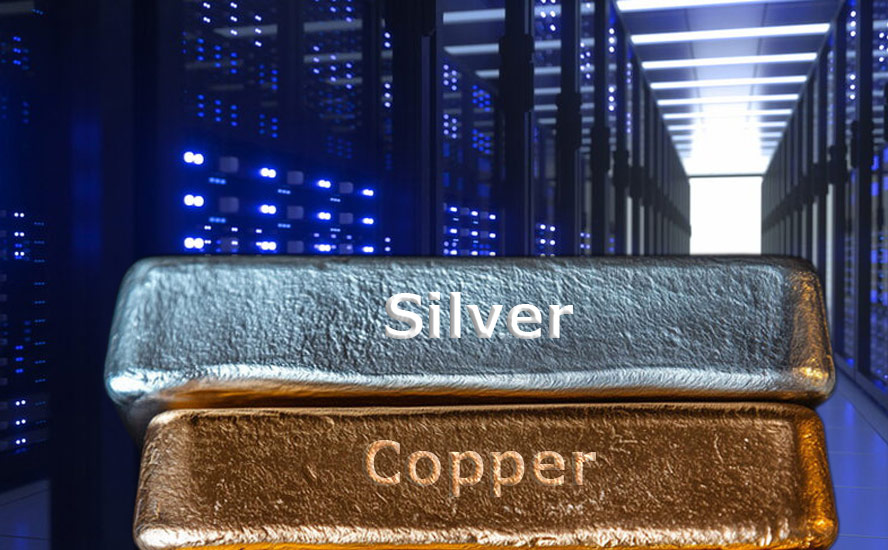
AI data centers and graphics processing units (GPUs) are not just code; they require massive physical infrastructure. Every GPU cooling fan, data center motor, and advanced semiconductor chip depends on copper for massive electrical grids, and rare earth elements like neodymium for advanced magnets
Shifting the world away from fossil fuels means building massive amounts of new technology. Wind turbines, solar panels, and electric vehicles (EVs) are incredibly mineral-heavy. They require vast amounts of lithium, cobalt, nickel, graphite, and heavy rare earths to function and store power.
Discussions often focus on rare earth elements (REEs) because of supply chain and geopolitical risks. However, the actual physical and industrial backbone of green energy relies heavily on common, heavy industrial metals
Renewable energy farms require massive amounts of standard industrial metals and bulk materials—such as hundreds of tons of steel and concrete.
A standard 3-megawatt (MW) onshore wind turbine uses tremendous quantities of basic materials:
- Steel: 335 tons for the tower, hub, and internal framing.
- Concrete: 1,200 tons for the deep-set structural foundation.
- Copper: 4.7 tons for electrical wiring, transformers, and generators.
- Aluminum: 3 tons for lighter structural parts and housings.
- Rare Earth Elements: About 2 tons (in permanent magnet designs).
Building these energy farms at scale requires the sustained output of the global heavy industrial base—including steel mills, cement plants, and copper smelters. These heavy manufacturing processes currently require large amounts of energy and fossil fuels to generate the extreme heat needed for melting and refining.
Modern defense relies heavily on technology. Autonomous weapons, precision-guided missiles, military communications, and stealth fighter jets require the same top-tier magnets, specialized semiconductors, and heavy metals as the commercial tech sector.
The massive intersection of artificial intelligence, green energy, climate policy, and national defense is driving an unprecedented global race to secure critical minerals and rare earth elements. These industries are entirely dependent on a finite, highly concentrated physical supply chain.
Because these four megatrends are peaking at the exact same time, we are witnessing a fundamental shift in global economics, moving from a software-driven market to one constrained by hard physical assets.
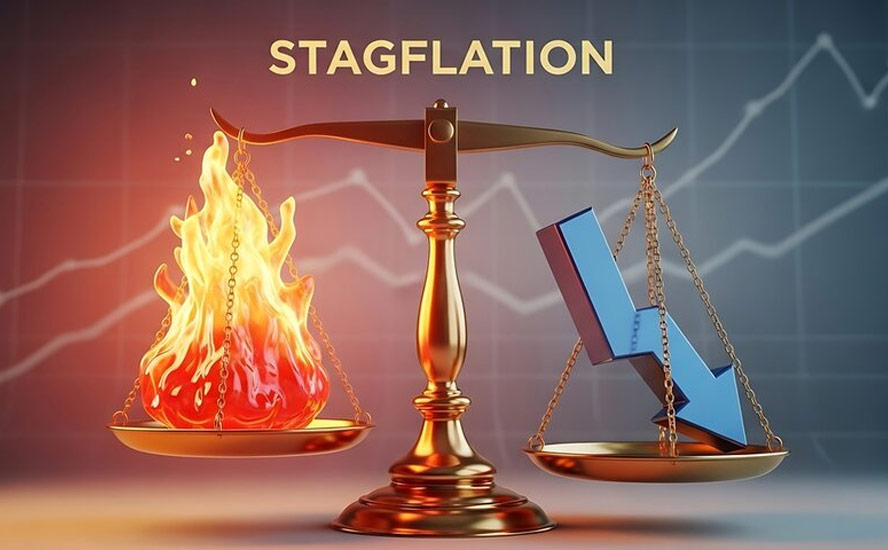
Stagflation
When physical resource scarcity collides with rising demand and higher prices, the immediate result is severe economic strain, widening inequality, and systemic inflation.
As raw materials (like oil, minerals, and arable land) become harder to extract, the cost to produce everyday goods rises, driving sustained inflation.
Higher prices disproportionately harm lower-income populations, who must spend a vastly larger share of their income on essentials like food, energy, and housing.
When supplies cannot meet demand, the free market allocates goods strictly by wealth, meaning only those who can afford high prices get access, pricing others out entirely.
Nations may compete aggressively or enact protectionist tariffs and export bans over dwindling critical resources, straining international relations.
From a macroeconomic perspective, when the absolute limits of a finite world collide with expanding global demand, the result is a fundamental shift in how entire economies function.
From a geopolitical perspective, a finite world with climbing demand completely flips the balance of global power. Resource wealth replaces traditional military or financial might as the ultimate form of leverage.
When scarcity meets high prices, international relations shift from a system of open trade to a zero-sum game of resource nationalism—where nations treat critical materials as strictly guarded instruments of state power rather than global commodities.
Several major events in metals markets have had and will continue to have
tremendous effect on copper, gold and silver markets
Richard (Rick) Mills
aheadoftheherd.com

Legal Notice / Disclaimer
Ahead of the Herd newsletter, aheadoftheherd.com, hereafter known as AOTH.Please read the entire Disclaimer carefully before you use this website or read the newsletter. If you do not agree to all the AOTH/Richard Mills Disclaimer, do not access/read this website/newsletter/article, or any of its pages. By reading/using this AOTH/Richard Mills website/newsletter/article, and whether you actually read this Disclaimer, you are deemed to have accepted it.