 RSS Subscribe
The mining industry is facing a ‘grey tsunami’ of worker retirements – Richard Mills
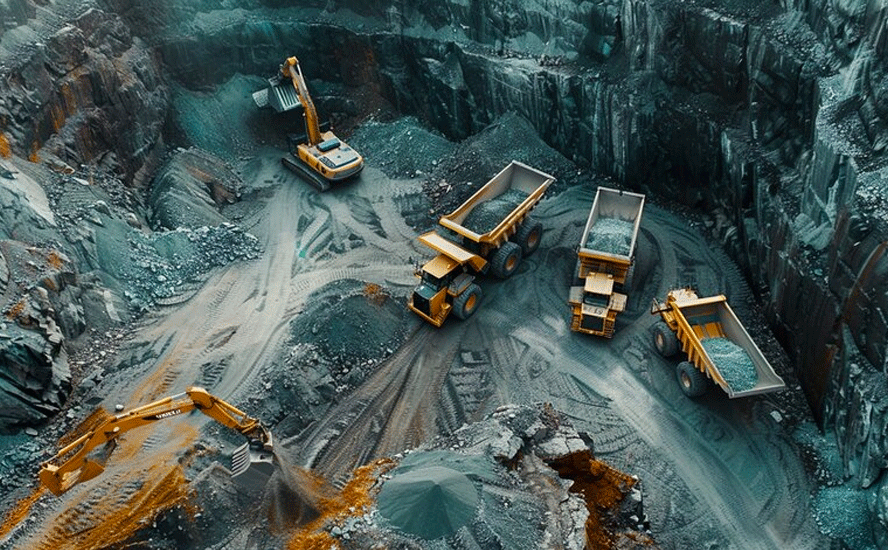
One of the biggest challenges facing the mining industry is a growing skills gap created by an aging workforce and a dearth of talent waiting next in line.
According to Walter Copan, vice president, research and technology transfer at the Colorado School of Mines, the industry is facing a critical skills gap, compounded by the so-called ‘grey tsunami’, referring to the number of retirements anticipated.
A study put out by Deloitte revealed that nearly 50% of mining engineers will reach retirement age within the next decade. The average age of a US mine worker is 46.
The Deloitte study found that mining employment has fallen 20.4% over the past decade in the United States. In Canada, approximately 80,000 to 120,000 workers will need to be hired by 2030.
The firm highlighted the danger of critical knowledge and skills being lost, when they are needed most, as demand for metals surges for the transition from fossil-fueled to renewable energy, electrification and the massive build out for hyper-scaler’s, data centers and power grid rebuild.
A McKinsey & Company survey found 71% of mining executives are finding a talent shortage is holding them back from delivering on production targets and strategic objectives. 86% say it’s harder to recruit and retain talent, particularly in specialized fields such as mine planning, process engineering, and digital (data science and automation).
A recent PwC study found that nearly two-thirds of CEOs believe skill shortages will have a large or very large impact on profitability over the next decade. 57% of CEOs who responded see recruitment as the biggest barrier to adopting new technology.
The crisis spanning the entire resource sector is driven by several compounding factors.
The ‘grey tsunami’ and knowledge cliff
The single biggest driver is demographics. The average age of a resource worker is significantly higher than the national industry average across North America. In the US, the Society for Mining, Metallurgy & Exploration (SME) projects that more than half of the current workforce will retire by 2029 (roughly 221,000 workers).
In Canada, the Mining Industry Human Resources Council (MiHR) forecasts that the sector will need to hire roughly 246,000 workers through 2035, with a staggering 86% of those roles needed just to replace retirees.
Acute skilled trades shortages
It isn’t just white-collar engineers who are missing; the shortage is paralyzing field operations. Heavy-duty mechanics, specialized underground welders, electricians, and HVAC technicians (who maintain the critical life-support ventilation systems underground) are in extremely short supply. Major operators (such as Cameco and various operations across British Columbia) have already had to cut production forecasts, delay expansions, or pause operations entirely because they lack the bodies to maintain heavy equipment.
The highly technical talent needed to find and extract natural resources is drying up at the university level. In Canada, nearly a third of all geoscientists are over the age of 50, and junior exploration companies are actively struggling to find field talent.
Canada’s oil patch is facing an identical crunch, requiring at least 72,000 workers by 2035 due to an imminent wave of retirements.
The Canadian oil and mining sectors rely on the same core technical specialties that are facing severe nationwide shortages. The difference is the oil sands are producing more oil while reducing headcount through automation and technology; while the mining industry is battling a deep talent deficit driven by a massive pipeline of active development projects.
Changing worker preferences and perceptions
According to data from McKinsey, the resource extraction sector struggles with a severely damaged “Employee Value Proposition”. Younger generations (like Gen Z) associate the sector with negative perceptions regarding remote camp life, poor work-life balance, and historical environmental impacts. Even though youth unemployment is elevated in many regions, recruiting them to fly-in, fly-out (FIFO) roles remains an uphill battle.
While typical manufacturing roles take about 43 days to fill, specialized mining roles now average 62 days to fill, costing industrial companies billions in lost productivity. Companies are aggressively turning to autonomous haul trucks, remote drilling rigs and AI to survive, but tech cannot completely replace field expertise.
Younger generation
Indeed, there is a shortage of new talent to replace the old when the time comes. According to Copan, the pipeline of people servicing the sector, from the leadership level to engineers, metallurgists and geologists, are being replaced only at a trickle in the United States, Canada, Australia and Europe.
In the US, the number of accredited mining engineering programs has plummeted from 25 in 1982 to just 14. Since 2016, there has been a 39% decline in US mining engineering graduates. In Australia, mining engineering degree completions dropped from 519 in 2014 to 80 in 2023, representing a bachelor-level completion decline of roughly 98%, while total enrolments fell by about 65% over a similar period.
Nationwide, US universities produce between 170 and 300 mining engineers a year. However, the US market demands roughly 600 new mining engineers, leaving a significant deficit.
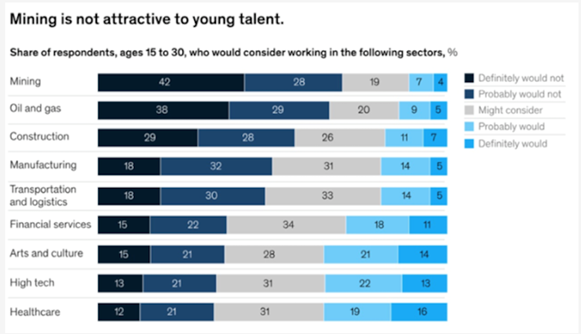
A big part of the problem? Mining is not considered an aspirational industry by younger people raised on environmental awareness and a different set of work values.
In Canada, despite mining and quarrying employment increasing over 56% since 2022, employers have drawn from the available labor pool and are struggling to find additional workers. This, says Ryan Montpellier, executive director at the MiHR, is due to several factors including an aging workforce and shrinking youth participation.
“The share of mining workers under 25 has dropped to about 6 per cent, retirements are accelerating — and national youth perception polling conducted by MiHR has shown career interest in mining ranking lowest compared to other sectors,” he explains. “This has led to shrinking mining-related post-secondary programs, a big concern as employers rely heavily on higher education as mining becomes more technologically advanced.” (The Globe and Mail)
MiHR’s 2026 labour outlook estimates the industry could need more than 246,000 new workers by 2035 under its baseline scenario. In a stronger expansion case, that requirement rises to nearly 329,000.
“There’s been a bit of a lost decade in people going through university in mining courses — that’s proving to really come to crunch point now,” said Alison Allen, deputy managing director at UK-based mining consultancy Wardell Armstrong. “There are too few graduates filling needs.”
At the UK’s prestigious Camborne School of Mines, traditionally an important feeder school for the industry, the number earning degrees from its undergraduate mining engineering course has fallen in recent years, with new intakes halted in 2020.
The above-mentioned McKinsey survey reported that 70% of 15 to 30-year-olds said they “definitely wouldn’t” or “probably wouldn’t” work in mining. Only 4% said they “definitely would”.
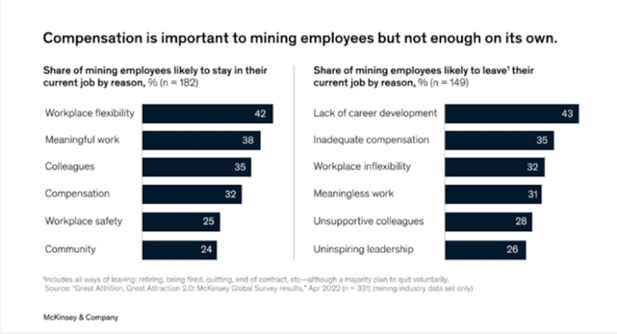
Compensation was previously the key factor in attracting talent, with mining paying an average salary of US$115,761, versus the national average of $59,428.
But today’s graduates want more than a fat paycheck.
“They tell us: ‘You can try and throw as much money as you want at me, but that’s not going to attract me,” an anonymous mining executive said in a recent EY report.
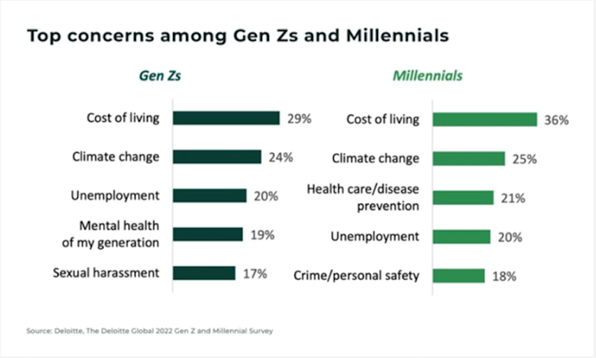
The Oregon Group explains that employment expectations among the new generation, Gen Z and Millennials, have shifted significantly, with greater emphasis on meaningful work, work-life balance, remote working, job security, a sense of belonging and feeling valued.
In a BDO survey of Gen Z, 66% of respondents said having a career that positively impacts local communities is important to them, and 59% said positively impacting the environment is important.
As noted in a 2023 Bloomberg article, fewer students now want to be geologists or engineers, partly due to mining’s negative image regarding pollution, human rights and gender equality. That’s leaving the industry with an aging workforce and forcing it to recruit from outside the traditional university talent pool, such as through apprenticeship programs and internal training.
The McKinsey report suggests the mining industry is partly to blame for failing to adapt to new workforce realities, and notes the industry faces several structural challenges. This includes lack of sophisticated infrastructure (hospitals, schools, entertainment) and therefore lower family friendliness. Equally, there is the perception that the work is physically demanding and hazardous. Then, once talent has been attracted and employed, additional pain points often include uninspiring capability development (beyond standard occupational training), limited or vaguely defined career progression pathways beyond middle-management layers, and insufficient levels of diversity and inclusion.
More positively, the organization has four suggestions for reversing the trend: treating talent as a strategic pillar, alongside safety, production, and cost; double down on what matters to employees; understand which skills matter and invest in them; and make bold moves on the social agenda.
The Oregon Group argues that in recruiting new graduates, the mining workforce is too often seen as an enabler, not a driver of value; that there is a lack of transparency over environmental, social and governance (ESG) improvements; and that the industry has failed to get its message out about the importance of mining for meeting net-zero targets en route to the global energy transition.
“As societal expectations are changing, and higher standards are placed on organisations, we must ensure that we are consistently displaying and living our values. Without change or action, our ability to attract and retain partners and talented people will be negatively impacted. The trust from host communities and countries may also be weakened, limiting our operating licence and growth opportunities” — Rio Tinto Annual Report 2022, Strategic Report
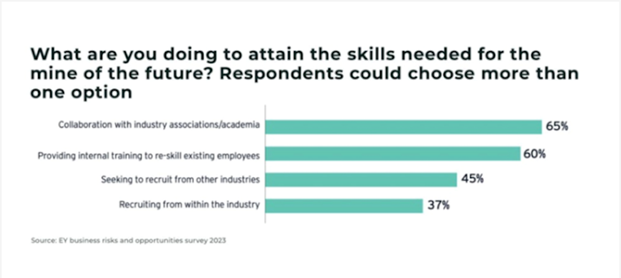
The Oregon Group also notes that artificial intelligence offers the mining industry an opportunity for significant productivity savings, and to potentially reduce its dependence on manual labor, through automation. The shift to AI will require new skills such as coding and robotics engineering.
The above-quoted Walter Copan, of the Colorado School of Mines, sends a positive message about mining’s future through a statement in an August 2023 article in the Canadian Mining Journal:
“I think we will have a chance to rebuild the workforce. I’m also excited about a new era of innovation for the mining sector as we look at the role [of] industrial automation, robotics and artificial intelligence,” Copan said. “We have an amazing opportunity for us to reduce collateral environmental damage from the sector through the application of advanced technologies, and I think that’s going to be an important part of [what] the investment community is looking at.”
Conclusion
The mining industry is dealing with a dearth of personnel, as the old guard slips into retirement and not enough new hires are coming through mining education programs to replace them.
A better job could be done of educating the younger generation and society in general of the requirement for mining in the energy transition. Without it, there literally would be no electric vehicles, no renewable energy, no industries of virtually any kind.
New talent can be coaxed into the industry if mining companies embrace technology and begin adding the new jobs that come with it. There are opportunities in industrial automation, robotics and artificial intelligence, for example.
Changing the mining culture to align more with the younger generation’s values is a bigger challenge that will take time to address.
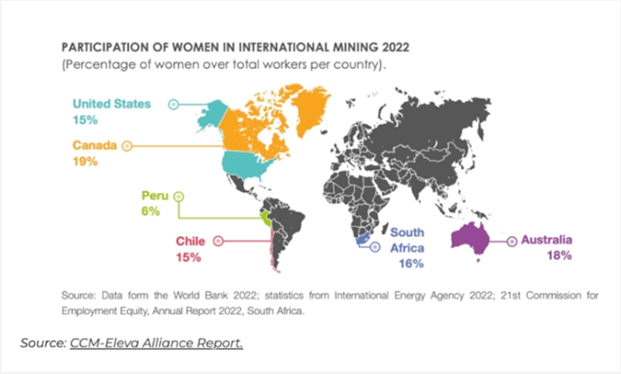
One area of improvement is the number of women in mining.
McKinsey said multiple mining companies have boosted the proportion of women they employ. Though women still make up a minority of the workforce, BHP increased global female representation from roughly 21% in 2017 to 37-40% in recent years, while Teck and Anglo American have also raised their female employment shares.
Richard (Rick) Mills
aheadoftheherd.com

Legal Notice / Disclaimer
Ahead of the Herd newsletter, aheadoftheherd.com, hereafter known as AOTH.Please read the entire Disclaimer carefully before you use this website or read the newsletter. If you do not agree to all the AOTH/Richard Mills Disclaimer, do not access/read this website/newsletter/article, or any of its pages. By reading/using this AOTH/Richard Mills website/newsletter/article, and whether you actually read this Disclaimer, you are deemed to have accepted it.