 RSS Subscribe
Storm intersects sulfide mineralization in all eight holes recently drilled at Gold Standard Project – Richard Mills

Storm Exploration (TSXV:STRM) has intersected disseminated and/or semi-massive to massive sulfide mineralization in all eight holes drilled at the newly discovered mineralized VMS system at Gold Standard.
The company’s 100%-owned project is located 60 km north of Fort Frances, Ontario.
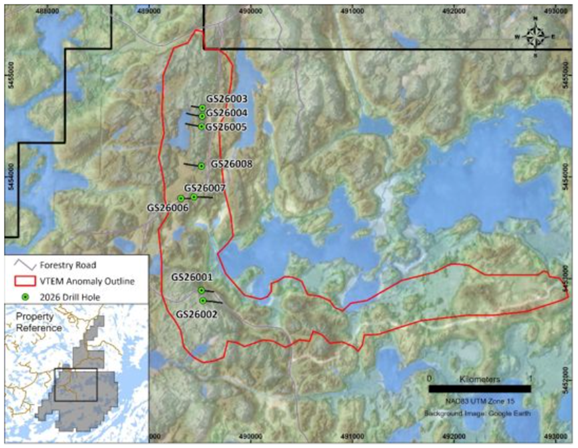
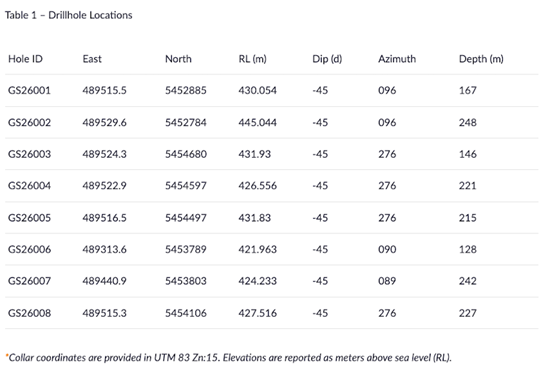
Storm highlights eight holes totaling 1,594 meters have been completed, testing 1.9 km of the north-south striking portion of the 7-km-long geophysical conductor.
Assays results for these holes are expected in early Q1/2027.
“The lithologies, alteration and mineralisation observed in these drill holes confirm that a VMS system is the source of the 7 km-long corridor of conductive rocks at Gold Standard,” says Storm’s President and CEO Bruce Counts. “Based on these results, we are eager to assess the lateral and vertical potential of this extensive system and have commenced additional mapping and ground VLF on site in preparation for the resumption of drilling in Q2/2027.”
Storm’s Sept. 23 news release highlighted 1,000 meters in five holes drilled. All five holes intersected disseminated and/or semi-massive to massive sulfide mineralization.
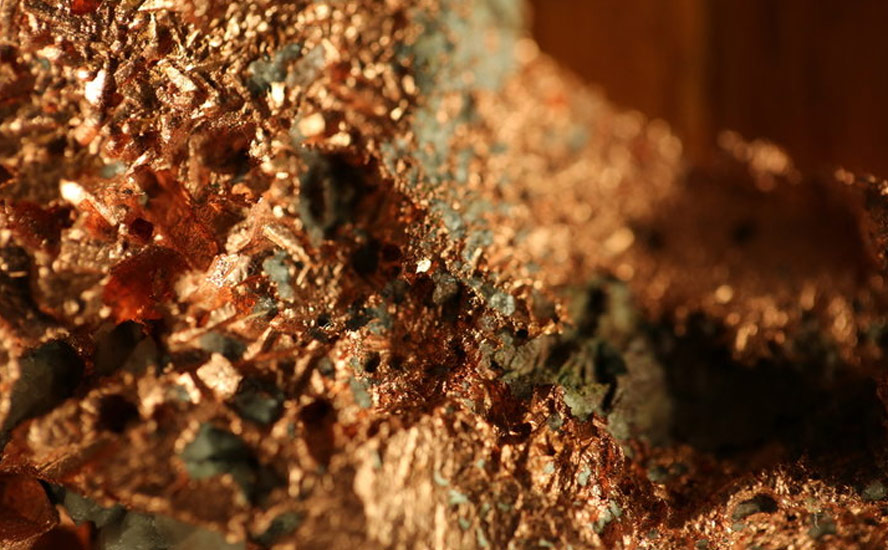
The presence of chalcopyrite (a copper sulfide mineral) and sphalerite (a zinc sulfide mineral) was confirmed in all holes.
Storm discovers VMS system at Gold Standard; stock reacts — Richard Mills
Airborne and ground electromagnetic VLF-EM surveys have outlined a conductivity anomaly that is continuous over 7 km.
The anomaly is 50 to 100 meters wide and indicates strong potential for subsurface sulfide mineralization. We know this because Inco drilled four shallow holes on the property back in 1969 and 1970. Every hole intersected sulfide mineralization, including copper and zinc sulfides.
Two holes intersected semi-continuous sulfides over 20 meters.
However, Inco never assayed the core because their focus was strictly on nickel.
Storm Exploration: Forgotten Inco VMS Target Offers Massive Potential Leverage for 2026
The property comprises 373 mineral claims covering 7,869 hectares and lies within the Manitou-Stormy Lakes Greenstone Belt along the Manitou Stretch-Pipestone Lake Deformation Zone, a large crustal structure that spans over 60 km along its strike and up to 3 km in width.
Storm’s Gold Standard Project is also home to three historical gold mines that were operational between 1901 and 1903. Surface rock samples collected by Storm in 2022 near the HW-271 mine, on the southern end of the property, have returned impressive high-grade gold values, such as 166 grams per tonne, 88.6 g/t and 83.4 g/t and 1.47% copper as well.
Geology overview
The geology of the core from the 2026 drilling at Gold Standard has been reviewed by Dr. Stephen Piercey, PhD, P.Geo., and is interpreted as a bimodal-mafic sub-type of volcanogenic massive sulfide system. These types of VMS deposits are dominated by mafic volcanic rocks but include up to 25% felsic volcanic rocks in the sequence, the latter often hosting mineralization. Deposits from the Noranda, Flin Flon-Snow Lake and Kidd Creek camps are classic examples of this type of VMS sub-type.
This interpretation is supported by presence of bedded and deformed sulfides, quartz alteration, chlorite-sericite alteration and metamorphosed equivalents (chlorite-garnet), and a polymetallic sulfide assemblage within a bimodal submarine volcanic sequence. The felsic volcanic horizon appears to host the best mineralization and represents the principal target lithology at Gold Standard.
Detailed geological descriptions of each hole follow:
GS26001
GS26001 intersected chlorite-altered mafic volcanic flows, tuffs, gabbro, and later porphyry and diabase dikes. The main mineralized interval, 46.7–53.93m, comprises sulfide-facies exhalite with bedded magnetite and folded, laminated sulfides. It is dominated by pyrrhotite with lesser pyrite, minor sphalerite and chalcopyrite; the 49.75–52.6m section is locally semi-massive.
The sequence is pervasively chlorite altered, with carbonate, quartz, and sericite alteration concentrated around the massive sulfide horizon and adjacent volcanic units; strong sericite alteration and potassic bleaching occur in the felsic tuff between 67.7 and 73.15m. Several quartz and quartz-carbonate veins cut the sequence, including a 1m massive quartz vein at 48-49m that carries blebby pyrite and pyrrhotite, while carbonate stockwork veining is developed at 16-21m.
GS26002
GS26002 intersected chlorite-altered mafic flows, pillow basalts, hyaloclastite breccias, argillaceous mudstones, and intermediate to felsic volcanic rocks. Mineralization occurs as thin laminated exhalative sulfide horizons in argillite and a broader replacement zone in sericite-quartz altered felsic tuff. Mineralization occurs as several thin, laminated to bedded exhalative sulfide horizons within dark argillaceous mudstones, plus a broader replacement-style zone in strongly sericite- and quartz-altered felsic tuff. The main intervals are 73.0–75.94m and 97.15–97.5m, which are both dominated by pyrrhotite and pyrite; and 108.75-111.42m where laminated sulfide reaches an estimated 20% of the rock volume.
The strongest logged interval is 126.7-129.3m in deformed felsic tuff, containing an estimated 25% sulfides, including blebby chalcopyrite, with a further 10% disseminated sulfide in the immediately underlying mixed volcanic interval. Sulfides are dominantly very fine-grained pyrrhotite with subordinate pyrite, occurring as laminated, bedded, disseminated, fracture-hosted, stringer, and locally replacement textures.
GS26003
GS26003 intersected intermediate tuffs and flows, garnetiferous basalt, lapilli tuff, strongly quartz-altered felsic volcanic rocks, and gabbro. Widespread low-abundance sulfide mineraliation intensifies downhole, with the best zone from 110.1 to 123.0m in quartz-altered felsic volcanic and tuffaceous rocks. Mineralization is widespread but generally low to moderate in intensity, occurring mainly as fine-grained disseminated pyrite with lesser pyrrhotite, and becomes increasingly polymetallic and structurally controlled downhole.
The best mineralization is between approximately 110.1 and 123.0m, where sulfides occur as veinlets, disseminations, and interstitial aggregates within strongly quartz-altered felsic volcanic rocks and adjacent tuffaceous/mixed mafic units. The strongest interval, 114.5–115.0m, contains an estimated 25% sulfides dominated by pyrite and pyrrhotite with lesser amounts of sphalerite and chalcopyrite; nearby intervals from 110.1-112.5m and 118.6-119.7m contain approximately 15% sulfide mineralization that is dominated by pyrrhotite with lesser amounts of pyrite, sphalerite and trace chalcopyrite.
Alteration is dominated by chlorite in the mafic units, with fracture-controlled sericite and quartz in the upper tuffs, patchy epidote and albite, and strong pervasive silicification with local potassic alteration through the felsic volcanic interval from 104 to 114m.
GS26004
GS26004 intersected bedded intermediate and mafic lapilli tuffs, minor andesite and rhyolite, chert-bearing felsic volcaniclastic rocks, and chlorite-altered gabbroic sills/mafic flows. The key mineralized interval occurs from 172.62 to 181.4m in a rhyolitic volcaniclastic unit with banded chert, where massive to semi-massive, bedded and interstitial sulfide forms the matrix to rhyolitic clasts and fragmented quartz veins.
The sulfide assemblage is strongly polymetallic: the logged 172.6-173.1m and 179.5-179.9m intervals contain an estimated 70% sulfide mineralization that is dominated by pyrrhotite, with lesser amounts of pyrite, sphalerite, and chalcopyrite, as well as minor chalcocite. Mineralisation is stratiform to stratabound, with the strongest sulfide developed near chert-rich horizons and sphalerite concentrated toward the base of the zone.
GS26005
GS26005 intersected bedded intermediate and mafic lapilli tuffs, rhyolitic volcaniclastic rocks, chert-bearing exhalative units, and chlorite-altered gabbroic sills. The main mineralized interval is 189.2-201.86m, within strongly quartz-, epidote-, and chlorite-altered felsic tuff and pillow-fragment breccia. Mineralization comprises laminated, bedded, blebby, and semi-massive sulfides dominated by pyrrhotite with pyrite, sphalerite, and chalcopyrite.
The strongest logged intervals, 191.4-195.0m and 196.8-199.1m, contain an estimated 25% sulfides that are dominated by pyrrhotite and pyrite with lesser amounts of sphalerite and chalcopyrite. Alteration included strong quartz, sericite, epidote, chlorite, with local metamorphosed equivalents containing garnet, together with bedded chert and sulfide.
GS26006
GS26006 intersected mainly chlorite-altered basalt, gabbroic mafic flows/sills, pillow basalt, and minor mafic tuff, with late diabase dikes. Mineralization consists mostly of trace fracture-hosted pyrite, with a narrow-laminated pyrite bed at 30.47-31.85m. Bedded sulfide was encountered within mafic tuff at 54.43-58.75m, where sulfides are laminated to bedded and locally include pyrrhotite and chalcopyrite. Strong chlorite, carbonate, epidote, and local sericite alteration, and pillow basalt, are consistent with the broader submarine volcanic setting.
GS26007
GS26007 intersected chlorite-altered basalt, pillow basalt, mafic and intermediate tuffs, argillaceous mudstone, and gabbroic sills/flows. Mineralization is moderate and occurs as bedded, laminated, stringer, interstitial, and locally replacement-style pyrite-pyrrhotite, with the best intervals at 47.07-52.93m, 62.5-63.5m, 97.52-100.4m, and 109.1-112.2m. Strong chlorite, carbonate, quartz, sericite, epidote, and chlorite-garnet-magnetite alteration was present, together with bedded sulfide, pillowed mafic volcanics, and quartz-carbonate veining.
GS26008
GS26008 intersected a submarine volcaniclastic sequence of felsic and intermediate lapilli tuffs, chlorite-garnet altered mafic tuff, pillow basalt, and chlorite-altered gabbro. The main mineralized interval is 120.98-149.52m, hosted by strongly chlorite-, sericite-, and quartz-altered felsic lapilli tuff.
The best section, 144.0-149.52m, contains semi-massive to massive replacement-type sulfide with up to 70% sulfide mineralization, including pyrrhotite, pyrite, sphalerite and chalcopyrite. Sulfides occur as interstitial replacement textures around quartz-altered rhyolitic lapilli and quartz fragments, with a broader pyrite halo from 120.98-144.0m. Strong chlorite, sericite, quartz, epidote, carbonate, and chlorite-garnet alteration, combined with the polymetallic pyrite-pyrrhotite-sphalerite-chalcopyrite assemblage and volcaniclastic host rocks are consistent with a VMS origin.
- Visual estimates of sulfide abundance are preliminary geological-logging observations and are not a substitute for assay results; assays are required to determine grades, metal content, and true widths.
Next steps
Logging of the core has been completed, and the final holes are currently being cut for sampling. Assay results are expected early in the first quarter of 2027. Mapping and ground VLF will commence in November in preparation for additional work in the spring.
Storm Exploration Inc.
TSXV:STRM
Cdn$0.39 2026.11.13
Shares Outstanding 21m
Market cap Cdn$11.1m
STRM website
Richard (Rick) Mills
aheadoftheherd.com

Subscribe to AOTH’s free newsletter
Richard owns shares of Storm Exploration Inc. TSXV:STRM. STRM is a paid advertiser on his site aheadoftheherd.com
This article is issued on behalf of STRM
Legal Notice / Disclaimer
Ahead of the Herd newsletter, aheadoftheherd.com, hereafter known as AOTH.Please read the entire Disclaimer carefully before you use this website or read the newsletter. If you do not agree to all the AOTH/Richard Mills Disclaimer, do not access/read this website/newsletter/article, or any of its pages. By reading/using this AOTH/Richard Mills website/newsletter/article, and whether you actually read this Disclaimer, you are deemed to have accepted it.