 RSS Subscribe
Agricultural train wreck and the 2027 global food crisis – Richard Mills
The FAO Food Price Index rose for a third consecutive month in September 2026, marking a 1.5% increase from August and reaching its highest level since November 2022.
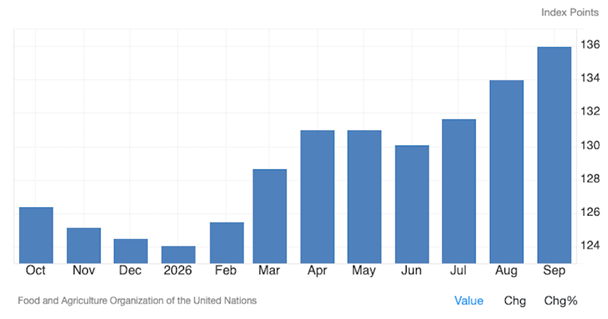
Prices are up 5.8% compared to September 2025.
Food prices are climbing due to a combination of:
- Rising production costs. Higher oil and diesel prices increase the cost of running farm machinery and transporting goods. Imported fertilizers and materials like steel for cans cost more due to trade tariffs.
- Reduced agricultural labor pools have driven up wages and harvesting expenses.
- Extreme weather. Droughts, floods, and unseasonal freezes have hurt crop yields globally.
- Supply chain disruptions. Multi-year droughts forced farmers to shrink cattle herds, pushing beef prices to record highs. Regional conflicts and port delays slow down transit times for fresh food.
- Corporate profit margins. A small number of massive corporations control major parts of the food supply chain, limiting price competition. Many large food companies raised prices during inflation spikes to protect or expand their profit margins.
Groceries increasingly expensive — Richard Mills
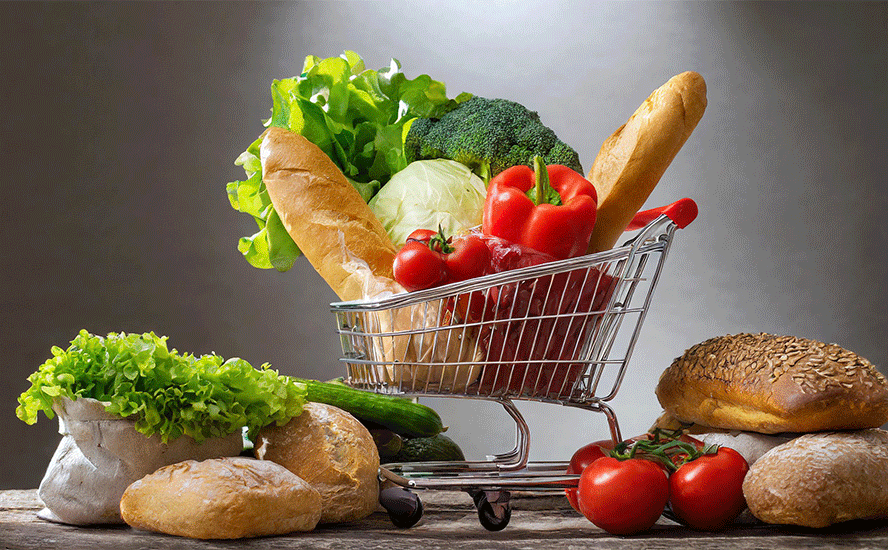
When grocery budgets are squeezed, families protect their immediate hunger by buying cheap, calorie-dense starchy staples (like rice, maize or bread) while cutting out expensive, nutrient-dense foods (like meat, dairy, vegetables and fruit).
Families in developing nations spend 50% to 100% of their income on food (compared to 12%–30% in wealthier countries). Historically, sharp food price spikes directly trigger civil unrest, food riots, and political upheavals. When local agricultural systems collapse from high input costs or climate stress, families are forced to displace and migrate to survive.
According to the latest UN Hunger Hotspots Report and updates from the World Food Program (WFP), 266 million people globally are facing acute, crisis-level hunger.
The primary driver of hunger is that 2.7 billion people simply cannot afford a healthy diet. This is because food is treated as a global commodity, meaning it flows to where the profit is, not where the hunger is.
A major reason food prices spike unpredictably is because of financial speculation. Investment banks and hedge funds are buying and selling food contracts strictly to make a profit on price movements.
Fertilizer and farming
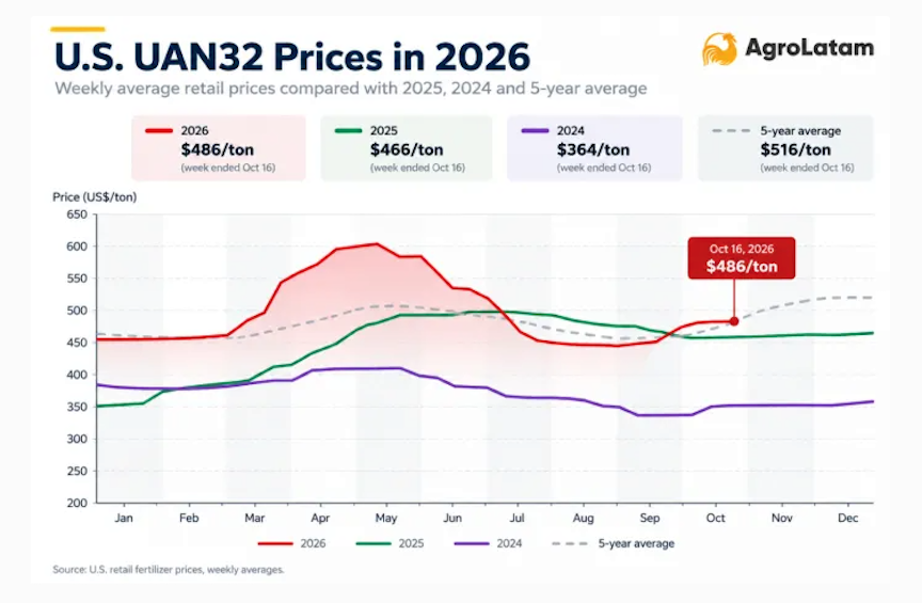
US fertilizer prices continued climbing during the week of Oct. 12-16, with nitrogen products recording the strongest monthly increases as farmers faced renewed pressure on production costs. Retail market figures released Oct. 21 showed UAN32 rising to $486 per ton, UAN28 reaching $441 and anhydrous ammonia climbing to $987. The increases matter because nitrogen is a major variable expense in corn production, and higher replacement costs could influence fertilizer purchases, crop budgets and planting decisions heading into 2027.
The latest market figures show a broad-based increase rather than an isolated nitrogen price adjustment. Seven of eight major fertilizer products became more expensive over the preceding month, while liquid starter fertilizer 10-34-0 was the only category to decline. UAN32 recorded a 6% monthly increase, while UAN28 and anhydrous ammonia each rose approximately 5%. The upward movement comes as agricultural producers evaluate whether expected commodity revenue can absorb another round of input inflation without further weakening operating margins. (AgroLatam)
Agricultural fertilizers face an extended, painful pricing plateau.
A dramatic divide is emerging between the industrial sector and the agricultural supply chain.
According to a report by consultancy firm CRU released at London Metal Exchange (LME) Week, sulfuric acid prices will extend their decline in 2027. Prices delivered to top copper producers like Chile are projected to plummet to $215 a metric ton by Q4 2027, down from an extreme, war-driven record high of $451 earlier this year.
Note that while processed acid is falling, raw elemental sulfur remains critically bottlenecked at the Strait of Hormuz, maintaining a deep divergence between industrial chemical markets and agricultural inputs.
Roughly half of the global sulfur supply is stuck behind the Strait of Hormuz or locked in Russia. This raw sulfur shortage has sent input costs skyrocketing by 130%, prompting China to implement export bans.
North Dakota State University projections indicate that fertilizer prices will plateau at highly elevated levels well above pre-war averages through 2028. For 2027, diammonium phosphate (DAP) is projected to average $666/ton (up from traditional baselines but down from its $901 peaks), while urea is expected to stabilize near $496/ton.
Josh Linville, vice president of fertilizer at StoneX Group, says tight nitrogen supplies, rising demand and global disruptions to sulfur supplies are keeping pressure on fertilizer markets even if tensions in the Strait of Hormuz ease.
As reported by AgWeb Farm Journal:
“Even if we solve the Strait of Hormuz right now and everything went back to normal — vessel traffic, peace, all those fun things — I think we’re still talking about this in spring 2027,” Linville says. “I don’t think farmers are getting out of this.”
Fertilizer costs are already climbing as farmers prepare for the 2027 growing season. University of Illinois researchers report that diammonium phosphate (DAP) prices have risen from about $700 per ton early in 2026 to around $850 per ton, while sulfur prices have surged more than 130% since the beginning of the year. Researchers warn continued sulfur supply disruptions could push phosphate fertilizer costs higher.
AgroLatam agrees that rising fertilizer prices, tight nitrogen supplies and global trade disruptions threaten US farm margins as growers prepare for the 2027 planting season.
U.S. farmers are facing mounting fertilizer supply risks as of October 21, 2026, with industry analysts warning that disruptions in global nitrogen, phosphate and sulfur markets could extend into spring 2027. The outlook matters because producers across the Corn Belt are already preparing crop budgets and securing inputs for next season. Even if shipping conditions improve in the Strait of Hormuz, depleted inventories and manufacturing constraints could keep fertilizer prices elevated, creating another financial challenge for American agriculture.
The pressure is becoming increasingly visible in fertilizer markets. Research published by the University of Illinois’ farmdoc daily in August showed diammonium phosphate (DAP) prices climbing from approximately $700 to $850 per ton during 2026, an increase of more than 20%. Sulfur prices rose more than 130% from the beginning of the year, adding substantial pressure to phosphate production costs. These increases are particularly concerning for corn producers, whose fertilizer requirements make them more exposed to changes in nitrogen and phosphate prices.
The financial consequences extend well beyond individual fertilizer purchases. In its September 2026 farm income outlook, the USDA projected total U.S. agricultural production expenses of $492.8 billion for 2026, up 4.5% from the previous year. Spending on fertilizer, lime and soil conditioners was expected to increase by $5.3 billion, or 15.3%. Those figures underscore how rising input costs can weaken farm profitability even when commodity prices provide some revenue support, especially for producers operating with limited working capital.
Diesel
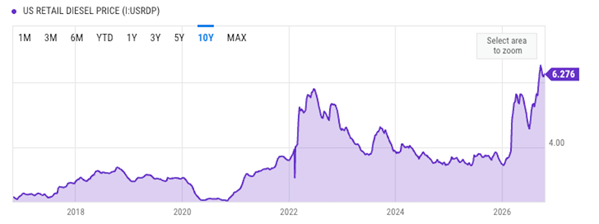
US diesel prices have nearly doubled this year, reaching $6.27 a gallon for the week of Oct. 19.
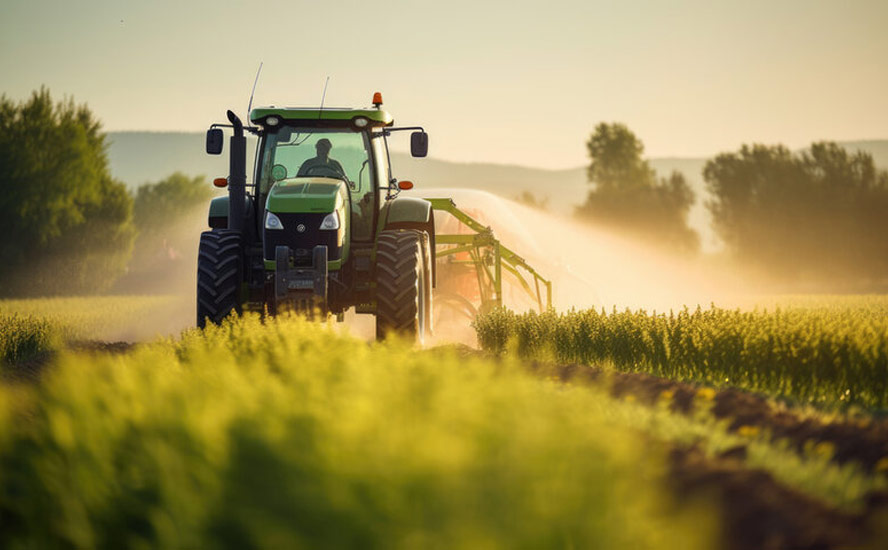
Most people have no idea how fragile and fuel-dependent the modern food supply really is. Diesel runs the tractors that plow the fields. It runs the harvesters that bring in the crops. It runs the refrigerated trucks that move produce from farm to distribution center. It runs the trains that carry grain across continents. It runs the ships that haul food between nations. Every single link in the food chain depends on diesel — and there is no substitute at scale.
This is the reality that the climate alarmists and the energy transition fantasists refuse to acknowledge. You cannot run a modern agricultural system on solar panels and wind turbines. You cannot harvest wheat with an electric combine that runs for six hours before needing a charge. The scale of energy required to feed eight billion people is staggering, and the vast majority of it comes from fossil fuels. When diesel becomes scarce or unaffordable, the entire system seizes up.
Worse still, fertilizer production is also tied to energy — specifically natural gas. As energy costs spike, fertilizer production becomes unprofitable. As fertilizer production declines, farmers cannot afford to fertilize their fields. As fertilization declines, yields collapse. This is a chain reaction that cannot be stopped once it begins. As I wrote in a prior article, ‘This is not a drought or a plague — it is a man-made catastrophe’. The destruction of affordable energy is the quickest path to starvation hell. (Natural News)
Super El Niño
The intensifying 2026-27 “Super El Niño” is projected by the World Meteorological Organization (WMO) and the National Oceanic and Atmospheric Administration (NOAA) to be one of the most destructive climate events in 50 years, severely disrupting agriculture.
WMO forecasts a near-100% likelihood that El Niño will persist through February 2027 and could be the strongest ever, raising risks of extreme weather into next year. Only three very strong or Super El Niños have been recorded since 1950. The last Super El Niño occurred in
2015-16.
Reuters notes the El Niño phenomenon has already caused mass crop failures in Central America this year.
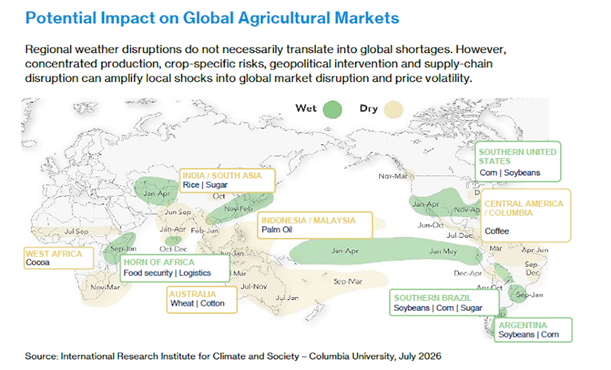
Coconut oil (Philippines and Indonesia), and palm oil (Malaysia and Indonesia) are among the agricultural commodities most affected by El Niño. The Malaysian Palm Oil Council estimates that an average El Niño leads to a 10-14% decline in yields during the first year, with a further 3-4% drop in subsequent years if the drought persists. (VanEck)
Rice, sugar, cocoa and coffee also face elevated supply risks. During the 2023-24 El Niño, cocoa prices rocketed 350% higher, sugar spiked more than 200% and several rice exporters closed their borders.
Grains tend to respond with a delay, VanEck notes, with corn typically falling in the first months after El Niño begins, then rising with the rest of the crop commodity complex. Wheat lags the longest due to its wide geographical spread. It usually trades flat to lower for a full year before
moving higher.
Global fertilizer prices have eased from their initial peaks following the start of the Iran war, though they remain high and continue to squeeze farmers according to Rabobank via Canadian Cattlemen.
Forbes notes Drought conditions across Asia and Australia could further impact rice, maize and wheat yields. The price of many staple products from beef to milk to onions are already under immense pressure.
Tomato, potato and carrot prices are projected to double as El Niño impacts agricultural conditions in Brazil. As reported by Reuters, extreme heat across Europe is already disrupting Parmigiano Reggiano and other products. Conversely, changing conditions could have some positive impacts. For example, a wet year in South America could boost soy crops, but the negative impacts are more alarming overall.
According to Morgan Stanley, a US bank, sugar is the agricultural commodity most likely to receive a price boost as weather conditions threaten production both in Asia and in Brazil.
Weaker monsoon rainfall could cut sugar-cane production in India, Thailand and Southeast Asia, while heavier rainfall in Brazil could reduce yields there.
Wetter conditions could benefit agricultural yields in Argentina and southern Brazil, while other regions of Brazil face a greater risk of irregular rainfall and delayed soybean planting.
“As a result, a super-bullish grain price scenario appears less likely, especially considering that El Niño events have historically coincided with weaker grain prices,” says Julia Rizzo, Morgan Stanley research equity analyst and commodities strategist for Latin America.
Teneo, a CEO advisory firm, ranks cocoa, palm oil, rice and sugar as highly exposed to El Niño. Coffee is rated moderate to lowly exposed.
Around two-thirds of global cocoa production is concentrated in West Africa, leaving supply highly exposed to regional weather conditions. Heat and rainfall volatility can reduce yields, affect crop development and increase disease risk.
Indonesia and Malaysia account for approximately 82% of global palm oil production, making the market particularly sensitive to prolonged drought, high temperatures and increasing risks to supply.
El Niño does not consistently reduce global rice production, but weaker monsoon rainfall or regional crop concerns can reduce exportable supply.
Brazil accounts for approximately 40% to 45% of global sugar exports, with India and Thailand also key suppliers. El Niño can reduce sugarcane yields through weaker monsoon rainfall and heat stress. This risk is compounded by increased ethanol diversions in Brazil and India’s recent ban on raw, white and refined sugar exports, which are currently tightening global supply.
Brazil and Vietnan account for approximately 50% of global coffee production. Weather disruption in these regions is more likely to affect quality, harvest timing and logistics than to create a uniform reduction in output. Exposure will depend on the type of coffee, the timing of
weather conditions and the extent to which buyers can substitute between origins and grades.
The war with Iran
According to Fund Society, while the war with Iran has now lasted seven months, the event with the greatest impact took place on Sept. 11 when Saudi Arabia closed its 1,200-km east-west pipeline following a drone attack, meaning the closure of the main route used by Gulf crude to bypass the Strait of Hormuz.
In the agricultural sector, main exposure derives from the trade of fertilizers and raw materials transiting through the same waterway, and it is precisely the difference compared to 2022 that makes it lasting. The war between Russia and Ukraine in 2022 diverted trade flows, whereas this one has diminished productive capacity. It is estimated that 31 ammonia plants across the Middle East have been directly affected or closed down completely; another 49 in South Asia have reduced production or are halted due to raw material shortages; and at least 20 Russian plants have suffered damage due to drone attacks.
Their reactivation will require time and capital far beyond the end of hostilities.
Steps toward a global food collapse
Italian truck drivers are staging major road blockades and protests across southern Italy in response to soaring diesel prices, which have spiked over 30% due to the ongoing war in Iran.
Mike Adams of Natural News states, “This looks like a temporary inconvenience in a distant country. That’s what the establishment media will tell you. But in my view, this is exactly how the opening act of a global food collapse begins, not with a bang, but with a trucker protest, a blocked highway, a few empty shelves. By the time the shelves stay empty, it will be too late to prepare. The warning shots are being fired right now, and almost nobody is listening.
Consider what happens when truckers cannot afford to drive. Diesel is not a minor input cost for food distribution; it is the lifeblood. When diesel goes above a certain price point, trucking companies lose money on every haul. They park their rigs. And when the rigs park, the food stops moving. The Italian trucker strike is not an isolated incident, it’s the first domino.”
The next domino is a fertilizer shortage, followed by food shortages and price spikes, and finally, revolution.
The Arab Spring refers to a series of anti-government protests, uprisings and armed rebellions that spread across much of the Arab world in the early 2010s. Largely a response to corruption and economic stagnation, the Arab Spring started over a shortage of bread.
When grain prices spiked in 2007, bread prices in Egypt rose 37%.
Chronic unemployment meant more people depended on subsidized bread, but the government didn’t make any more available. This led to social unrest that eventually unseated Egyptian President Mubarek.
The Tunisian uprising started in more dramatic fashion, when a young man running a vegetable stand set himself on fire to protest corruption. Many believe his act of self-immolation was the start of the Arab Spring.
American Spring — Richard Mills
Adams writes: “The fertilizer shortages will be far more pronounced in 2027 and 2028. That means the worst harvests are still ahead of us. The global food crisis is not a distant threat; it is already here, and it is getting worse. As one analysis noted, a convergence of horrifying events has set into motion an irreversible collapse of food production and crop harvests, leading to global famine throughout 2024. When people cannot afford food, every nation is only about nine meals away from anarchy. The rioting in France and unrest in the Middle East are early signals of what spreads when food and fuel run short.”
A recent report by S&P Global has similar findings. It says shortages of fertilizer and fuel combined with the effects of El Niño could lead to a global food crisis in 2027. World Grain hits the high points:
The authors of the report, released on Oct. 19, noted that the reinforcing shocks of higher energy and fertilizer costs, resilient biofuel-linked demand and El Niño-related weather risk are starting to emerge.
“Farmers buy seed, fertilizer and fuel months before they sell a crop,” the authors said. “The squeeze now bearing down on farm budgets may therefore not reach food markets in force until 2027.”
About 30% of urea — the world’s most widely used nitrogen fertilizer — traded on the global market passes through the Strait of Hormuz, as does about half of the global sulfur trade and 21% of ammonia.
Yet, the fertilizer disruption is only the first channel through which the Iran war reaches global agriculture, the authors said. Fertilizer producers elsewhere depend on energy, mainly natural gas, for feedstock as well as fuel for their manufacture. By restricting oil and LNG flows through the Strait of Hormuz, which links the Persian Gulf and the Gulf of Oman, the conflict also raises fertilizer production costs and farm operating costs far beyond the Gulf region.
South Asia is particularly exposed to a double vulnerability of disrupted fertilizer supply from the Gulf and higher costs for the LNG used by domestic producers, the authors note. The Gulf producers are an important source of imported urea for India, while LNG supports around 85% of its domestic urea production. In Bangladesh, the lack of available LNG has resulted in four of the country’s five urea fertilizer plants ceasing operation since March…
The ongoing conflict between Russia and Ukraine, about to enter its fifth year, also has impacted the fertilizer and fuel situation, the report noted. The Middle East and Russia normally account for half of global net diesel exports. Middle Eastern diesel exports have fallen by more than half since July 2025 to less than 1 million barrels per day in July 2026. Meanwhile, Ukrainian drone attacks and an export ban have pushed Russian diesel exports from roughly 1 million barrels per day toward zero. China has tightened its restrictions on exports of diesel and jet fuel, also…
“The conflict has driven diesel prices up much faster than crude oil prices, exposing farmers to a sharp increase in operating costs,” the authors said. “Faced with this increase, on top of more expensive fertilizer, farmers in the most affected regions either have to reduce fertilizer purchases and the rate at which they apply fertilizer to their crops, or they may choose to reduce the acreage that they plant. Either way, less food would be produced than would otherwise have happened.”
S&P Global’s agriculture modeling now indicates:
- Brazil’s corn output forecast has been reduced by 6 million tonnes, to 137 million tonnes, with a further decline of 10 million tonnes possible if El Niño intensifies.
- Australia’s wheat production could fall to 22 million tonnes, compared with the current forecast of 28 million tonnes.
- India’s rabi wheat crop faces increased downside risk if monsoon deficits persist. September rainfall was approximately 14% below average.
- Brazil’s soybean output forecast has been lowered by 6 million tonnes, to 177 million tonnes.
Barron’s summarizes the S&P Global report as follows:
- A report by S&P Global says a triple whammy of fertilizer shortages, extreme weather and diesel shortages could cause global food prices to rise.
- The Strait of Hormuz remains mostly closed, reducing shipments of sulfur and urea needed for fertilizer as the Southern Hemisphere planting begins.
- An El Niñoweather pattern and high diesel costs from wars in Iran and Ukraine are expected to further raise farming costs and reduce crop yields.
Simply Wall Street reports on JP Morgan’s findings that 2027 could see fertilizer disruptions, geopolitical conflict and a developing El Niñothat could squeeze food production that could squeeze crop production and push food prices higher. Empty shelves are not part of its prediction.
The influential bank’s May analysis focused on nitrogen fertilizer and the vulnerability of supply chains around the Persian Gulf. Its August analysis sees food inflation at roughly 5% in the first half of 2027, up from 2.8% a year earlier.
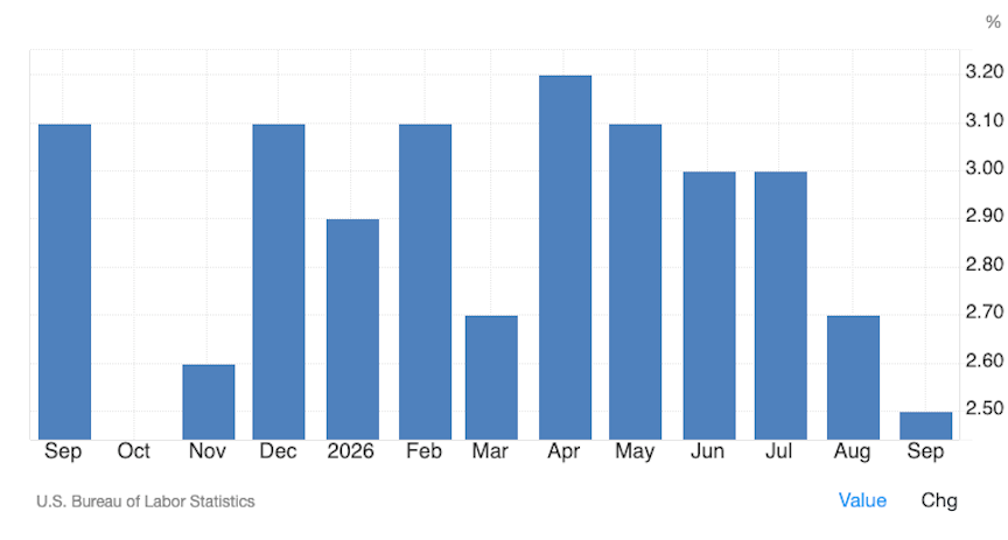
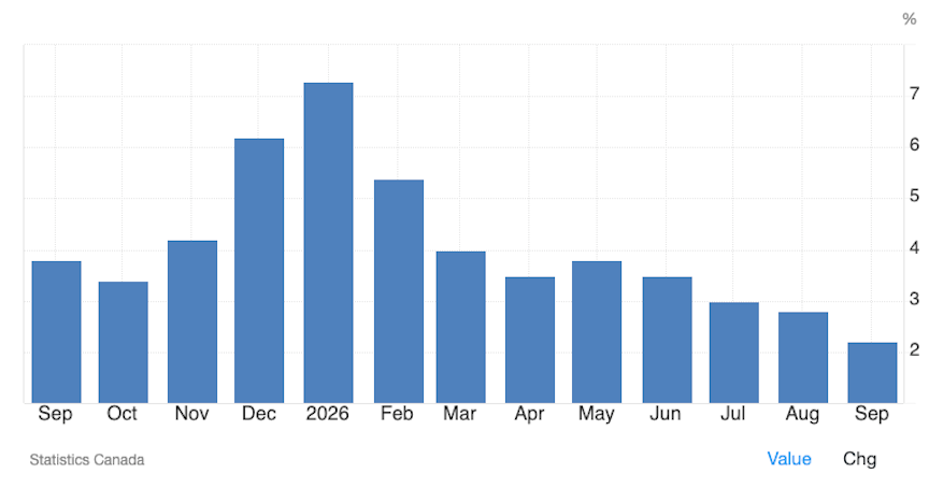
JPM advises “It is essential to farmers that fertilizer arrives on time, as a missed planting period can disrupt the crop growth, yield, and production. JPMorgan points to higher fertilizer costs encouraging lower application, which can reduce yields and put upward pressure on food prices.”
Conclusion
Even though crude oil and total export volumes from the Persian Gulf have recovered or surpassed pre-war levels, oil and refined product prices remain high due to extreme logistics costs, damaged refining capacity, and ongoing security risks.
Fertilizer shortages to continue, even as oil flows resume — AOTH
Supertanker charter rates have spiked dramatically (from roughly $30,000 per day prior to the conflict to as high as $1.2 million per day), and transit costs have jumped from about $2 to over $30 per barrel.
Freight charges that once accounted for about 3% of oil’s market price now make up roughly 27%.
While crude oil exports have largely bounced back, refined-product exports (such as gasoline, diesel, and jet fuel) from the Persian Gulf remain at only 20% to 50% of pre-conflict levels.
Diesel prices in the US are over $6 a gallon, and the average price for regular gasoline is $4.26/g according to AAA.
High fuel prices are not something President Trump and the Republicans want to see going into the midterms.
Farmers have no alternative to diesel for running their equipment and trucks. Every single link in the food chain depends on diesel — and there is no substitute at scale.
The scale of energy required to feed eight billion people is staggering, and the vast majority of it comes from fossil fuels. When diesel becomes scarce or unaffordable, the entire system seizes up.
Worse still, fertilizer production is also tied to energy — specifically natural gas. As energy costs spike, fertilizer production becomes unprofitable. As fertilizer production declines, farmers cannot afford to fertilize their fields. As fertilization declines, yields collapse. This is a chain reaction that cannot be stopped once it begins.
This is the first full planting season we’ve had with such elevated fertilizer prices. North Dakota State University projections indicate that fertilizer prices will plateau well above pre-war averages through 2028. In other words, the worst is yet to come.
If you think food is expensive now, wait a year or two. Global News reported this week that the number of Canadians struggling with food security continues to grow. Food bank visits hit a new record of more than 2.3 million. Nearly a third of the visits were by children.
Alarmingly, more Canadians and Americans are putting everyday groceries on credit cards, utilizing “Buy Now, Pay Later” loans, and drawing on savings to handle severe grocery inflation. These individuals are going into debt (@ 20% interest) to buy food, using money they don’t have to buy the essentials — forcing record numbers of people to rely on food banks when that debt becomes unmanageable.
The Arab Spring and the French Revolution were both caused by hunger. The cost of living globally continues to go up, with inflation a problem being tackled by central banks with higher interest rates, which also hurt the average consumer and homeowner with higher borrowing costs.
The slow-moving train wreck of high agricultural input costs combined with a Super El Niño causing droughts or floods that further reduce yields leading to food insecurity and, in the worst places, starvation, is only just beginning.
Richard (Rick) Mills
aheadoftheherd.com

Legal Notice / Disclaimer
Ahead of the Herd newsletter, aheadoftheherd.com, hereafter known as AOTH.Please read the entire Disclaimer carefully before you use this website or read the newsletter. If you do not agree to all the AOTH/Richard Mills Disclaimer, do not access/read this website/newsletter/article, or any of its pages. By reading/using this AOTH/Richard Mills website/newsletter/article, and whether you actually read this Disclaimer, you are deemed to have accepted it.