 RSS Subscribe
Several major events in metals markets have had and will continue to have tremendous effect on copper, gold and silver markets – Richard Mills

2026.09.11
Copper prices are dropping sharply this morning because plans for the U.S. White House to impose a 15% tariff on imported refined copper have stalled.
Before today’s report, traders were in a mad rush to buy copper and ship it into the U.S. to beat the expected tariff. This panic-buying pushed copper prices to historic highs earlier this week. However, news broke this morning that the administration is hesitating out of fear that the tariffs will spike manufacturing costs and worsen inflation. Because the tariff trade has suddenly paused, massive profit-taking and speculative unwinding have triggered a rapid sell-off.
While this morning’s drop feels sudden and painful, commodity analysts note that the long-term structural fundamentals for copper, gold and silver remain incredibly strong. This is a severe policy-driven pullback, but not a collapse in actual physical demand.
The copper backbone
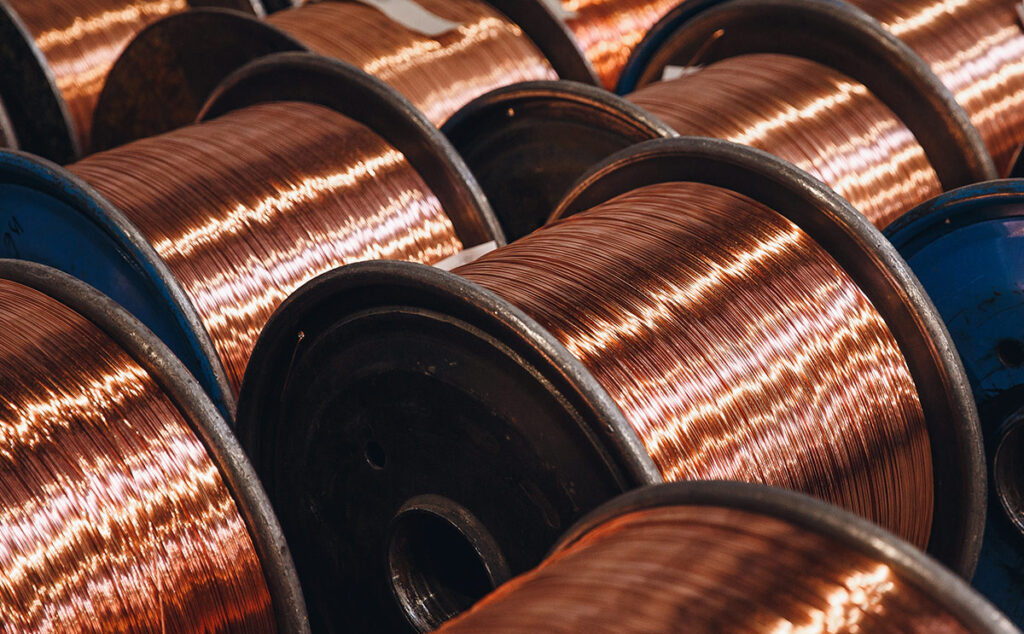
The explosive demand coming from AI data centers, power grid upgrades, and electric vehicles means the structural shortages in the copper will persist.
The global race to handle the benefaction (the processing and refining) of minerals at home is completely rewriting the rules for the world’s metals market. For decades, countries simply dug rocks out of the ground and shipped them off—usually to China—to be turned into usable metals.
Today, a massive wave of nationalism, trade tariffs, and national security fears has pushed dozens of nations to build their own processing plants simultaneously. This shift from global supply chains to localized ones is a historic event that will permanently disrupt how metals are priced, traded, and stockpiled.
Mineral processing (or benefaction) is the crucial middle step that turns ore from a mine into high-purity, usable sheets of refined copper. When so many countries try to do this inside their own borders at the same time, it triggers several major market reactions:
- China became the world’s factory because it kept refining costs incredibly low. Building new, highly regulated refineries in North America, Europe, and Australia means higher labor and environmental costs, which will drive up the long-term price of metals.
- Countries with plenty of factories but no mines are desperately trying to secure raw materials.
- Instead of a single global market, the metals world is splitting into friendly political neighborhoods. For instance, Canada launched a multi-billion dollar alliance with a dozen allied partners to fund domestic projects, while the U.S. Department of Energy (DOE) frequently issues massive grants to fast-track domestic mining and processing tech.
Developing countries that own the mines (like Indonesia or African nations) are refusing to export raw ore anymore. They want the high-paying refining jobs and profits kept within their borders, starving foreign smelters of raw materials.
One of the metals facing the biggest shift is copper. The literal backbone of the AI data center boom and power grids.
Smelter shortages are causing extreme price swings as countries realize they lack the infrastructure to refine enough copper locally.
We are moving away from an era where metals were traded purely based on supply and demand. We have entered an era where geopolitics, domestic processing capability, and government funding dictate market winners.
It will take years to build this new processing infrastructure, but the money moving into global, non-centric China processing right now guarantees that the metals market will look entirely different in the near term future.
Technology booms meet resource nationalism
The collision of copper resource nationalism and the technology boom has turned copper into one of the most politically sensitive metals on Earth. Driven by existing structural shortages, hoarding, tariffs, massive demand from AI data centers, power grids, and electric vehicles, copper prices on the London Metal Exchange surpassed all-time records, soaring above $14,300 per metric ton.
Because so many factors are in play in the copper markets, and so many sectors are desperately bidding for this metal, countries with heavy copper reserves are using their leverage to change tax codes, ban raw exports, and demand that processing happen on their own soil
Self benefaction, a big part of resource nationalism, takes many forms—from introducing steep mining royalties to banning the export of unrefined rocks. Today, over 33% of global copper production happens in countries considered “high risk” for resource nationalism, up from just 17% a decade ago.
Consider Chile, the undisputed heavyweight of global copper mining, it recently enacted a sweeping Mining Royalty Act. Large copper producers now face an effective tax rate as high as 46.5%, composed of sales taxes and profit-margin taxes.
Western nations are using massive government subsidies to cut out adversarial supply chains. For instance, Canada recently opened its critical mineral projects directly to U.S. defense capital, fast-tracking domestic mines and processing networks to supply NATO allies.
The Collision with the Technology Sector
The technology sector cannot function without copper. While tech companies don’t own mines, they are the huge end-users suffering from resource nationalism price shocks.
Artificial Intelligence requires an unthinkable amount of electricity. Data centers are packed with heavy power distribution units, transformers, and massive cooling systems that run entirely on copper cabling.
Global data center copper demand is expected to more than double to 2.5 million tonnes by 2040. S&P Global warns that AI facilities will eat up 58% of all data-center copper within the next few years.
Because it takes an average of 17 years to take a copper mine from discovery to production, tech infrastructure companies cannot quickly conjure new supply to outrun resource-nationalist bottlenecks.
To fuel AI and clean energy tech, the physical power grid must expand.
To fully electrify and support modern tech infrastructure, the U.S. alone needs to build roughly 3 million miles of new transmission lines, all heavily lined with copper.
Higher copper costs directly translate to more expensive cloud computing, slower rollouts of regional tech grids, and lower profit margins for electrical equipment manufacturers.
Precious metal hitchhikers
One of the most important, hidden mechanics in the commodities world is that the vast majority of the world’s precious metals are actually just “hitchhikers” on industrial metal projects.
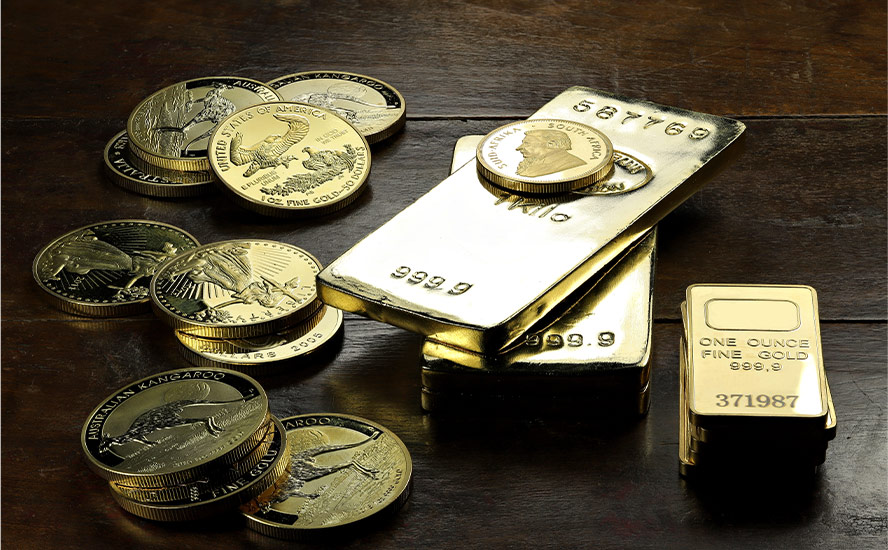
Roughly 28% of all global silver and roughly 10% of global gold comes directly out of copper mines as secondary byproducts. When a company digs up copper ore, that rock almost always contains trace amounts of gold and silver.
When countries force copper benefaction to happen domestically, or weaponize their copper through resource nationalism, it triggers an immediate, chaotic chain reaction that fundamentally alters the global supply and pricing of gold and silver.
Silver
There is a significant, ongoing structural shortage of physical silver in 2026, marking six consecutive years of deficits where industrial and investment demand outweighs supply. While exchange-traded paper silver exists, physical silver is increasingly scarce, with major inventories in London, New York, and Shanghai experiencing rapid depletion.
Analysts estimate the cumulative supply deficit since 2021 at close to a billion ounces — nearly a full year of global mine production, gone.
Record demand from industrial sectors, particularly solar panels, electronics and electric vehicles, is outpacing flat mining supply.
The three largest silver inventories (Shanghai, COMEX, and LBMA) are dropping simultaneously, with hundreds of millions of ounces vanishing from visible stocks since 2021.
Shanghai Exchange Silver Inventory Collapse (2020 vs 2026)


Peak mined gold
In calculating the true picture of gold demand versus supply, we, at AOTH don’t, and won’t, count jewelry recycling. What we want to know, and all we really care about, is whether the annual mined supply of gold meets annual demand for gold. It doesn’t! When we strip jewelry recycling from the equation, we see peak mined gold.
This is significant, because it is saying even though gold miners were massively high grading their reserves for years, mining all the best gold and leaving the rest, they still didn’t manage to satisfy global demand for the precious metal, not even close. Only by recycling gold jewelry could demand be satisfied.
This is our definition of peak mined gold. Will the gold mining industry be able to produce, or discover, enough gold, so that it’s able to meet demand without having to recycle jewelry? If the numbers reflect that, peak gold would be debunked. We’ve been tracking it since 2016, and it hasn’t happened yet.
CHARTS: New study shows global mining is now a brownfield industry
For byproduct metals copper miners have not historically scaled up or scaled down operations based on the price of silver or gold. Copper miners use to only care about the economics of copper. Therefore, if copper mining or refining got bottlenecked by politics or resource nationalism, global gold and silver supplies were choked off automatically, completely ignoring how high precious metals prices might be flying.
However, countries (most notably China) have spent billions building massive domestic copper processing plants. There are now too many factories chasing too little raw copper ore.
This has caused treatment charges (the fees miners pay smelters to clean their ore) to collapse into negative territory. Smelters are now effectively paying copper miners for the right to process their rock. Annual benchmark copper treatment and refining charges (TC/RCs) have collapsed to $0 per ton for 2026—down from $80 in 2024 and $21.25 in 2025—with spot rates plunging deep into negative territory.
To survive losing money on copper, these domestic refining plants are staying afloat purely by harvesting the gold, silver, and sulfuric acid left behind in the copper concentrate. Precious metal byproducts have shifted from a “bonus” into the primary reason copper refineries can afford to keep their doors open.
Because refineries are desperate for raw material to capture those precious metals, they are offering copper miners incredibly aggressive deals. Projects that can deliver gold and silver-rich material with high sulphur content are benefiting from this new reality. Smelters are using the precious metals to make up for lost fees and turn the sulphur into highly profitable sulphuric acid.
The blame for this new paradigm in the copper, gold and silver markets can be traced back to the war in the Middle East and the closure of the Straight of Hormuz by Iran.
Because smelters lose money on pure copper processing, they are staying alive via “side terms”. They are buying high-sulphur material like pyrite (“fool’s gold”) to capture surging profits from sulphuric acid which has spiked over 500% and high-value gold and silver byproducts. The war effect is though by analysts to be a factor for up to 4 years, from when it ends
The war is actively rewriting the profit margins of major mining companies, making copper mines with high gold/silver concentrations vastly more valuable than lower grade PM copper mines. This “upside-down” market will eventually balance out after the end of the decade, if it stops immediately, however, Iran has shown it controls the Strait, and can shut it down when it wants, in the future.
Longer term, when a country bans the export of raw copper until a domestic plant is built, that gold and silver completely vanishes from the global marketplace for years while construction takes place.
Let’s also consider, when a nation processes copper domestically, they also capture the refined gold and silver bars at the end of the line. Instead of those precious metals being sold onto open western exchanges (like London or New York), local central banks can immediately buy them up domestically to back their own currencies and build national reserves.
Control of the gold market is moving
Now, when looking at junior resource companies exploring for copper deposits for investment I no longer just look at their copper grades. I’m looking for companies with high gold-equivalent or silver-equivalent ounces.
A copper miner operating in a safe jurisdiction (like Canada or the U.S.) that also produces substantial gold/silver byproducts will see its cash costs heavily offset by precious metal sales.
Resource nationalism
One of the biggest structural transformations happening in global markets today is known as resource nationalism.
Resource nationalism is defined by Ahead of the Herd as the tendency of people and governments to assert strategic and economic control over natural resources located within their borders.
Rising commodity prices and record profits make host governments want a larger share of the financial benefits so countries with vital metals guard them closely. This creates supply deficits, stockpiling, and higher market prices for materials like copper, silver, and gold.
Instead of allowing foreign entities to dig and concentrate ore just to ship it away, and pocket the massive profits from refining it, developing nations are demanding a piece of the industrial pie. They are using export bans to force mining giants to build local factories, smelters, refineries, deep sea ports, roads, power grids and railroads.
Countries are no longer content with just being the world’s quarry.
The template for this movement was created by Indonesia, which banned raw nickel exports. By forcing foreign companies to build local smelters, Indonesia’s nickel export revenues skyrocketed. Now, a massive wave of nations is following their playbook.
Very recent examples include:
- The Democratic Republic of Congo (DRC): As the world’s second-largest copper supplier and primary cobalt producer, the DRC just shocked the market by implementing an immediate ban on copper and cobalt concentrate exports. They are targeting massive multi-nationals to force immediate investments into local smelting.
- Zimbabwe: Already having banned raw lithium, Zimbabwe just expanded its ban to include raw antimony and tungsten to protect its domestic clean-energy supply chains.
- Kenya: President William Ruto just announced a sweeping directive that Kenya will no longer export raw materials. This affects everything from their gold and iron ore to graphite and soda ash.
- Vietnam: Implemented strict bans prohibiting the export of raw rare earth materials, which are critical for high-tech electronics and defense.
- Ghana: The government recently mandated that all locally mined gold must be refined domestically before it can leave the country.
The trend of resource nationalism is not new. Countries have used export bans, high taxes, and nationalization for over a century to wrest control of their natural wealth from foreign powers.
Here are the most significant historical examples that shaped global energy, mining, and manufacturing starting with the ultimate historical example of resource control shaking the global economy.
- Arab members of the Organization of the Petroleum Exporting Countries (OPEC) instituted strict oil export bans and production cuts targeted at Western nations supporting Israel in the Yom Kippur War. Global oil prices quadrupled, sky-rocketing from around $3 to nearly $12 a barrel. It triggered massive inflation, gas lines across the United States, and forced the West to drastically rethink energy independence and fuel efficiency.
- Before 1938, British and American companies owned and operated virtually all of Mexico’s oil fields, shipping the profits out of the country. President Lázaro Cárdenas signed an order expropriating all assets of foreign oil companies and created the state-owned giant Petróleos Mexicanos (Pemex). It was a massive gamble that led to a temporary Western boycott of Mexican goods. However, it successfully kept Mexico’s oil wealth within its borders, laying the financial foundation for Mexico’s mid-century economic miracle.
- Historically, American giants like Anaconda and Kennecott controlled Chile’s massive copper mines, exporting unrefined or semi-refined ore. Starting in 1964, Chile began buying majority stakes in these mines. In 1971, under President Salvador Allende, the Chilean Congress unanimously voted to fully nationalize the copper mines, creating the state corporation Codelco. Despite intense political backlash and U.S. economic sanctions, Chile successfully retained its copper wealth. Today, Codelco remains the single largest copper-producing company in the world.
- Indonesia provided the exact playbook that countries like the DRC and Zimbabwe are copying today. In 2014, Indonesia banned the export of raw, unrefined nickel ore, demanding that mining companies build local smelters instead. When miners hesitated, Indonesia temporarily eased the rules but slammed the door shut again with a total ban in 2020. The move was a spectacular success. Chinese stainless steel and EV battery giants poured billions of dollars into Indonesia to build local industrial parks. Indonesia’s nickel export value exploded from around $1 billion to over $30 billion, transforming it from a simple miner into a global refining superpower.
- China controls the vast majority of the world’s rare earth element processing, which is vital for smartphones, magnets, and military defense. In 2010, amid a diplomatic dispute with Japan, China abruptly slashed its export quotas for rare earth minerals by 40%, effectively choking off global supply. Prices for materials like neodymium and dysprosium surged by hundreds of percent overnight. This historical event serves as the primary wake-up call that shocked Western governments into funding their own domestic mineral processing supply chains.
Resource nationalism fundamentally tightens global mineral supplies, structurally elevating floor prices and causing extreme market volatility. By creating an economic squeeze on western economies resource nationalism fundamentally changes how commodity trading works and poses serious challenges for global markets.
Companies can no longer just build a mine and ship concentrated ore home. They are forced to capital-intensive complex and high-energy use processing plants inside developing nations. Refining minerals requires massive amounts of reliable electricity. Building out power grids and refineries in remote parts of Africa or Southeast Asia takes years and adds massive capital costs, called CAPEX, which permanently elevates the baseline price of refined metals.
Instead of flowing through open predictable free markets, metals are increasingly being leveraged for prioritized national interests and geopolitical security.
However, resource nationalism affects each metal differently based on its primary use case—whether it is treated as an industrial building block or a financial shield.
Copper
Because copper is the foundational backbone of the global green energy transition, artificial intelligence data centers, and power grids, it is a primary target for export bans and higher state taxes.
Building or expanding a mine requires billions of dollars upfront. Because market prices cycle up and down, mining companies are often hesitant to spend huge sums of money unless they are certain prices will stay high for decades. Years of underinvestment in the 2010s left the industry without enough new projects ready to go online today.
Copper supply was already highly inelastic because it takes a massive amount of time, money, and complex engineering to find and dig up more copper. When prices shoot up, mining companies cannot simply turn a dial to instantly produce more, inelastic supply means that even if the price of copper jumps significantly the physical amount of copper concentrate available on the market changes very little in the short term. Building a new copper mine is a massive undertaking. It typically takes up to 20 years from the initial discovery of a copper deposit to the day the mine actually starts shipping concentrate.
Existing mines are also dealing with declining ore grades, meaning the rock they dig up contains less and less actual copper.
Sudden export bans on unrefined concentrates (like those recently seen in the DRC) force miners to pause operations or scramble to build domestic smelters, creating sudden “choke points.” This delays new copper tonnes from hitting the market for years.
Driven squarely by the supply-side shock of raw export bans, smelter choke points and the mandate for localized refining strip the market of immediate liquidity, forcing a massive premium on Western buyers causing baseline costs to structurally reset higher.
Major institutions like Citigroup, UBS, and Goldman Sachs forecast that persistent supply deficits caused by policy disruptions could push copper prices from its current trading ranges up toward $15,500 per metric tonne.
Gold
Gold is finite and rare. Most of the easiest, highest-grade gold deposits on Earth have already been found and heavily mined. Major new discoveries have become increasingly rare over the past decade, creating a deep exploration crisis in the mining sector.
Finding a new gold deposit and turning it into a working mine is the work of decades. According to the GoldBroker exploration report, it generally takes up to 20 years to take a new gold deposit from initial discovery to active production.
Gold is rarely hit with raw export bans because, unlike silver, it is not an industrial input. Instead, resource nationalism acts as a massive psychological and financial propellant for gold prices. When western governments use economic sanctions as a weapon they trigger a wave of ‘monetary resource nationalism’ and developing countries central banks diversify away from U.S. dollars and U.S. Treasuries.
As the same time these emerging economies clamp down on their physical commodities, their central banks are actively diversifying foreign exchange reserves away from Western fiat currencies and into physical gold. Instead of keeping their wealth in paper assets, they are buying physical gold and repatriating it to their own soil.
Central bank gold purchases have more than doubled to over 1,000 tonnes annually creating an incredibly strong floor price under gold’s price.
Silver
The supply of raw silver is highly inelastic and this is the 6th year in a row of a silver supply deficit with hundreds of millions of ounces of cumulative inventory drawdowns. And supply is highly inelastic, roughly 70% to 75% of all mined silver is produced as a byproduct of mining other metals like copper, zinc, lead, and gold.
Silver also suffers a unique double-whammy hit from resource nationalism because it functions both as a critical industrial metal and a monetary metal catching the wave of retail/institutional safe-haven demand.
Major producers are locking down their supply chains. A prime example occurred when China slapped strict export controls on silver, limiting how much raw metal can leave its borders to protect its own dominant solar manufacturing industries.
Because silver sits in a multi-year physical supply deficit these export limits trigger violent upward price movements.
Supply chains the rocky road
Resource nationalism is a major reason for mineral shortages, but it is part of a bigger picture. Massive changes in tech, old mines, and rocky supply chains are creating huge price swings for copper, gold, and silver.
For example, copper and sulphur are completely tangled up together right now because of a global sulfuric acid crisis. Most global sulphur comes from oil and gas refining, heavily centered in the Middle East. Geopolitical conflicts and shipping bottlenecks in the Strait of Hormuz have choked off sulphur exports. To make matters tighter, China halted its own acid exports to protect its domestic fertilizer supplies.
We’re also running out of easy-to-reach metal in the ground.
Almost half of the world’s copper mines are over 20 years old and the rock we dig up today has 40% less pure copper in it than it did in 1991.
The shift from “Just-in-Time” (JIT) to “Just-in-Case” (JIC) supply chains is fundamentally rewriting how companies buy and hoard metals and it acts as a giant amplifier for price swings.
When companies switch from buying only what they need for tomorrow, JIT, to hoarding, JIC, what they might need for next year, they create artificial spikes in demand that make shortages look much worse than they actually are. Companies kept almost zero inventory. They trusted global shipping to deliver metals exactly when needed. This kept costs low but left them defenseless against disruptions.
Companies are now hoarding massive stockpiles of copper, silver, and other critical materials prioritizing survival and reliability over cutting costs.
The transition to Just-in-Case logistics creates a vicious cycle in the commodities market:
A phantom demand spike happens when a manufacturing giant decides to build a 6-month buffer stock instead of a 3-day supply, they suddenly buy massive amounts of metal all at once. This panic-buying strains the market.
A bullwhip effect happens when a small delay at a mining port causes panic down the line. The smartphone maker panics and orders double. The component factory then orders triple from the smelter. By the time it reaches the mine, the perceived demand is wildly inflated.
Add on hidden warehouse hoarding. A significant amount of the world’s copper and silver is no longer out in the open market. It is locked away in private corporate warehouses as an insurance policy, severely reducing the active, tradeable supply.
Automakers and power grid developers are terrified of running out of copper. Because copper is heavy and expensive to store, companies used to be very disciplined. Now, they are leasing extra warehouse space just to hold copper cathode buffers, pulling physical metal off the market.
Silver is used in tiny but vital amounts in electronics and solar panels. If a tech company runs out of silver, their entire multi-million dollar assembly line stops. Because the cost of silver per device is small, tech companies are highly incentivized to hoard years’ worth of silver chips and pastes “just in case,” deeply worsening the ongoing silver deficit. The growth of robotics and solid state batteries is a future huge driver for silver.
While industrial metals are hoarded by factories, gold is being hoarded by nations. Central banks are moving toward a financial “just-in-case” model. They are shifting away from digital Western assets and hoarding physical gold bars in their own vaults to protect against international sanctions and financial instability.
Geopolitics and trade policies have turned entire countries into hoarders.
Conclusion
All of the aforementioned problems remove the “efficiency” of global trade and replaces it with friction. For companies and nations buying these metals, it means higher costs, unpredictable supply chains, and localized shortages.
For a commodity investor the era of cheap, easily accessible raw materials is dead. While short-term macroeconomic policy shifts (like the tariff hiccup) can trigger temporary sell-offs, the long-term floor price for critical minerals is rising.
Finding and digging up resources has become more expensive, complicated, and risky. The highest-grade mines have been mostly tapped and miners need to dig up much more rock today just to get the same amount of copper as they did just a few decades ago. Costs to extract these deeper, lower-grade resources have skyrocketed.
For years, companies underinvested in the exploration for deposits and building new mines this has lead to a supply shortage. It can now take 20 years to get a new mine from discovery to production.
Gold, copper, and silver are strongly positioned to face long-term upward price pressure. Their multi-year outlook points toward them becoming much more expensive.
Richard (Rick) Mills
aheadoftheherd.com

Legal Notice / Disclaimer
Ahead of the Herd newsletter, aheadoftheherd.com, hereafter known as AOTH.Please read the entire Disclaimer carefully before you use this website or read the newsletter. If you do not agree to all the AOTH/Richard Mills Disclaimer, do not access/read this website/newsletter/article, or any of its pages. By reading/using this AOTH/Richard Mills website/newsletter/article, and whether you actually read this Disclaimer, you are deemed to have accepted it.