 RSS Subscribe
Silver: 5 metals in one – Richard Mills

Silver: 5 metals in one
Silver is widely known as a precious metal, but more than half of its demand comes from industries.
It’s estimated around 60% of silver is utilized in industrial applications, like solar and electronics, leaving only 40% for investing.
The amount of silver used by industry is climbing sharply — Richard Mills
Silver is the most conductive metal on the planet.
GE Reserve’s ‘Industrial Uses of Silver: Complete 2025 Guide’ says that “Silver’s unmatched electrical conductivity makes it essential for printed circuit boards, semiconductors, and electrical contacts. No viable substitute exists for applications requiring maximum conductivity in minimal space.”
Silver’s declining usage in photography has been replaced by silver needed for solar, solid-state batteries and new applications like AI data center chips, advanced electrical relays, smart grid infrastructure upgrades, and every US manufacturing facility. Silver is also heavily used in defense and health care.
Here we break silver usage down into five key sectors.
Clean & green metal
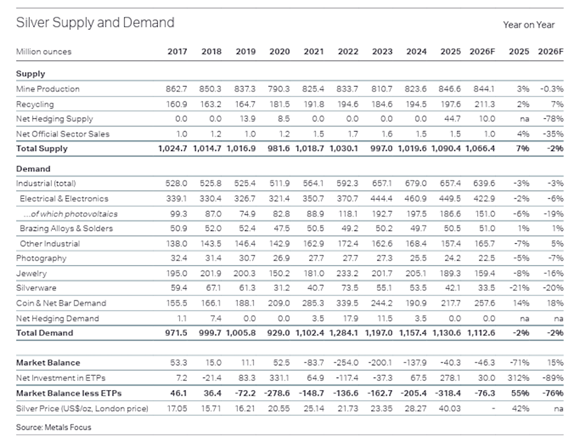
The Silver Survey 2026 says demand from the solar sector in 2025 hit 186.6Moz, an 87% increase from 2017. However, demand from photovoltaics actually fell last year from 197.5Moz in 2024.
“Industrial offtake slipped by 3% to 657.4Moz (20,446t), marking the first post-pandemic decline, as a contraction in PV demand and thrifting elsewhere outweighed gains linked to AI-related data-centers, high- speed transmission hardware, EV penetration and charging infrastructure,” states the survey, released in June 2026.
Each solar panel requires approximately 20 grams of silver in conductive paste applied to silicon wafers.
The silver creates electrical pathways that capture and transport energy generated by photovoltaic cells. Attempts to substitute copper or aluminum have consistently failed because these metals cannot match silver’s conductivity in the thin layers required for efficient panel design. Silver remains technically irreplaceable in current photovoltaic technology.
Research from the University of New South Wales warns that solar production alone could consume 85-98% of available silver resources by 2050 at current growth rates.
The structural imbalance between accelerating solar demand and limited silver production creates long-term support for the metal’s value. As renewable energy becomes non-negotiable for developed and developing nations alike, silver’s role as a critical material intensifies.
The Silver Institute notes that silver plays a vital role in the production of solar cells and the transmission of electricity that they produce and adds that PV power is the leading source of green electricity.
The institute says “As motor vehicles become more computerized, silver is playing a vital role in their operation. Over 60 million ounces of silver are used annually in motor vehicles.
For example, every electrical connection in a modern car is activated with silver-coated contacts that start the engine, open power windows, adjust power seats, close a trunk and power on and off other features.”
According to Industrial Uses of Silver: Complete 2025 Guide, “The automotive sector consumes approximately 85 million ounces of silver annually, driven by the rapid transition to electric powertrains. Silver appears in electrical connections, switches, membrane controls, and increasingly in battery management systems.
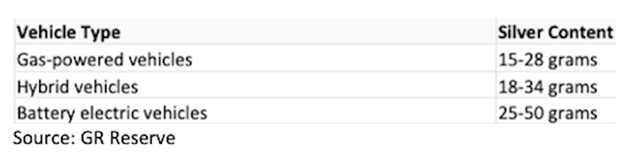
Electric vehicles require nearly double the silver of conventional cars due to additional electrical systems and power management components. Every percentage point increase in EV market share translates to millions of additional ounces of industrial demand.”
The International Energy Agency projects that 50% of all vehicles sold globally will be electric by 2035.
“Charging station deployment amplifies automotive silver demand beyond the vehicles themselves. Each fast-charging unit requires 1-2 kilograms of silver in power electronics and connections. Plans for millions of public charging installations by 2030 represent substantial additional consumption.”
Silver is becoming a critical component in next-generation solid-state batteries (SSBs), particularly in Samsung’s high-performance designs, which use a silver-carbon (Ag-C) composite anode to increase energy density, enable faster charging (9 minutes to 80%), and improve safety.
What cut silver output in Mexico, Peru and Chile at once?
These batteries can utilize up to 1 kilogram of silver (about 32.1 ounces per 100 kWh pack (compared to just 25–50 grams in a conventional liquid lithium-ion EV), potentially adding up to 16,000 metric tons of annual demand if 20% of the EV market adopts this technology, threatening to cause a massive silver supply deficit.
If solid-state batteries capture 20% of global car production (roughly 16 million vehicles out of 80 million annual production), it would generate an incremental annual demand of 16,000 metric tons of silver. This single sector would absorb over 60% of total annual global mine production.
Defense metal
The US military has long treated silver as essential for precision guidance and communications. Silver is used in almost every defense application — not in massive amounts, but in mission-critical component such as missiles and guidance systems, satellites and spacecraft, and military aircraft.
The Pentagon’s Defense Logistics Agency has historically stockpiled silver specifically for its role in electronics, optics and energy applications. (Birch Gold Group)
Military spending and the metals needed

Mining Newswire adds silver’s uses in military applications includes bombs and shells, missiles and rockets, satellites, fighter jets, night vision gadgets, torpedoes, submarines and tanks, communications devices, space technology, radar systems and nuclear technology.
The military leverages silver for its conductivity, corrosion resistance, heat conductivity, reflectivity and antimicrobial properties.
Health metal
Healthcare and medical technology consume approximately 30 million ounces of silver annually in applications largely immune to economic cycles. Silver’s natural antimicrobial properties make it valuable for infection control in hospital environments and medical devices.
The metal disrupts bacterial cell membranes and binds to proteins essential for microbial survival. This mechanism proves effective even against antibiotic-resistant strains, making silver increasingly important as traditional antibiotics face resistance challenges. Hospital surfaces, surgical instruments, and device coatings all utilize silver’s protective characteristics.
Advanced wound care represents a rapidly growing application, with the market expanding at roughly 6% annually. Silver-containing dressings treat burns, surgical wounds, and chronic injuries by preventing infection while promoting healing. The effectiveness of these products drives consistent adoption across healthcare systems.
Catheters, stents, and implantable electronics incorporate silver alloys to prevent bacterial colonization and improve long-term device performance. Medical-grade silver reduces infection rates and complications, creating value that justifies its cost in critical healthcare applications.
The silver nanoparticles market for healthcare applications shows particularly strong growth trajectories. These specialized materials enable new antimicrobial treatments and medical device innovations that weren’t possible with traditional silver compounds.
The Silver Institute notes that “During World War I, battlefields wounds were wrapped in silver foil and silver sutures were used to close deep wounds.”
The British were among the first to deploy silver-infused garments for military use. In 2005, the UK Ministry of Defence introduced anti-microbial underpants as part of a new desert uniform for soldiers. The unisex trunks were made with silver particles woven into the material to prevent sweating.
Ranked: Which Countries Produce the Most Silver?
Companies like Schoeller Tech and Max Wendon sell silver-infused fabrics that minimize odor by preventing the spread of bacteria.
Antimicrobial silver powders are sometimes used in ostomy care to control bacteria and help dry out the skin before applying the wafer.
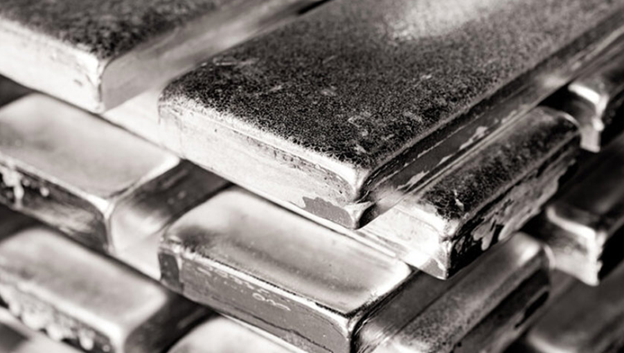
More recently, medical devices such as breathing tubes, prosthetics and catheters are coated with silver to help fight infections. Silver is also being applied to artificial bones and scaffolding used to keep bones in place while they mend. Silver is found in bandages and ointments because it keeps bacteria at bay, allowing the body to heal faster.
Silver has also been shown to be effective against bacteria that are becoming drug-resistant because of overuse. For example, a life-threatening Staph germ called MRSA (Methicillin-resistant Staphylococcus aureus), often referred to as a “superbug” found in healthcare facilities, is becoming resistant to most antibiotics. To fight back, many facilities are employing silver-imbedded equipment including surgical tools, needles, stethoscopes, furniture, door handles, furniture, linens and even paper files.
Only during the past few years have scientist learned how silver works as a biocide. Silver ions can penetrate the cell walls of bacteria — without injuring mammalian cells — thus destroying the chemical and structural bonds essential for the bacteria’s survival and growth. In some special situations, silver is used to breach a cell wall thus allowing a drug to enter and kill the cell.
Developing nations increasingly adopt silver-based water purification technologies. The metal’s antimicrobial properties prevent bacterial and algal growth in community water supplies, swimming pools, and hospital water systems. Silver filters require no chemical additives and maintain effectiveness over extended periods. (Industrial Uses of Silver: Complete 2025 Guide)
Millions of water purifiers are sold each year and silver is inside many of them. Silver prevents bacteria and algae from building up in their filters so that they can do their job — getting rid of bacteria, chlorine, trihalomethanes, lead, particulates and odor. Silver, in concert with oxygen, acts as a powerful sanitizer that offers an alternative to, or an augmentation of, other disinfectant systems. (The Silver Institute)
Summer of Silver: The Case for Buying and Holding
Tech metal
A modern AI training server uses about 180 to 210 grams of silver, while a large hyperscale data center can consume between 1 and 25 metric tons of the metal.
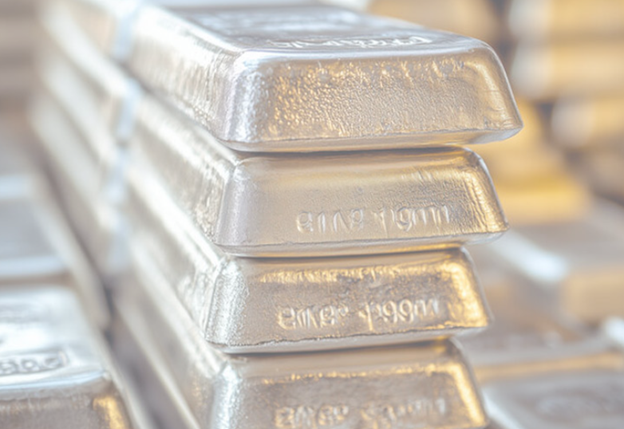
Silver use per server:
- Traditional Servers: A standard enterprise server uses roughly 60 grams of silver.
- AI-Optimized Servers: A modern AI training server uses 180 to 210 grams of silver. This is about three times more than a traditional server because AI hardware requires denser graphics processing units (GPUs) and advanced cooling components.
Silver use per facility:
- Switchgear and Power: Medium-voltage switchgear that routes power through a facility uses silver-tungsten and silver-nickel alloys. A single large data center can hold 5 to 50 kilograms (160 to 1,600 troy ounces) just in its switchgear.
- Total Facility Demand: Major data center sites contain thousands of specialized servers and extensive power infrastructure, bringing total silver consumption to massive industrial scales.
Where the silver goes:
- Circuit Boards: Silver-based conductive inks trace electrical pathways on high-frequency printed circuit boards.
- Connectors and Relays: Silver resists oxidation and handles millions of rapid electrical switches without losing conductivity.
- Capacitors: Tiny multilayer ceramic capacitors use silver-palladium electrodes to manage dense power loads on AI boards.
- Global IT power capacity — used by The Silver Institute as a proxy for silver going into data centers — jumped 5,252% in five years, from 0.93 gigawatts in 2020 to nearly 50 GW in 2025.
The institute’s December 2025 report names data centers and AI as one of three structural growth pillars for industrial silver over the next five years, alongside solar and EVs.
But there is a problem. The US relies on imports for 64% of the silver connectors and parts needed to build data centers.
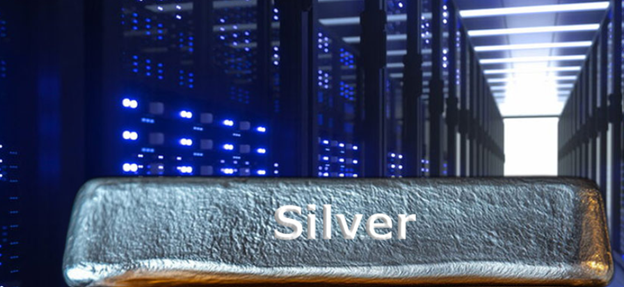
There is valid concern that there will not be enough silver to satisfy data center demand for it. According to Mining Visuals, a meaningful share of planned 2026 capacity is expected to slip because grid interconnection and construction cannot keep pace. The bottleneck has shifted from software to the physical plant, the layer where silver lives.
The rise of advanced automation, sensor-heavy industrial machinery, and humanoid robotics relies heavily on precision electronics, semiconductors, and high-conductivity wiring.
Estimates suggest individual advanced humanoid or sensor-dense robots could require 20 to 30 grams of silver per unit.
Scaling production to ambitious long-term targets — such as building 3 billion robots globally—would require an estimated 75,000 metric tons of silver, tripling total current yearly global mine output on that volume alone.
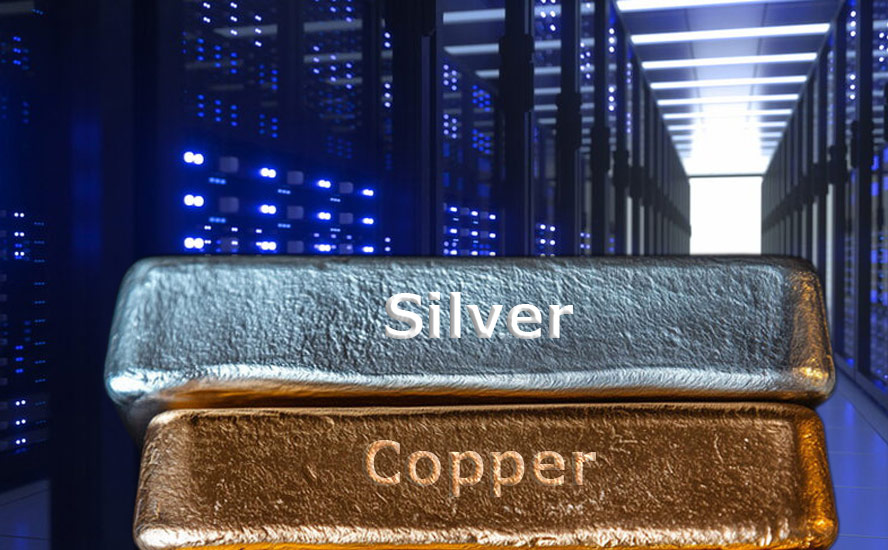
Copper and silver usage in data centers, robotics and solid state batteries — Richard Mills
Monetary metal
Silver, like gold, is a precious metal that offers investors protection during times of economic and political uncertainty.
According to The Silver Survey 2026, “2025 was marked by exceptional gains in silver investment, driven by a combination of a supportive macroeconomic and geopolitical backdrop, favorable supply-demand fundamentals, and increasingly tight physical market conditions. Across all segments, growth in investor activity was most pronounced during the final four months of the year, when silver prices reached successive record highs. As a result, in value terms, the increase in silver investment in 2025 was even more impressive, with the combined total comfortably setting a new all-time record high.”
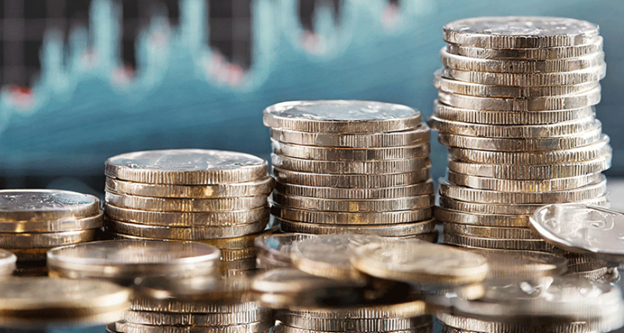
Safe-haven buying amid escalating geopolitical tensions drove silver to an all-time high on Jan. 29 2026, of $121.67 per ounce. While silver prices have been cut in half to around $60 as of this writing, the Silver Institute expects this weakness to be temporary.
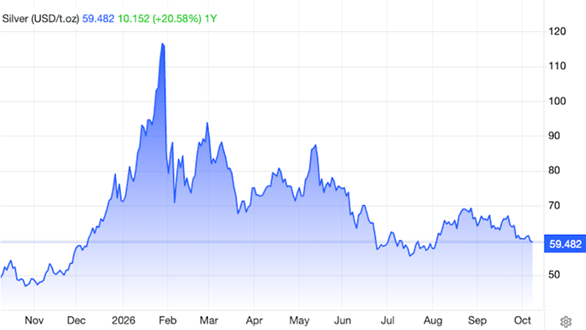
“Regardless of the [Iran] conflict’s eventual outcome, ongoing US policy uncertainty, combined with elevated geopolitical and macroeconomic risks, is expected to continue supporting portfolio diversification into precious metals,” the Silver Survey 2026 states.
Silver ETP [exchange-traded products] inflows last year were the second highest on record and the highest in value terms.
As for investment in physical silver, it rose by 13% in 2025, marking the first annual increase in three years.
While the silver market is currently contending with high bond yields, one market strategist who spoke to Kitco News said the precious metal remains an important monetary asset and diversification tool.
In an interview with Kitco News, Nate Miller, Vice President of Product Development at Amplify ETFs, said that although silver’s price action has been disappointing since its highs at the start of the year, prices are still well above where they were a year ago…
Despite the difficult headwinds, Miller said he sees silver carving out a new base and believes its long-term uptrend remains firmly in place, as he is skeptical that the Federal Reserve will be able to bring inflation fully under control.
Although rising interest rate expectations have weighed heavily on precious metals, Miller said that investors should not overlook the longer-term risks posed by persistent inflation and the declining purchasing power of fiat currencies.
Silver’s two-speed market: New York refills while Shanghai pays up
New uses
Silver’s unmatched electrical and thermal conductivity has driven a surge in modern, high-tech industrial applications. Aside from solar, EVs and AI data centers, smart grids rely on silver contacts for efficiency; 5G infrastructure (antennas and base stations) uses conductive silver inks to handle rapid transfer; silver inks are also used in 3D printing.
Silver-bearing solders and brazing alloys use fine silver (often 2% to 95% silver content depending on the application) to increase joint strength, electrical conductivity and corrosion resistance.
Common high-end formulations include electronics & audio (silver-tin), jewelry-making, and plumbing & HVAC (silver brazing).
Alloys like Sn96/Ag4 (96% tin, 4% silver) or Sn95/Ag5 provide strong, lead-free joints for high-end audio cables, circuit boards and sensitive electronics. High-silver brazing alloys (often 30% to 56% silver) join copper and brass pipes under high pressure and temperature without needing flux on copper-to-copper joints.
Silver in deficit
Global silver fabrication already faces persistent structural deficits as industrial offtake (driven heavily by solar PV and AI data infrastructure) consumes upward of 56% to 80% of yearly supplies.
Because roughly 70% of silver is mined as a byproduct of lead, zinc, copper, or gold mining, output cannot easily or rapidly scale to match sudden spikes in technological demand.
Silver Market Balance: A 2026 Update
BMI (Fitch Solutions) notes that mining disruptions at top operations like Grasberg and Kamoa, alongside delayed projects, are pushing the copper market into a structural shortage. They view the current tight market as the start of a multi-year structural deficit.
J.P. Morgan holds one of the most aggressive deficit forecasts on Wall Street, projecting a 330,000-metric-ton shortfall for 2026. This is largely driven by a massive, immediate demand spike from power-dense AI data centers.
Copper mine replacement by acquisition — Richard Mills
Will the silver mining industry be able to produce, or discover, enough silver that it’s able to meet future demand? It seems highly unlikely.
The silver market is experiencing a severe structural deficit, with demand consistently outstripping both primary mining output and recycling, leading to a sixth consecutive year of shortages.
The Silver Institute and Metals Focus forecast a 46.3 million-ounce silver deficit in 2026.
The silver shortage is real — Richard Mills
China, the world’s third largest silver producer, has worsened the silver deficit by implementing strict production minimums and licensing requirements on refined silver exports.
The country leads the world in globally traded refined silver, accounting for roughly 70% of the market.
Conclusion
Most silver demanded by industry goes towards electronics. Number two is solar panels. But other sectors are growing rapidly, acting as the new primary drivers of silver consumption.
AI and data center infrastructure are currently experiencing a monstrous appetite for silver, as it is used extensively in high-performance computing, connections and servers to prevent overheating.
EV consumption continues to rise, with 25-50 grams of silver used per vehicle, significantly higher than internal-combustion-engine cars.
Automotive demand is projected to grow by 3.4% annually through 2031. Add in solid state batteries and EVs are huge users of silver.
The accelerated rollout of 5G infrastructure and increasing complexity in semiconductor chips require massive amounts of silver for electrical contacts and conductive paths.
Silver use in advanced medical electronics and devices is steadily increasing.
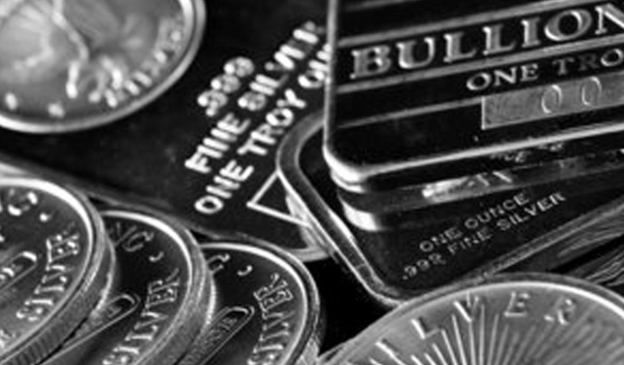
Silver is used in almost every defense application including missiles and guidance systems, satellites and spacecraft, and military aircraft.
China used to be a net silver seller but Beijing, aware of its scarcity, is now hoarding silver, having declared it a strategic material and tightening export licenses.
The silver deficit is real and prices, despite some short-term volatility, will eventually reflect market realities and rise accordingly.
Richard (Rick) Mills
aheadoftheherd.com

Legal Notice / Disclaimer
Ahead of the Herd newsletter, aheadoftheherd.com, hereafter known as AOTH.Please read the entire Disclaimer carefully before you use this website or read the newsletter. If you do not agree to all the AOTH/Richard Mills Disclaimer, do not access/read this website/newsletter/article, or any of its pages. By reading/using this AOTH/Richard Mills website/newsletter/article, and whether you actually read this Disclaimer, you are deemed to have accepted it.