 RSS Subscribe
Junior resource companies serve as the primary exploration engine of the mining industry, discovering the mineral deposits that become the world’s future mines – Richard Mills
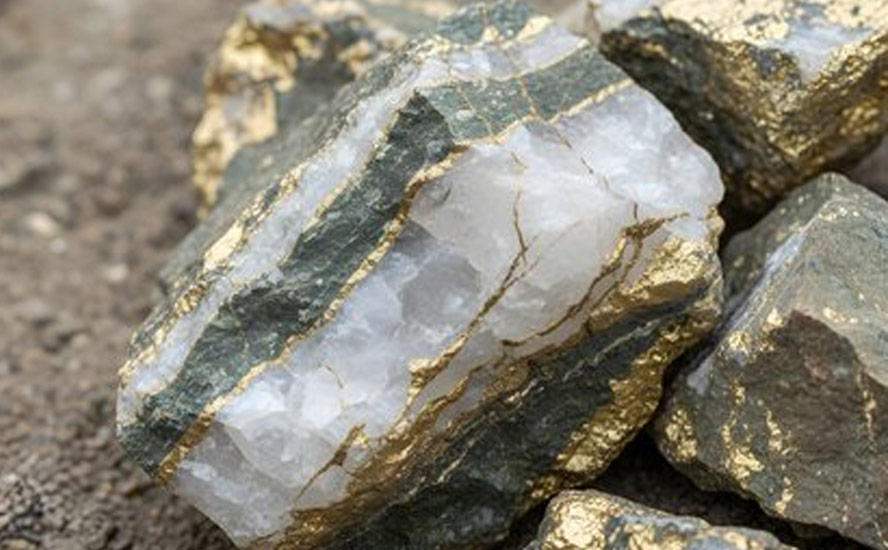
Industry forecasts confirm a growing structural deficit for critical minerals and precious metals because long mine development timelines and historical underinvestment in junior exploration limit near-term supply.
While global demand is accelerating due to electrification, AI data center infrastructure, and central bank gold buying, the mining pipeline faces severe bottlenecks between initial discovery and commercial production.
Advancing a mineral discovery from initial exploration to a producing mine takes an average of 15 to 18 years. Complex permitting processes, environmental assessments, and local community consultations frequently delay projects even further.
Major mining companies are high grading, extracting higher-grade, easily accessible ore bodies faster than they are replacing them. Many operating mines are aging, resulting in declining ore grades and higher extraction costs per tonne.
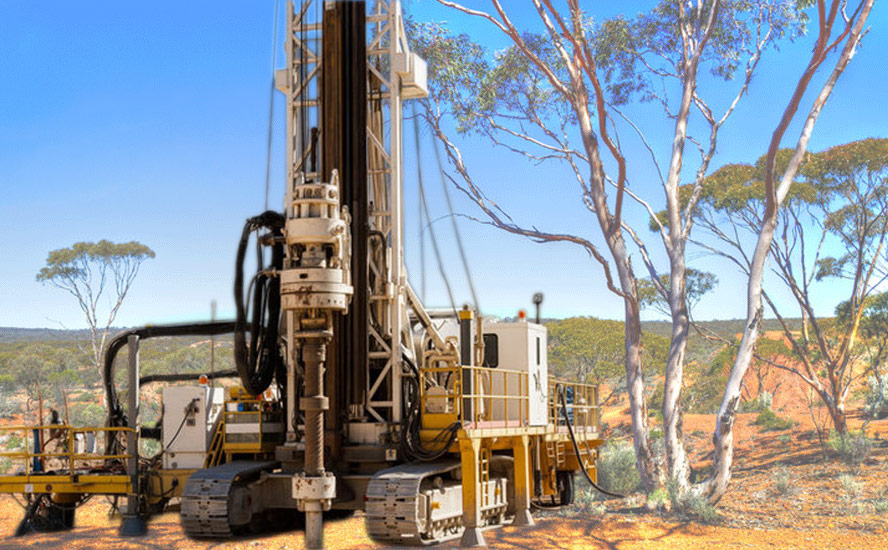
Junior mining companies make the majority of new mineral discoveries, Juniors put “boots on the ground” to prospect, drill, and define new mineral deposits yet they rely heavily on equity markets for capital. High interest rates and risk-averse capital markets over the past few years have starved many early-stage explorers of the funding needed for drilling and feasibility studies.
Forecasts from agencies like the International Energy Agency (IEA) and S&P Global project substantial deficits in, for example, copper, by the early-to-mid 2030s. I use Copper as an example because it is particularly constrained because of grid expansion, electric vehicles, and data centers require massive volumes that existing mines cannot meet.
Primary gold production has largely plateaued globally as major producers struggle to find multi-million-ounce deposits. Silver faces a dual pressure from investment demand and surging industrial consumption in solar photovoltaics, leading to multi-year structural market deficits.
Cash-rich senior producers are increasingly acquiring mid-tier developers with permitted, shovel-ready assets rather than taking on early-stage exploration risk themselves.
Automakers, tech companies, and governments (such as Canada’s Critical Minerals Strategy and the U.S. Inflation Reduction Act) are bypassing traditional financing by signing direct offtake agreements, providing grants, or taking equity stakes in junior developers.
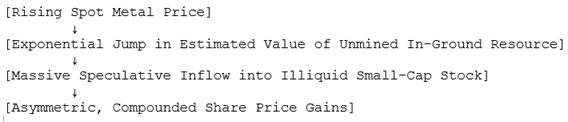
While physical gold or an ETF might move 10% during a commodities rally, a successful junior exploration or development company can see its stock price multiply by hundreds of percent due to structural operating and discovery leverage. Junior mining stocks are highly sensitive to underlying metal prices. When a junior makes a significant drill discovery during a commodity bull market, its share price can offer substantial upside leverage compared to large, established producers.
However, this explosive upside comes with a massive trade-off. Junior resource companies operate in a completely different risk universe than physical gold or stable, dividend-paying major producers (like Newmont or Barrick).
Junior miners are micro-cap or small-cap companies that do not actually produce metal yet; they focus entirely on finding mineral deposits and proving they can be mined profitably.
Junior resource companies own the world’s future mines. Put another way junior’s own the resources major mining companies need to replace mined reserves.
That statement accurately describes the core symbiotic relationship in the global mining industry. Junior exploration companies act as the research and development arm for major miners, taking on early-stage risk to discover the deposits that majors eventually acquire to replenish their depleting reserves.
Major mining companies are constantly extracting ore, meaning every day a mine operates, its finite reserves shrink. To maintain production levels and satisfy shareholders, majors must continuously replace these mined ounces or pounds.
Rather than spending massive overhead on high-risk grassroots exploration, major miners frequently let smaller junior companies do the initial prospecting and drilling.
Juniors raise speculative capital to stake claims, drill targets, and publish technical reports. Once a junior proves a deposit is potentially large and economically viable, it becomes a prime target for a major, juniors primary business model is to be bought out or enter a joint venture (JV) with a senior producer.
With demand rising for critical minerals and precious metals, industry forecasts warn of looming supply gaps over the next decades if more junior discoveries are not funded and advanced into production.
https://www.miningvisuals.com/post/what-each-part-of-the-mining-ecosystem-does
Global trends like electrification, decarbonization, and infrastructure development require massive amounts of copper, silver, uranium, graphite, and gold. Ahead of the Herd (AOTH) highlights that security of supply for these critical minerals directly depends on junior companies making new discoveries.
Metals security of supply depends on junior resource companies
Richard (Rick) Mills
aheadoftheherd.com

Legal Notice / Disclaimer
Ahead of the Herd newsletter, aheadoftheherd.com, hereafter known as AOTH.Please read the entire Disclaimer carefully before you use this website or read the newsletter. If you do not agree to all the AOTH/Richard Mills Disclaimer, do not access/read this website/newsletter/article, or any of its pages. By reading/using this AOTH/Richard Mills website/newsletter/article, and whether you actually read this Disclaimer, you are deemed to have accepted it.