 RSS Subscribe
Global official institutions purchase a staggering 289 tonnes of net gold in Q2 2026 – AOTH
When currency traders say they “smell financial cracks developing on both sides of the Atlantic,” they mean that both the U.S. dollar and the Euro are suffering from deep structural decay simultaneously. This situation introduces the risk of global currency devaluation, fundamentally driven by an inescapable, competitive “race to the bottom”.
The “Cracks”
The structural fragility on both sides of the Atlantic is being driven by two primary macroeconomic pressures.
Both the U.S. and major Eurozone nations (like France) are running massive fiscal deficits.
The massive capital requirements needed to build global artificial intelligence infrastructure have forced major tech “hyper-scalers” to issue unprecedented amounts of corporate debt, heavily leveraging the credit markets.
While AI is a huge driver of stock market gains particularly in the US where the “Magnificent Seven” tech stocks dominate, the amount of money being spent on re-arming the world’s militaries is equally eye-popping despite flying under most radars.
Fact is the planned increase in Group of Seven defense spending over the next decade may match Big Tech and AI.
Additional defence commitments from G7 governments over the next 10 years amount to some $8 trillion of additional re-armament spending on top of prior trends.
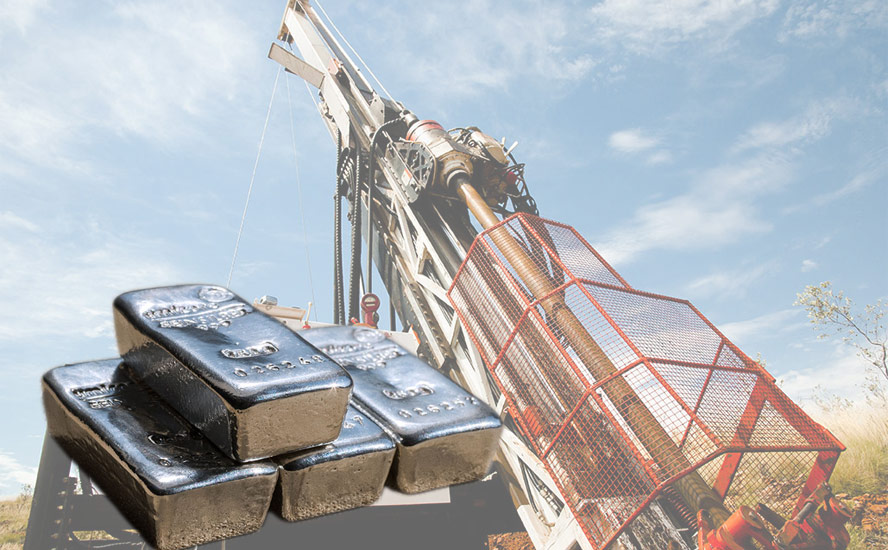
Military spending and the metals needed
A “Race to Worthless”
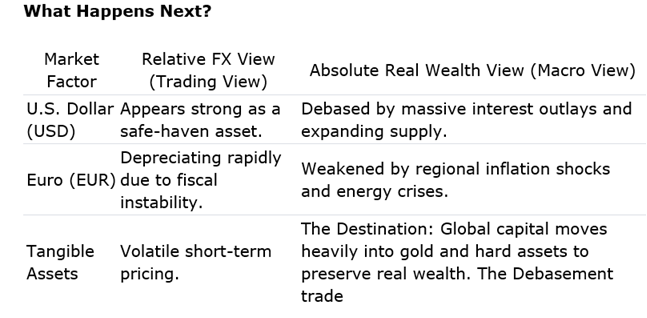
To understand what traders fear, you must separate relative currency valuation from absolute purchasing power devaluation.
The Cleanest Dirty Shirt – Even if one currency drops against the other, they can fluctuate relative to each other.
The Race to the Bottom – Both currencies are devaluing simultaneously against real-world assets. Real Purchasing Power is decreasing versus tangible goods received
In normal market conditions, if Europe faces a crisis, the Euro plummets and the U.S. Dollar surges. Right now, the Euro has fallen toward a 17-month low of $1.12. On paper, the U.S. dollar looks incredibly strong, acting as what Wall Street calls “the cleanest dirty shirt in the laundry.”
The real danger traders see is that both currencies are experiencing rapid real-world devaluation, it has shown up in the Euro and coming weakness is expected in the US dollar. Because the Federal Reserve and the European Central Bank must continuously print money or keep interest rates high to service their massive debts, both currencies are fundamentally losing their purchasing power against tangible assets.
It will be a “race to the bottom” because neither power can afford a strong, restrictive currency without risking a sovereign debt default.
When both major global reserve currencies face structural cracks at the same time, the global financial system undergoes structural fragmentation. Rather than one fiat currency “winning,” capital systematically begins moving out of paper promises altogether, driving structural flows into hard assets.
Gold and commodities are pricing in these systemic Atlantic cracks through a structural decoupling from fiat currencies, transforming from simple inflation hedges into defensive tools against sovereign risk. While the safe-haven U.S. dollar temporarily suppresses paper commodity prices during acute panics, the underlying structural flow shows investors fleeing crumbling Western debt liabilities in favor of hard, physical assets.
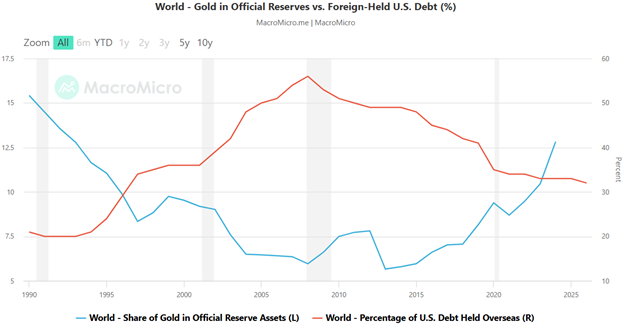
For nearly 30 years, U.S. Treasuries held the dominant crown. However, data from the European Central Bank (ECB) and World Gold Council shows a massive structural crossover. By the end of 2025, gold’s share of global central bank reserve assets surged to 27%, while U.S. Treasuries collapsed to 22%.
It is the structural acceleration of the debasement trade. As Western sovereign debt levels cross critical psychological thresholds, with U.S. federal debt hitting $40 trillion and global debt reaching a record $365.5 trillion, investors are increasingly treating G10 government bonds not as safe havens, but as systemic liabilities.
At AOTH we believe the traditional relationship where soaring bond yields crush non-yielding hard assets has fundamentally fractured. Instead, a major capital migration is underway.
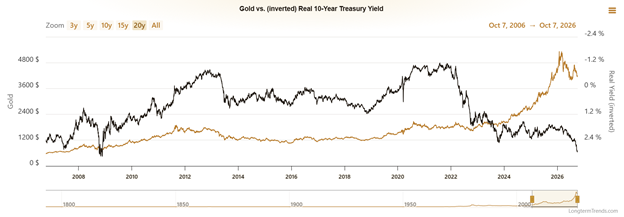
Modern charts show this historic relationship completely breaking down. Despite Western bond yields climbing drastically due to ballooning sovereign deficits, gold has simultaneously surged to record highs. This visual divergence proves that investors are treating gold as a “systemic risk hedge” rather than just a play on interest rates.
Capital is leaving paper assets and looking for an unprintable anchor.
With annual interest expenses on sovereign debt consuming growing shares of tax revenue, market participants are front-running the inevitable: central banks prioritizing financial stability over inflation control by keeping real interest rates negative.
Global gold ETF holdings reached record highs. This surge is driven by Western retail and institutional investors catching up to non-Western central banks. Central banks have proactively chosen bullion over U.S. Treasuries to diversify away from geopolitical and structural currency risks.
Capital concentration reports reveal that money is flowing directly into tangible economic bottlenecks. This includes physical energy grids, AI data center hardware, and base metals like copper, which face massive structural supply constraints.
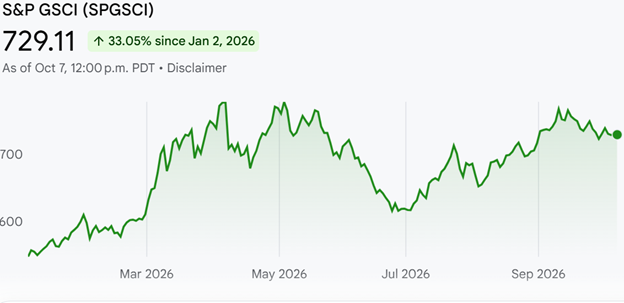
The S&P GSCI Commodity Index has surged roughly 32% to 33% so far this year. This broad rally reflects a profound global pushback against transatlantic debt expansion and real-world currency debasement.
Macro Commodities
Beyond precious metals, raw commodities are pricing in a structural supply-side crisis combined with massive infrastructure demands:
Crude oil has faced extensive upward pressure, climbing toward the $90–$95 range, pushed by geopolitics and the real-world cost of currency debasement in global oil contracts.
Transatlantic debt is heavily funding digital transformations. The monumental power and manufacturing needs of global artificial intelligence hardware have created inelastic demand for industrial metals like copper, protecting them from broader economic slowdowns.
As the Atlantic alliance strains and the world fragments into regional trade blocks, the cost of moving raw physical materials increases. Traders are pricing this structural inefficiency into food, energy, and soft commodities.
Ultimately, commodities are pricing in a world where paper contracts, whether they are Euros, Dollars, or government bonds, are becoming less trustworthy stores of value than the physical, tangible resources themselves
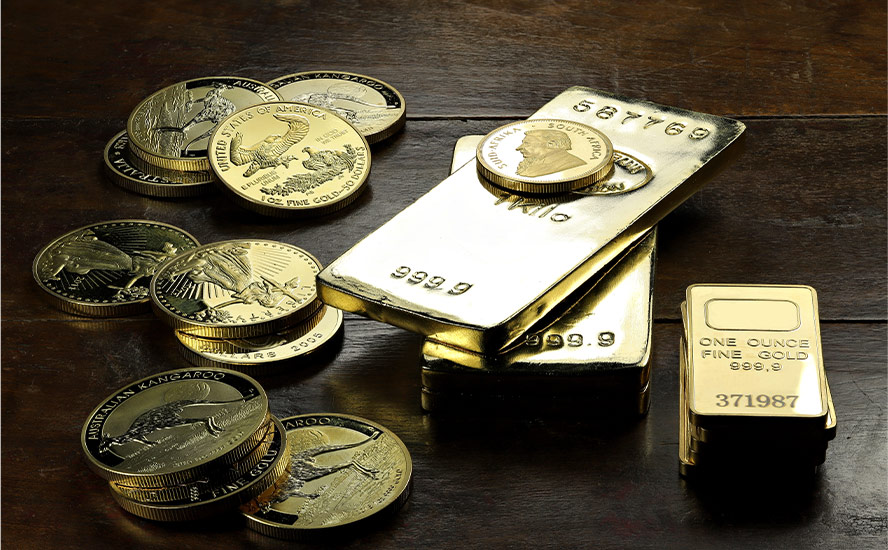
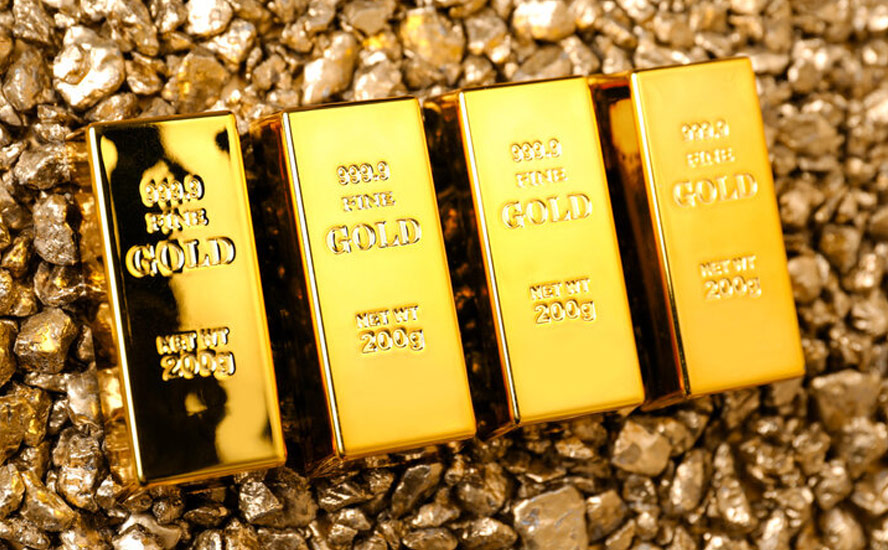
According to data compiled by the World Gold Council (WGC), global official institutions registered a staggering 289 tonnes of net gold purchases in Q2 2026. This marks the single largest second quarter on record. It follows a heavily revised net total of 57 tonnes in Q1 2026, where large-scale, country-specific liquidity sales from Turkey and Russia temporarily masked robust, underlying institutional demand.
Sovereign Crisis Insurance
Rather than tracking standard inflation data, Gold has re-priced as a direct bet against the stability of Western central bank governance.
Gold reached an all-time nominal high of $5,608.35 per ounce in January 2026. While it has consolidated near $4,138 ahead of critical central bank guidance, it remains structurally elevated compared to previous years.
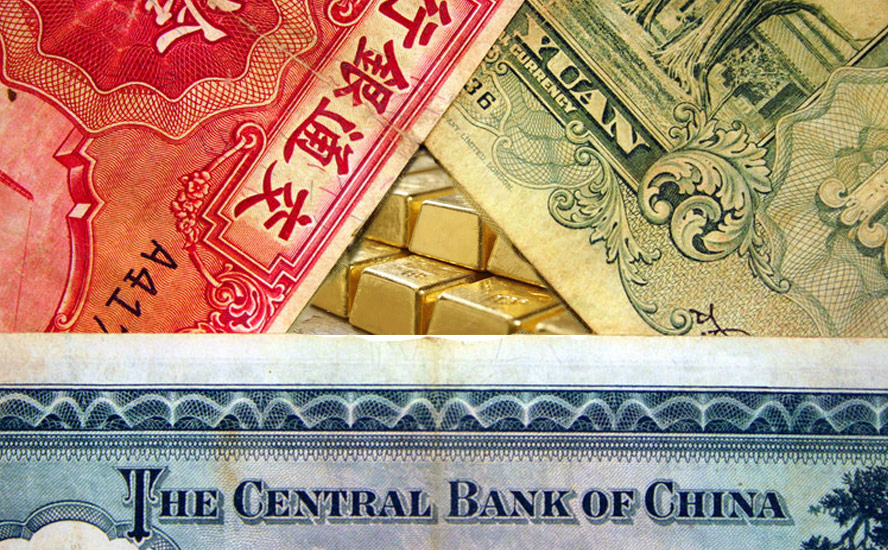
Emerging market central banks (like the PBoC) are aggressively substituting U.S. Treasuries and Euros for gold. This creates a permanent floor under the market, driven by a structural need to dodge sanctionable and devaluing Western paper liabilities.
In the immediate short term, when France or the Eurozone fractures, the U.S. dollar spikes on relative safe-haven demand. Because gold is priced in dollars, this creates localized downward corrections in paper futures, presenting a stark divergence between short-term spot volatility and long-term accumulation trends.
Trusting Gold Over Foreign Debt
Sovereign accumulation patterns highlight an underlying change in the psychology of global reserve managers. As Deutsche Bundesbank Chief Joachim Nagel recently noted at the 2026 London Bullion Market Association (LBMA) conference, gold’s share of world central bank reserves has effectively jumped from 14% in 2023 to nearly 25% today.
Central banks are treating gold as an irreplaceable shield against transatlantic vulnerabilities for very specific reasons:

The WGC’s 2026 Central Bank Survey reinforces this sentiment: 89% of reserve managers expect global gold holdings to continue climbing over the next 12 months, while a record 45% plan to actively expand their own bullion stockpiles. Concurrently, 74% of central banks explicitly forecast that the U.S. dollar’s dominant share of global reserves will contract over the next five years
A tight group of familiar sovereign participants pursuing explicit, multi-year asset-diversification mandates dominates recent accumulation:
The Western Frontrunner
- Leading global net accumulation, Poland added 82 to 98 tonnes year-to-date through August 2026.
- The Narodowy Bank Polski has aggressively scaled total reserves to 648 tonnes, steadily pushing toward an explicit domestic target of 700 tonnes.
The Uninterrupted Accumulator
- The People’s Bank of China (PBoC) expanded its gold reserves by 740,000 ounces (~21 tonnes) in September 2026. It added 20 tonnes in August and 10 tonnes in May.
- September marked China’s 23rd consecutive month of reported accumulation, pushing its official disclosed gold reserves to an all-time high of 2,366 tonnes.
Both central banks consistently alternate between mining domestic supply and stacking reserves. In mid-2026, Uzbekistan and Kazakhstan logged regular monthly net additions averaging 7 to 9 tonnes respectively.
Hard assets are transforming from tactical hedges into core structural anchors.

Legal Notice / Disclaimer
Ahead of the Herd newsletter, aheadoftheherd.com, hereafter known as AOTH.Please read the entire Disclaimer carefully before you use this website or read the newsletter. If you do not agree to all the AOTH/Richard Mills Disclaimer, do not access/read this website/newsletter/article, or any of its pages. By reading/using this AOTH/Richard Mills website/newsletter/article, and whether you actually read this Disclaimer, you are deemed to have accepted it.