 RSS Subscribe
Orestone advances exploration at Tom East and Kelly gold zones on Francisca Gold-Silver Project, Argentina – Richard Mills

2026.07.22
Orestone (TSXV:ORS) reported this week that follow-up exploration is underway at the recently discovered Tom East and the Kelly gold zones located along the Francisca Gold Trend. Current work is focused on expanding the mineralized footprint and defining high-priority drill targets ahead of the company’s drill program.
Orestone to drill Francisca Gold-Silver Project, Argentina
Oxide gold stockwork mineralized trend
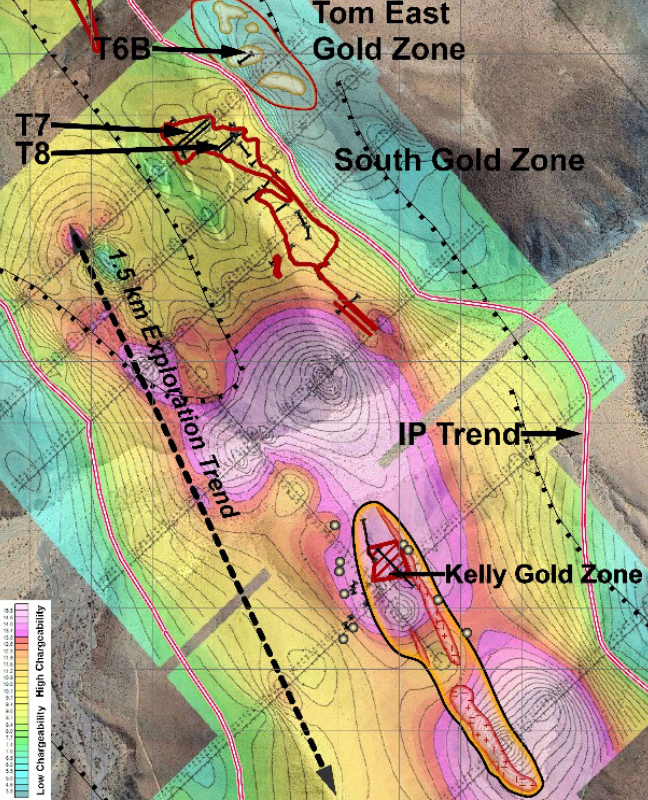
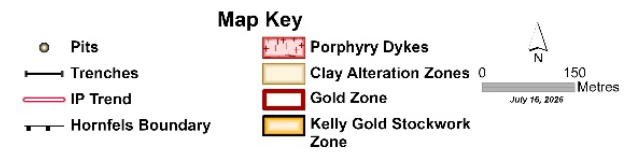
The Francisca Gold Trend now covers a northwest strike length of 1.5 km, where an oxide gold-silver system can be observed at surface outcropping in numerous areas: North Gold Zone, South Gold Zone, Kelly Gold Zone and the Tom East Gold Zone (stockwork, vein, breccia and epithermal vein systems).
The outcropping zones are within a 500- to 1000-meter-wide zone of strongly hornfels altered sediments and further defined by a 1,700-meter-long by 500-700-meter-wide induced polarization (IP) chargeability anomaly that appears to be related to gold-silver mineralization.
Several large, strong IP chargeability anomalies indicate the potential for a larger, buried sulfide mineralized gold porphyry. The oxide gold quartz limonite stock-work trend is associated with quartz feldspar porphyry intrusive dikes and intense sericite clay alteration along a NW-trending fault system.
Francesca Gold Trend
Gold-Silver Zones and IP Anomalies
Tom East gold discovery
During the recent Phase I exploration program, hand trench sampling to a depth of 1.3 meters yielded 4.45 g/t gold over 21 meters in Trench 6B in soft, clay-altered colluvium mixed with chalcedonic quartz.
To further define this highly prospective target, Orestone has initiated a detailed soil sampling program covering a 200m by 200m grid. Sampling will be carried out in half-meter deep pits on a 20m by 20m grid, providing the detailed geological information required to support drill targeting.
The Tom East discovery lies approximately 120 meters northeast of the South Gold Zone. It is thought to be a potential epithermal vein system flanking the Francisca porphyry localized along a parallel NW-trending structure lying just east of the Francisca IP chargeability high.
Kelly Gold Zone
Additional mapping and sampling is also being undertaken at the Kelly Gold Zone located 250 meters along strike of the South Gold Zone and is thought to be an extension of it. Reconnaissance geological mapping and a widely spaced rock chip sampling program has defined an east-west-trending quartz-limonite vein stockwork zone within strongly sericite altered hornfels sediments over a width of 50 meters grading 0.37 g/t gold and 2.15 g/t silver.
The Kelly Gold Zone is open to the north, south and west.
The stockwork system is associated with northwest-trending silicified and sericite altered porphyry dikes that have been mapped over a 500-meter strike length. The mineralized zone is underlain by a 600-metre-wide induced polarization (IP) chargeability anomaly.
“Exploration at the Francisca Gold-Silver Project continues to demonstrate the scale and growth potential of this emerging mineralized system,” Orestone CEO David Hottman stated in the July 20 news release. “The Tom East discovery, highlighted by trench results of 4.45 g/t gold over 21 metres, reinforces our belief that Francisca hosts a robust and extensive gold system extending along a 1.5-kilometre trend. By integrating modern geological mapping, geochemistry and geophysics, we are efficiently identifying high-quality drill targets while maintaining a disciplined, low-cost exploration strategy. Francisca and our other projects remain well suited for year-round exploration.”
AOTH analysis
In a phone call on Tuesday, July 21, I asked Hottman why there are so many types of mineralization at Francisca: stockwork, vein, breccia and epithermal vein systems.
His answer is based on Orestone’s belief that they likely all stem from a porphyry.
“We do know that within not too deep of a level that there have been intersections of porphyry in drill holes. So, we have different types of mineralization that come from the same boiling magma chamber.”
Orestone has yet to develop a geological model for what is driving the mineralization. But Hottman said it’s important not to get too hung up on theories and remember that this is early-state exploration. Quite simply, the company is looking for precious metals.
“Frankly if it’s got gold and silver in it, it’s good rock. If it doesn’t, it’s not good rock.”
Truer words cannot be spoken regarding first-pass exploration.
Orestone is scaling up the Francisca Gold-Silver Project through mapping and sampling.
The Francisca Gold Trend now covers a northwest strike length of 1.5 km, where an oxide gold-silver system can be observed at surface outcropping in numerous areas.
Reconnaissance mapping and sampling has identified two new targets: the Kelly Gold Zone and the Tom East Gold Zone.
The Kelly gold system has defined three east-west oriented, mineralized panels of vein stockwork with average grades of 0.24 g/t gold from seven samples over 20 meters; 0.41 g/t gold over 40m from 17 samples; and 0.39 g/t gold over 20m from seven samples.
It is thought that the Tom East Gold Zone is a potential epithermal vein system flanking the Francisca porphyry localized along a parallel NW-trending structure lying just east of the Francisca IP chargeability high.
In a little over a year Orestone has gone from raising money to target an oxide gold deposit mineable by open pit methods and amenable to heap leach gold recovery to an initial expansion of their Francisca Gold-Silver Project, the completion of a Phase I chip sampling and trenching program, the acquisition of the Francisca II concession and the purchase of historical geophysical survey data over the current and new land positions.
An amazing amount of work, and success, done all while conserving the treasury and avoiding unnecessary share holder dilution.
“We’ve got a tiger by the tail, Francisca represents a multi-million-ounce opportunity for an open-pit gold project,” says Hottman. But he also added they have porphyry dikes that are exposed to surface and there is a big IP anomaly that indicates a larger porphyry target deeper.
After all Phase I assays results are received and analyzed, Orestone plans to drill-test the gold/ silver oxide zone and the porphyry target during a Phase 2 drill program that is slated to begin shortly.
The first round of drilling will be around 1,300 meters and is expected to cost approximately CAD$700,000.
Orestone Mining Corp.
TSXV:ORS, OTC Pink:ORESF, FSE:O2R2
2026.07.21 Share Price: Cdn$0.085
Shares Outstanding: 107.3m
Market Cap: Cdn$9.1m
ORS website
Richard (Rick) Mills
aheadoftheherd.com

Subscribe to AOTH’s free newsletter
Richard owns shares of Orestone Mining Corp. )TSXV:ORS).ORS is a paid advertiser on his site aheadoftheherd.com
This article is issued on behalf of ORS.
Legal Notice / Disclaimer
Ahead of the Herd newsletter, aheadoftheherd.com, hereafter known as AOTH.Please read the entire Disclaimer carefully before you use this website or read the newsletter. If you do not agree to all the AOTH/Richard Mills Disclaimer, do not access/read this website/newsletter/article, or any of its pages. By reading/using this AOTH/Richard Mills website/newsletter/article, and whether you actually read this Disclaimer, you are deemed to have accepted it.