 RSS Subscribe
Gold majors returning record cash instead of building new mines – AOTH
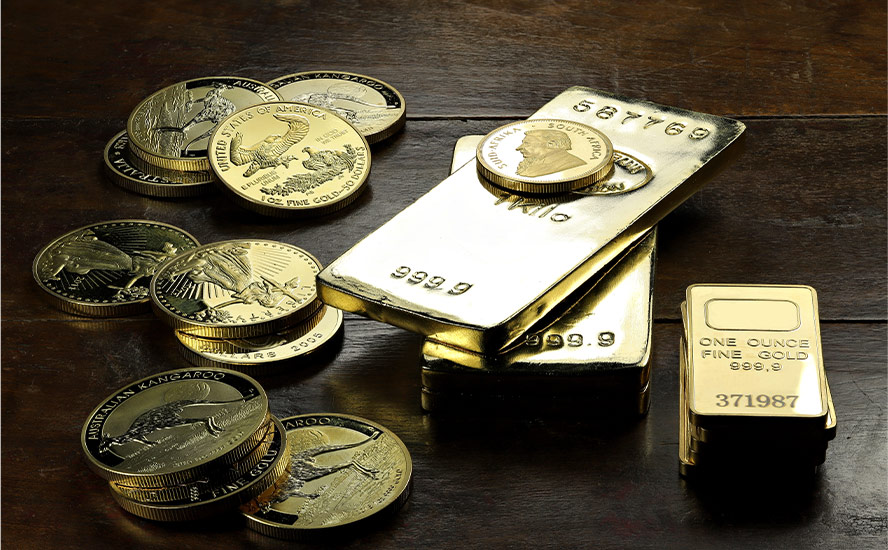
The gold sector is currently experiencing a historic paradox. Despite gold prices climbing past $4,000 per ounce, gold majors are pulling back on building new “greenfield” mines. Instead, companies are funneling their unprecedented profits back into shareholder dividends, asset consolidation and record stock buybacks.
This massive wave of structural capital discipline marks a permanent shift for an industry notorious for overspending during previous bull markets.
Rather than allocating multi-billion dollar budgets toward high-risk, 10-to-15-year exploration and construction cycles, senior operators have drastically flattened their capital expenditures to hand profits back to investors.
Three examples illustrate the trend.
Barrick Mining (NYSE:B) returned an astonishing $1.50 billion to shareholders in a single recent quarter — a 242% spike year-over-year — simultaneously lowering its overall capex outlook.
Kinross Gold (NYSE:KGC) distributed over $600 million in the first half of the year. Fueled by a massive generation of free cash flow, Kinross has absorbed roughly $1.1 billion of its own stock since early 2025, effectively shrinking its outstanding share count by 4%.
Agnico Eagle Mines (NYSE:AEM) generated a record quarterly free cash flow of $1.335 billion on the back of historic realized gold pricing. It translated this into $625 million in total shareholder returns for the quarter via aggressive $400 million buybacks and an elevated $0.45 dividend payout.
Why majors are resisting the shovel
Securing permits for a new mine has become a bottleneck. Permitted deposits within politically stable regions are rare, turning existing properties into prized, often high-value assets.
Rather than breaking new ground, operators find it safer and more cost-effective to restart or expand older operations. In regions like northern Ontario, high prices have made previously bypassed, lower-grade deposits economically viable.
Persistent supply chain disruptions and geopolitical conflicts continue to squeeze operational margins via labor, equipment and fuel inflation. This makes the upfront costs of building new mining infrastructure, such as processing mills, prohibitive.
Building a processing plant is the single largest discrete cost in bringing a small gold deposit into production, and it is also the longest pole in the schedule. It needs capital before revenue exists, permits of its own, a power solution, a tailings facility and a workforce. For a developer holding a few hundred thousand ounces, the plant can cost more than the deposit is worth at a conservative price deck, which is the reason so many modest deposits in good districts have never been mined.
– GlobeNewswire
Few new mines being discovered
Fewer major gold mines are being discovered because the easiest-to-find deposits near the surface have already been located and exploring deeper underground or in remote areas has become much more difficult and expensive.
Gold mines have been mining at a higher grade than the reserve grade for much of the last decade. Purposely mining areas of the orebody with the highest-grade material is known as high grading.
Mining the high-grade accessible areas of their deposits was one way for operations to bolster margins when facing low metal prices.
Small wonder the #1 risk identified for mining companies over 2026 is rising operational complexity which is being driven by more complex ore bodies, much deeper mines and significantly declined ore grades.
And mining capital is increasingly favoring brownfield expansions, which offer 50% to 70% faster production timelines compared to new greenfield projects.
The role of juniors
In a world of resource depletion, it falls to gold exploration companies to fill the gap with new deposits that can deliver the kind of production required to meet gold demand, which is currently out-running supply.
Our gold mining industry is in trouble — Richard Mills
Consider: in the 1970s, ‘80s and ‘90s, the gold industry found at least one +50Moz gold deposit and 10 +30Moz deposits. Since 2000, no deposits of this size have been found, and very few 15Moz deposits.
Here’s Ian Telfer, former Goldcorp chairman, and gold industry expert, giving his argument for peak gold, back in 2018:
“In my life, gold produced from mines has gone up pretty steadily for 40 years. Well, either this year it starts to go down, or next year it starts to go down, or it’s already going down… We’re right at peak gold here.”
To get world gold mine production back to the point where it can meet the required annual demand without recycling jewelry, the industry has two choices: it can mine more gold, or it can discover new gold.
Squeezing more gold out of existing deposits has its challenges. Reserves are getting depleted, and mines are having production problems, including lower grades, labor disruptions, protests, etc.
But finding and exploiting new gold deposits is even harder, more expensive and riskier.
Few gold exploration projects have the economics, scale, jurisdiction and money-raising capabilities backing them, to become mines. Those with the staying power to make it through the various development stages, from initial discovery to drilling to resource definition to first production, will be the belle of the ball, so to speak, with many major gold miners cueing up for the first dance.
Conclusion
This capital allocation pivot, from building new mines to returning cash to shareholders, is reshaping how market participants view precious metal equities. Because gold bullion (physical gold) does not offer a yield, major gold miners have historically been treated purely as operational leverage plays. Today, gold majors function as high-liquidity, defensive dividend vehicles.
(The two gold miners with the best dividend yields currently are Lundin Gold (TSX:LUG) @ 6.5%, and AngloGold Ashanti (NYSE:AU) @ 4.5%.)
However, flatlining development means global gold production is hitting a supply wall as reserves deplete faster than they are replaced. This structural supply squeeze provides a strong macro tailwind to physical gold prices, while aggressively boosting the asset values of exploration-stage companies (“the juniors”), especially those with fully permitted properties that can offer near-term production.

Legal Notice / Disclaimer
Ahead of the Herd newsletter, aheadoftheherd.com, hereafter known as AOTH.Please read the entire Disclaimer carefully before you use this website or read the newsletter. If you do not agree to all the AOTH/Richard Mills Disclaimer, do not access/read this website/newsletter/article, or any of its pages. By reading/using this AOTH/Richard Mills website/newsletter/article, and whether you actually read this Disclaimer, you are deemed to have accepted it.