 RSS Subscribe
Scientists Thought Ravens Followed Wolves for Food. They Were Wrong. Ravens Predict Them
By Tibi Puiu – ZME Science
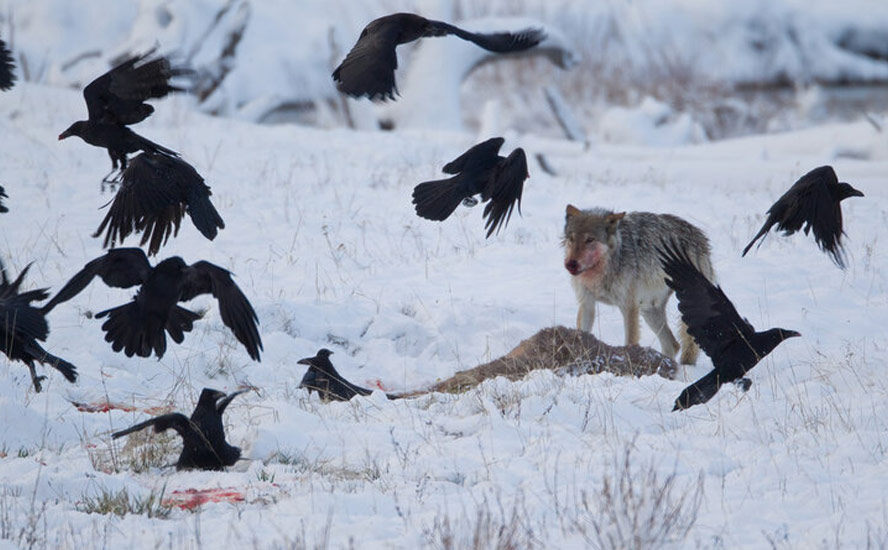
Whenever a wolf makes a successful kill, it seems like a flock of ravens is mere moments away. Biologists assumed the explanation was simple and the birds simply followed wolves constantly and waited for a meal.
A new study suggests that is only a small part of the story. By tracking ravens, wolves, and cougars across Yellowstone for two and a half years, researchers found that ravens rarely followed wolves over long distances. Instead, the birds returned again and again to areas where wolf kills were more likely to happen.
The findings suggest that ravens use their particularly remarkable memory and navigation to search for carrion across vast landscapes. Rather than acting as passive followers of predators, they appear to build a mental map of where predation is most likely to happen, and subsequently provide them with food.
Legal Notice / Disclaimer
Ahead of the Herd newsletter, aheadoftheherd.com, hereafter known as AOTH.Please read the entire Disclaimer carefully before you use this website or read the newsletter. If you do not agree to all the AOTH/Richard Mills Disclaimer, do not access/read this website/newsletter/article, or any of its pages. By reading/using this AOTH/Richard Mills website/newsletter/article, and whether you actually read this Disclaimer, you are deemed to have accepted it.