 RSS Subscribe
Western investors hoover up $18 billion in gold ETFs; Asians prefer bars and coins – Richard Mills

2026.09.11
Investors looking to avoid the hassles and drawbacks of owning physical gold often buy shares in exchange-traded funds (ETF) that replicate the price of gold.
ETFs can provide investors with a more liquid and low-cost entry into the gold market. SPDR Gold Shares (GLD), for instance, one of the oldest ETFs of its kind, can be bought or sold like any other stock. Each share of GLD represents one-tenth of an ounce of gold.
In 2020, gold-backed funds like GLD accounted for two-thirds of global net inflows for investment demand in the precious metal. During that year, gold ETF inflows reached $47.5 billion, almost double the previous record inflow set in 2016.
According to a World Gold Council chart, global gold ETF flows hit a four-year high in 2025 of 444.7 tonnes after net outflows in 2022, 2023 and 2024.

On a monthly basis, investment in gold ETFs fell from 120.5 tonnes in January 2026 to 23.5 tonnes in July, before rebounding in August.
Gold ETF inflows fell in the spring and early summer largely due to profit-taking after January’s record high, geopolitical shocks and margin liquidation, according to Morningstar.

A record August
This week the World Gold Council reported that investment demand in gold ETFs saw its second-largest inflows on record in August. Monthly data found the $18-billion total was led by North American and European-listed funds, which attracted $7.7 billion and $7.9 billion in capital, respectively. For North American ETFs it is the third-largest monthly inflow on record. For European ETFs it is the largest on record.
Asian gold ETFs attracted just $2 billion in capital, the most since February, with China dominating regional inflows “as stabilising and rebounding local gold prices attracted investor interest and kept the market on pace to surpass FY25’s record year of inflows. Continued declines in local government bond yields and a range-bound equity market likely provided additional support,” WGC analysts said in the report.
“Y-t-d, global gold ETF inflows totalled US$29bn, equivalent to a 160t increase in holdings. Asian-listed funds remained the largest contributor to global inflows over the period, followed by Europe,” they noted. “Rising long-term yields and the US Treasury’s 19 August intervention heightened concerns around fiscal sustainability and dominance, while reviving fears of potential dollar debasement. As gold rallied and broke above key technical levels, price momentum likely attracted additional tactical and institutional demand.”
The People’s Bank of China added the most gold to its reserves since 2023, accelerating purchases in August even as bullion prices surged. Holdings rose by 650,000 ounces, thus extending the PBOC’s buying streak to 22 months, Bloomberg reported on Sept. 7.
Other highlights from the WGC monthly report:
- The rallying gold price and strong inflows pushed global gold ETFs’ total AUM [assets under management] 16% higher m/m to US$615bn, while holdings rose 121t to a record high of 4,189t.
- Gold market activity rebounded in August, with average daily trading volumes rising 21% m/m across all major market segments.


West vs East
The global gold market is experiencing a massive geographic shift as physical bullion flows steadily out of Western financial centers like New York and London and into Eastern nations like China and India, and the Middle East.
This is not just a change on paper. It involves thousands of tonnes of heavy gold bars physically leaving Western vaults and flying across the globe to Eastern buyers.

In the East, gold is viewed as the ultimate tangible store of wealth. When Western investors sell and cause the price of gold to dip, Eastern buyers view it as a massive discount sale and aggressively buy up the actual physical metal.
The relentless movement of physical gold from Western vaults to Eastern treasuries is causing a major shift in the global financial system.
For nearly a century, Western institutional traders in New York and London set the price of gold based on US interest rates and the value of the US dollar. Today, that traditional playbook is breaking down.
The end result? A permanent loss of Western control over the world’s ultimate safe-haven asset.
Eastern nations are building a parallel financial system that operates entirely outside the reach of Western jurisdiction — physical gold stored inside domestic Eastern vaults is an asset that cannot be digitally hacked, frozen, or seized by Western governments.
Historically, Western institutions depress gold prices by selling massive amounts of “paper gold” (futures contracts and ETFs) without ever moving physical metal. Now, when the West tries to heavily short paper gold, Eastern buyers gladly step in and demand physical delivery of the actual bars.
The global safety net is shifting to physical possession and gold is actively replacing the US dollar as a core reserve asset among emerging markets. As fewer central banks buy US Treasury bonds, the United States faces a shrinking global audience to purchase its national debt, structurally weakening Western fiat currencies over time.
The East has reclaimed gold as the ultimate foundation of true economic power and sovereignty. When is the West going to realize that gold can no longer be treated as just another speculative financial asset to trade when interest rates change?
Control of the gold market is moving — Richard Mills
Conclusion
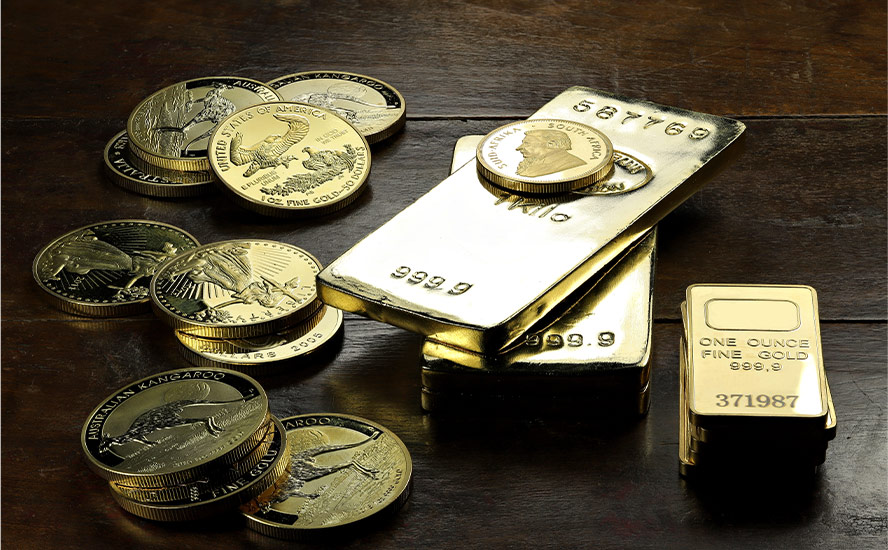
Westerns still have not learned their lesson. We buy paper gold, Asians buy 400-oz gold bars.
In August 2026, The Perth Mint sold 23,932 troy ounces of gold in minted product form, representing coin and small bar retail demand. The 23,932 ounces sold in August hit a three-month low for the refiner, reflecting choppy physical buying as prices surged.
Asian retail and institutional investors drove regional bar and coin demand to record highs, with Asian investors pushing global Q1 bar and coin consumption to 474 tonnes (up 42% year-over-year).
There are 15,239,454 troy ounces of gold in 474 metric tonnes. The live spot price of gold is $4,328.70 USD per troy ounce. If you multiply today’s price by the 15,239,454 troy ounces that physical gold is worth US$65,967,024,530.
The fact that inflows of gold-backed ETFs have stormed higher is obviously good news for the gold market, as it signals an increase in gold demand that supports the price, but by buying ETFs rather than bullion Western investors have learned nothing.
At AOTH we believe in gold’s protection against catastrophic events such as wars or currency collapse.
During the Vietnam War, the price of gold increased by more than 50%. Both the Soviet invasion of Afghanistan in 1979 and Russia’s 2022 invasion of Ukraine saw substantial increases in gold’s average spot price. During the Gulf War, gold increased by more than 20%. During the Iraq War, gold increased by more than 50%.
In the West we buy and sell paper gold (and silver) based on where we think interest rates are going. The East takes advantage of Western selling and gold price weakness by picking up cheaper bullion.
At AOTH we buy physical gold and junior resource stocks because the greatest leverage to rising metal prices are the juniors.
We believe everybody should have some physical gold exposure at home, not stored in a bank where it could be confiscated in a crisis.
Gold ETFs are ok for making short-term profits but true wealth and true safety can only be realized by accumulating physical bullion.
Richard (Rick) Mills
aheadoftheherd.com

Legal Notice / Disclaimer
Ahead of the Herd newsletter, aheadoftheherd.com, hereafter known as AOTH.Please read the entire Disclaimer carefully before you use this website or read the newsletter. If you do not agree to all the AOTH/Richard Mills Disclaimer, do not access/read this website/newsletter/article, or any of its pages. By reading/using this AOTH/Richard Mills website/newsletter/article, and whether you actually read this Disclaimer, you are deemed to have accepted it.