 RSS Subscribe
Substantial shortfall of up to 10 million metric tons of copper is projected by 2040 – Richard Mills
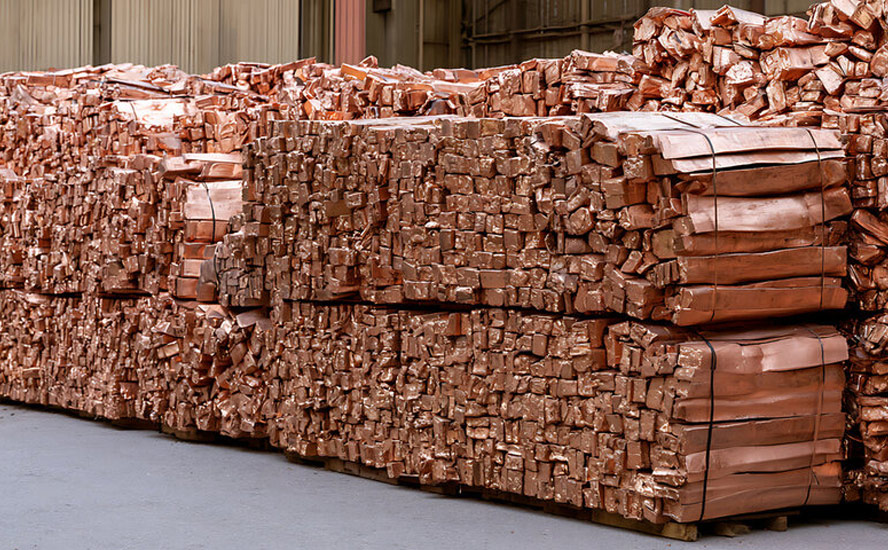
Copper futures jumped above $5.50 per pound on Friday, recovering from eleven-month lows as global technology stocks advanced for a second consecutive session amid improving sentiment in the artificial intelligence sector. The metal had come under considerable selling pressure in recent weeks due to uncertainty surrounding AI-related investments, given copper’s importance in data center construction and power infrastructure. Recently proposed US tariffs targeting major trading partners also proved less disruptive than initially feared, as the additional duties are not expected to be imposed on top of those introduced in July and are unlikely to take effect until February or March. Meanwhile, markets continue to factor in further monetary tightening, with the Federal Reserve widely expected to deliver interest rate increases in both December and January. (Trading Economics)
Copper climbed to a January 2026 pinnacle, briefly exceeding $6.57 per pound. The base metal on Sept. 10 reached a fresh record of $6.74.
Friday’s bounce was a continuation of bullish sentiment on Thursday, as equity markets recovered from a correction due mostly to a selloff in tech stocks. Mining.com said copper benefited from “bargain hunters betting on healthier demand prospects,” with benchmark copper on the London Metal Exchange up 1.9% to $11,867 a tonne ($5.38/lb) as of 1700 GMT.
“The metal may have become too closely tied to the AI trade, prompting some investors to reassess that link,” said Benchmark Mineral Intelligence analyst Albert Mackenzie.
“Recent concerns about AI spending have centred on data-centre investment, while a stronger dollar and a weaker economic outlook have added pressure.”
Still, the publication noted the copper market is tight after months of shipments into US warehouses have reduced availability in traditional consuming hubs.
“Backwardation in copper remains elevated, pointing to persistent near-term tightness,” said Neil Welsh, head of metals at broker Britannia Global Markets.
Momentum for copper is being supported by a tightening of global supply, specifically due to a reduction in Chile’s production forecasts alongside elevated import premiums in China.
Indeed, copper import premiums into China such as the Yangshan copper premium have climbed to record highs exceeding $200 a ton.
One reason for the high China premiums is a drop in copper imports.
Associated Press reported on Oct. 29 that the operator of Mongolia’s massive copper-gold-silver mine — Oyu Tolgoi — has lessened its export of copper concentrate to China by about 70% in the past two weeks due to border restrictions.
Specifically, the number of truck convoys moving concentrate across the Chinese border has fallen from the usual 12-13 to just four.
The slowdown relates to a truck driver facial recognition system introduced by Chinese authorities in August. The new system, which has affected border processing capacity, was supposed to be completed by late September but may continue until the end of December.
Meanwhile, copper supplies in China are tightening.
BMO researchers pointed to record contract settlements for cathode premiums alongside the surge in Yangshan prices, suggesting buyers are paying increasingly high premiums to secure available material even as speculative investors remain cautious.
Chile vs DRC
In Chile, supply constraints continue to dog the world’s biggest copper producer, with output falling 15% year on year in September — and sinking to its lowest quarterly level in at least two decades in the three months through September.
According to Bloomberg, State copper commission Cochilco cut its 2027 production forecast to 5.08 million metric tons, implying a 3% rebound. It also slashed this year’s estimate to 4.94 million tons from 5.27 million amid accidents and wild weather, representing an 8.4% annual drop.
Some of Chile’s biggest copper operations have failed to meet targets. Cochilco reports that mines run by Codelco and BHP account for 77% of the net decline. The state copper commission blames lower ore grades, maintenance and interruptions that have hurt processing and copper recoveries.
The “copper” lining is higher prices. Cochilco raised its forecasts from $5.95 a pound to $6.18 for 2026, and from $5.10 in 2027 to $5.95.
Chile’s production losses could be Congo’s gains. Bloomberg reports The Democratic Republic of Congo is challenging Chile’s dominance as the world’s largest copper producer after quarterly exports surpassed 1 million tonnes for the first time.
Congolese copper shipments rose 8% year-on-year to 2.7 million tonnes in the first nine months of 2026, according to government data. Chile exported 1.28 million tonnes in the third quarter, putting the South American nation’s lead within striking distance.
High-grade deposits and a wave of investment have more than tripled Congo’s output over the past decade, transforming the Central African nation into the world’s second-largest producer of the metal…
Two large Congolese mines owned by China’s CMOC Group (HKEX: 3993) accounted for almost 550,000 tonnes of exports through September, while Glencore’s (LON: GLEN) operations and the Sicomines complex each contributed 212,000 tonnes…
Kamoa-Kakula, co-owned by Canada’s Ivanhoe Mines (TSX: IVN) and Zijin Mining Group (HKEX: 2899), exported 187,000 tonnes.
(Congo is not a jurisdiction you want replacing Chile. As the world’s second-largest copper supplier and primary cobalt producer, the DRC just shocked the market by implementing an immediate ban on copper and cobalt concentrate exports. They are targeting massive multi-nationals to force immediate investments into local smelting — Rick)
Copper deficit persists
Several countries have designated copper as a critical mineral to support their economies, defense needs and clean energy transitions.
Copper’s criticality is causing governments to stockpile it to prevent shortages. According to Jose Torres, chief economist at Interactive Brokers, copper’s global strategic importance means prices will remain elevated.
“Broadly, it has to do with limited supply as nations want to stockpile the cyclical metal to bolster sovereign AI prospects,” he told Business Insider. “Governments are afraid that without enough copper, their economies won’t remain competitive in a world where advanced technology is increasingly adopted.”
Global mined copper output is set to fall in 2026 for the first time since 2017. Key supply constraints include declining ore grades, mine disruptions, and slow project pipelines.
Copper production to decrease for first time in 9 years — Richard Mills
Demand drivers include AI data centers, which rely heavily on copper for electrical conductivity, power distribution and heat management; the energy transition characterized by the rapid adoption of electric vehicles and renewable energy grid expansions requiring intensive copper deployment; and global defense spending adding further pressure to raw material supply chains.
While the copper market was roughly balanced in 2025, meaning that refined production met consumption, mine supply was severely disrupted and will likely create a deficit in 2026, states the International Institute for Strategic Studies (IISS).
The global copper market is approaching a key inflection point as disruptions to mine supply, a lack of major discoveries and rising demand point to the market’s first structural shortage since 2009.
According to S&P Global, without new mines or technological advancements, copper production will peak in 2030. A “substantial shortfall” of up to 10 million metric tons is projected by 2040 as demand surges 50% to 42 million tonnes.
A total of $332 billion of investment is needed in new copper mines to avoid a looming copper deficit that could slow electrification, BloombergNEF said in its Transition Metals Outlook 2026 on Oct. 20.
However, new supply new supply is harder to deliver than higher prices alone can quickly solve, states a recent analysis:
Three overlapping constraints make new copper supply difficult to bring on: the ore coming out of existing mines is getting progressively lower grade, the process of discovering and developing new deposits takes longer than it once did, and the pipeline of projects ready to enter construction is thinner than the demand trajectory requires.
Conclusion
The copper market faces a structural supply problem. EVs, renewable energy, electrical grid upgrades, data centers and defense all require copper in quantities that dwarf what earlier industrial eras consumed.
This all boils down to everything driving the world’s economies needs more copper, in the face of persistent constraints on mine supply.
Why we’re running out of copper — Richard Mills
Among the supply constraints identified by a report from S&P Global Market Intelligence and S&P Global Energy are declining ore grades, rising energy and labor costs, complex extraction conditions and lengthy permitting times. The average timeline from discovery to production spans 17 years.
Supply chain concentration adds another layer of risk, says S&P Global, with just six countries responsible for around two-thirds of mine production. China is both a miner and a refiner, with the country accounting for approximately 40% of global smelting capacity and 66% of copper concentrate imports. This makes the global supply vulnerable to supply shocks and trade barriers, the report said.
Wood Mackenzie notes that to meet forecasted copper demand, the industry will need to bring new mines online at roughly twice the rate of a decade ago. The problem is that greenfield mines/ new discoveries are failing to keep pace.
It explains that Western miners remain cautious about committing capital to new mine supply, even as prices rise.
Why copper incentive pricing and increasing M&A matters to owners of BC copper and gold projects
One bright spot is British Columbia, where most of Canada’s copper is produced. Premier-elect Lorne Doerksen has made mining a priority, mandating his new Cabinet to “supercharge” the sector and making a campaign promise to “make B.C. the fastest place in North America to permit a mine and LNG facility.”
Priorities for the ministry for energy, mines and petroleum resources under the new Conservative government include accelerating the mine-permitting process to “establish fixed approval timelines and advance shovel-ready projects,” according to Doerksen’s mandate letter, and “strengthen mining competitiveness” through exploration tax credits and partnerships in exploration, states the Vancouver Sun.
Richard (Rick) Mills
aheadoftheherd.com

Legal Notice / Disclaimer
Ahead of the Herd newsletter, aheadoftheherd.com, hereafter known as AOTH.Please read the entire Disclaimer carefully before you use this website or read the newsletter. If you do not agree to all the AOTH/Richard Mills Disclaimer, do not access/read this website/newsletter/article, or any of its pages. By reading/using this AOTH/Richard Mills website/newsletter/article, and whether you actually read this Disclaimer, you are deemed to have accepted it.