 RSS Subscribe
China exerts great influence over 70% of global seaborne trade and completely dominates critical minerals supply chains – Richard Mills
2026.07.15
Has Donald Trump stumbled into a “forever war” in the Middle East, from which the US will find it difficult to extract itself? Recent events make this seem more likely.
The US, of course, has been fighting a proxy war in Iran, with regional ally Israel, since Feb. 28. A mid-June ceasefire has been broken and fighting has resumed. The Strait of Hormuz is again blocked.
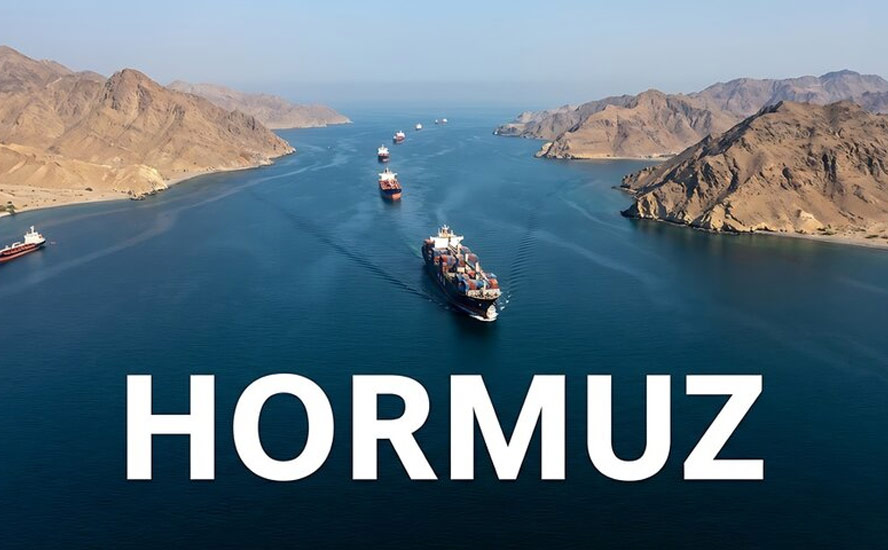
The vital waterway between Iran and Oman is caught in the dispute. Iran’s Revolutionary Guard (IRGC) declared the strait closed until further notice, while the US insists the route remains open and has launched retaliatory strikes against Iranian targets.
Trump said on Monday the United States will impose a 20% toll on cargo through the Strait of Hormuz, declared America the “guardian” of the important shipping route, and said the US will reimpose its blockade of Iranian ports. His administration has rejected Iran’s claims over the strait and its plan to charge ships to pass through it. The 20% toll has since been cancelled and the new plan calls for Middle Eastern countries to invest billions directly into the US.
On Monday, July 13, Yemen’s Iran-backed Houthis targeted Saudi Arabia, hours after the rebels accused the kingdom of attacking the Sanaa airport, in what is seen as the biggest escalation between the two sides in years, that threatens to upend a frozen conflict amid a volatile situation in the Middle East. (Daily Sabah)
The Saudi-backed Yemeni government claimed responsibility for the attack on the Houthi-held airport, saying it wanted to prevent an Iranian plane from landing…
The latest escalation threatens to unravel a truce that has been holding since 2022 despite expiring and comes at a time of heightened tensions as the U.S. and Iran trade attacks impacting the Gulf and traffic in the Strait of Hormuz.
Iran condemned the attack on the airport, with Foreign Ministry spokesperson Esmaeil Baghaei describing it “as a clear violation of international law,” state news agency IRNA reported.
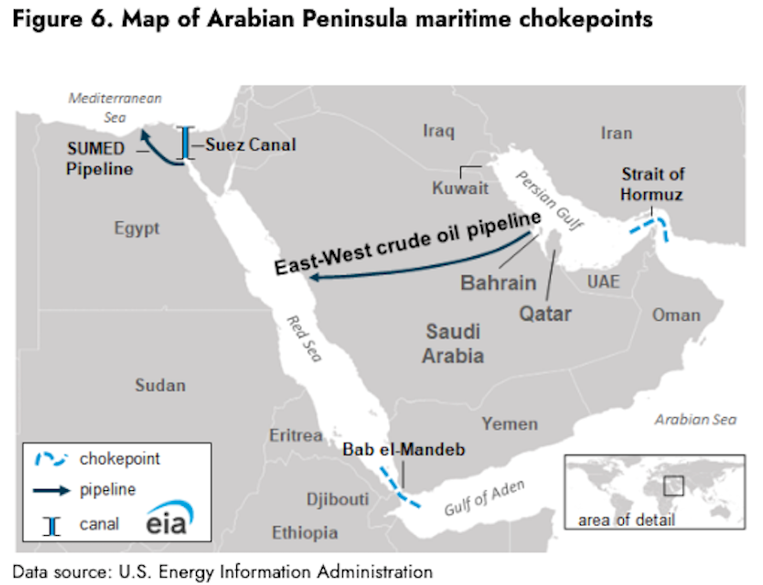
The Houthis launched multiple ballistic missiles targeting Saudi airports in retaliation. While Houthi leadership has issued threats to block the Bab el-Mandeb Strait, they have not yet officially announced its closure.
Escalation timeline:
- Sanaa Airport Strike: Saudi-backed Yemeni government forces struck the runway at Sanaa International Airport to prevent an Iranian aircraft from landing, prompting massive explosions.
- Houthi Retaliation: In response, the Iran-backed Houthi movement vowed retaliation and fired a barrage of missiles toward southern Saudi Arabia, specifically targeting King Khalid Air Base and Abha International Airport. Saudi-led coalition forces stated that air defenses intercepted the missiles.
- Strait Threats: Senior Houthi officials escalated rhetoric, threatening to completely close the Bab al-Mandab Strait as leverage against Riyadh, mirroring closures already seen in the Strait of Hormuz.
False flag?
While the Saudi-backed Yemeni government has claimed responsibility for the attack on the airport, it could also have been done at the behest of another, larger power, i.e., a false flag event.
China could be the country responsible.
The Houthis were always going to come into the war on the side of Iran. The attack on the airport, by the Saudis, is just the excuse needed to get them in.
Saudi Arabia / Pakistan defense pact
The Pakistan Air Force (PAF) is only allowed to operate at the border, and internally in Saudi Arabia for defence purposes, but Pakistan has deployed approximately 8,500 military personnel to Saudi Arabia under a mutual defense pact.
These troops are stationed primarily at the King Abdulaziz Air Base in the Eastern Province and operate both combat and air defense assets entirely.
- Military Equipment Deployed. The contingent is equipped with advanced assets heavily sourced from China and jointly developed with Pakistan.
- Fighter Jets: A full squadron (approx. 16 aircraft) of JF-17 Thunder multirole fighter jets.
- Air Defense Systems: Chinese-manufactured HQ-9 long-range surface-to-air missile systems.
- Unmanned Aerial Vehicles: Two full squadrons of drones.
- Support Aircraft: Various transport and support aircraft assigned to the base.
- Funding: The deployment is fully financed by Saudi Arabia.
- Personnel: All deployed hardware is operated strictly by Pakistani military personnel.
- Additional Forces: Prior to this major deployment, several hundred to a few thousand additional Pakistani service members were already stationed in the Kingdom fulfilling training, advisory and internal security roles.
The current legal and military frameworks account for further deployments under the following parameters:
- The Immediate Pledge: The baseline deployment of 8,000 troops serves as a combat-ready core force, but security officials have confirmed the agreement includes a formal pledge by Islamabad to send additional forces immediately if Saudi Arabia comes under further attack.
- Maximum Cap Under the Pact: Under the terms of the confidential Strategic Mutual Defence Agreement (SMDA) signed in late 2025, the framework provides for the possibility of up to 80,000 total Pakistani troops eventually being deployed to help secure the Kingdom’s borders.
- The “Nuclear Umbrella” Context: If regional hostilities involving Iran or regional proxies spill over heavily into Saudi territory, Pakistan is legally bound to scale up its presence. Pakistani Defense Minister Khawaja Asif hinted that the pact effectively puts Saudi Arabia under Pakistan’s broader deterrent umbrella, which heavily incentivizes Islamabad to reinforce the Kingdom dynamically as threats shift.
Iron brothers
Pakistan and China are deeply and formally aligned, often described by both as “iron brothers.” Their partnership is anchored by the multi-billion dollar China-Pakistan Economic Corridor (CPEC) and extensive military integration, with China supplying approximately 80% of Pakistan’s arms imports.
- Economic Alignment. China is a critical economic lifeline for Pakistan, heavily embedding itself in Pakistan’s infrastructure, technology, and energy sectors. This relationship is primarily driven through CPEC, a flagship component of Beijing’s Belt and Road Initiative, which connects western China to the Arabian Sea through the strategic Gwadar Port. While these megaprojects provide Pakistan with essential development funding, they have also resulted in substantial financial loans and a structural dependency on Chinese investments.
- Military and Strategic Alignment. Defense collaboration is a cornerstone of the alliance, spanning high-level strategic dialogues, joint personnel training, and tri-service military exercises. China is Pakistan’s largest military hardware provider, equipping the Pakistani military with aircraft, submarines, tanks, and missile systems. Both nations also collaborate extensively on joint defense production and aviation technology. According to analyses structural complementarity and a shared, long-standing security concern regarding India heavily drive this close strategic coordination.
Saudi Arabia is allies with Pakistan against Iran, and China is closely aligned with Pakistan due to historical grievances with India.
Muslim Brotherhood
While China has faced international scrutiny for its assimilation and detention campaigns targeting Uyghur Muslims in Xinjiang, Pakistan largely remains silent on these issues in deference to their strategic partnership.
China’s alliance with Pakistan, a strongly supportive member of the Muslim Brotherhood, illustrates that its policies target specific domestic, ethnic-separatist groups rather than Islam as a whole. Obviously the “iron brotherhood” is driven by pragmatism; Pakistan secures China’s economic and regional security interests, while Pakistan benefits from Chinese investment and diplomatic support.
In Pakistan, the primary group with close ideological, historical, and organizational ties to the Muslim Brotherhood is Jamaat-e-Islami Pakistan.
The Muslim Brotherhood (officially Jamāʿat al-Ikhwān al-Muslimīn) is a transnational Sunni Islamist organization founded in Egypt in 1928 by Islamic scholar Hassan al-Banna. Its core goal is to revive the Islamic world by establishing a society and government strictly governed by Islamic law.
(Sharia law is often viewed as incompatible with Western legal and ethical frameworks. The most frequent criticisms center on fundamental conflicts regarding human rights, religious freedom, and equality before the law)
No, Shari’ah Law Is Not Compatible With Western Values
While it started as a religious and social charity movement, it evolved into a powerful political force with autonomous affiliates in over 70 countries. The group operates largely underground, having been heavily suppressed, outlawed, or designated as a terrorist organization by multiple governments (including United States, Egypt, Saudi Arabia, and the UAE) due to its historical ties to political violence and radical ideology.
Hamas: Just one of the many Muslim Brotherhood groups operating in the Middle East.
Saudi Arabia: Does not have a single, state-affiliated Muslim Brotherhood group. The transnational organization is officially classified as a terrorist group in the country.
Jordan: Represented by the Islamic Action Front (IAF), the country’s largest opposition party.
Kuwait: Represented by the Islamic Constitutional Movement (Hadas), which operates legally as a highly organized political bloc in Kuwait’s parliament.
Lebanon: Operates via the Jama’a Islamiyya (Islamic Group), which maintains close coordination with regional factions and was blacklisted by the U.S.
Bahrain: Operates politically through the Al-Minbar Islamic Society, the official political arm of the Brotherhood in the country.
Yemen: Linked to the Al-Islah Party, a powerful political and tribal coalition that has played a major role in Yemen’s civil conflict
Qatar: Provides a safe haven for exiled leadership and heavily amplifies Brotherhood-aligned figures through state media networks.
Turkey: The ruling AK Party (AKP) shares deep ideological roots with the movement, allowing prominent exiled members to run political and media offices from Istanbul
How China gains
How does China benefit from the Houthis entering the war on the side of Iran? Effectively China is moving troops loyal to it into Saudi Arabia – call it what they are, China’s proxies, much like North Korean troops in Russia and Ukraine – into Saudi Arabia. If the war were to escalate, up to 80,000 Pakistani troops could be deployed to the Kingdom under the 2025 Strategic Mutual Defense Agreement signed between Pakistan and Saudi Arabia.
China is steadily expanding its Middle East footprint through energy investments, strategic infrastructure projects (the Belt and Road Initiative), and high-profile diplomatic mediation. By balancing relationships with all regional powers – avoiding direct interference and focusing on economic convergence – Beijing is both positioning itself as a primary alternative to US influence…and protecting it’s investment with military force.
At the same time, the Trump administration desperately wants out of the war in Iran. The war is making Trump very unpopular with Americans, and with oil prices creeping back up since the collapse of the ceasefire, gasoline prices are heading north with only a few months to go before the midterm elections.
Beijing has the opportunity to become a regional peacemaker.
Or China could let the US “fall on its sword” and keep the war going through further Houthi attacks and closing the Bab al-Mandab Strait to shipping. Now the US is fighting a two-front war: one against Iran in the Strait of Hormuz; and a second against the Houthis in the Red Sea.
The US remains embroiled for years, even decades, in a Middle East forever war, expending all their missile and defensive capabilities.
Beijing takes Taiwan
Meanwhile a real opportunity is setting up for Beijing to take Taiwan — its ultimate foreign policy goal. Chips and oil for China.
A direct military attack on Taiwan is out of the question, the risks to the chip foundries are too large to consider.
But Taiwan does not have it’s own energy or food. A blockade, which China has been practicing for a decade will work. In less than 9 months Taiwan will be starved into submission. And there is literally nothing anyone can do, even if the will was there. The physical reality on the ground, sea and air prohibits any resupply or relief invasion held off at great distances. The China navy has an enormous amount of close in shore navel forces and their missile inventory is massive and well spread out to cover any approach made.
Iran conflict strains US missile stockpiles: New report raises concerns over future war readiness
China now has great influence over 70% of world seaborne trade
Approximately 25% of the world’s seaborne oil trade transits through the Strait of Hormuz, with another roughly 11% moving through the Strait of Bab-el-Mandeb, 30-35% of global maritime trade transits the South China Sea over which, to put it mildly, China exerts great influence.
According to the CSIS South China Sea Study, major straits in this region handled over $6 trillion in goods. China claims much of this area via its “nine-dash line,” builds military outposts, and maintains a vast coast guard and maritime militia presence to assert dominance.
The Strait of Hormuz is closed, a precedent for closing the Bab-el-Mandeb Strait has already been set. On June 8, 2026, Iran and its Houthis allies in Yemen declared that Bab-el-Mandeb would be closed to Israeli-linked vessels.
The Houthis proved from 2023 to 2025 that you don’t need a navy to choke a strait. You just need drones, missiles and the willingness to use them. (OneIndia News)
One man, one missile – Richard Mills
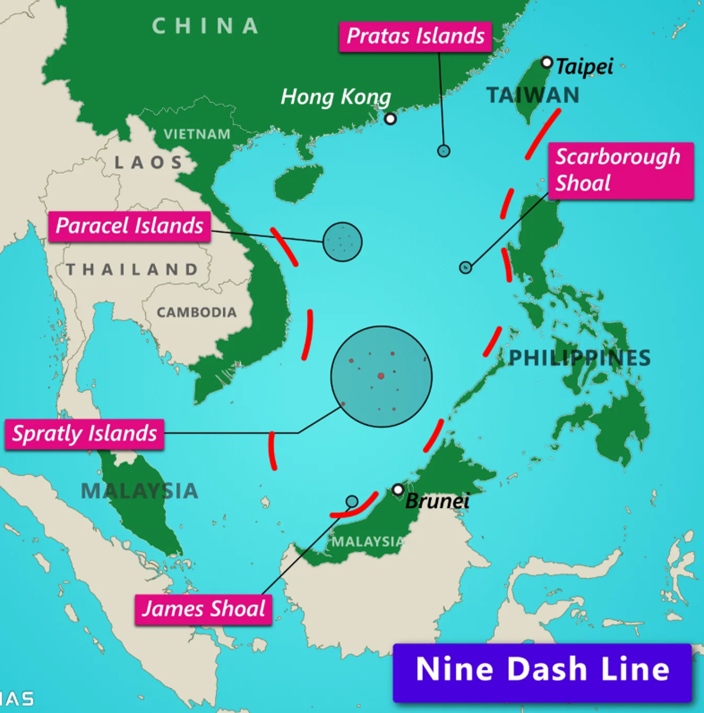
The Nine-Dash Line: This represents Beijing’s expansive claim over approximately 90% of the South China Sea. The U-shaped boundary stretches up to 2,000 kilometers from the Chinese mainland, overlapping with the Exclusive Economic Zones (EEZs) of Vietnam, the Philippines, Malaysia, and Brunei. An international tribunal in 2016 invalidated this claim, though China continues to enforce it.
Primary Trade Routes: Major shipping arteries connect the Indian and Pacific Oceans directly through the region. Key corridors run through the Strait of Malacca, the Sunda Strait, and the Lombok Strait to the south, while the Luzon Strait and Taiwan Strait connect trade to the northeast.
Strategic Chokepoints
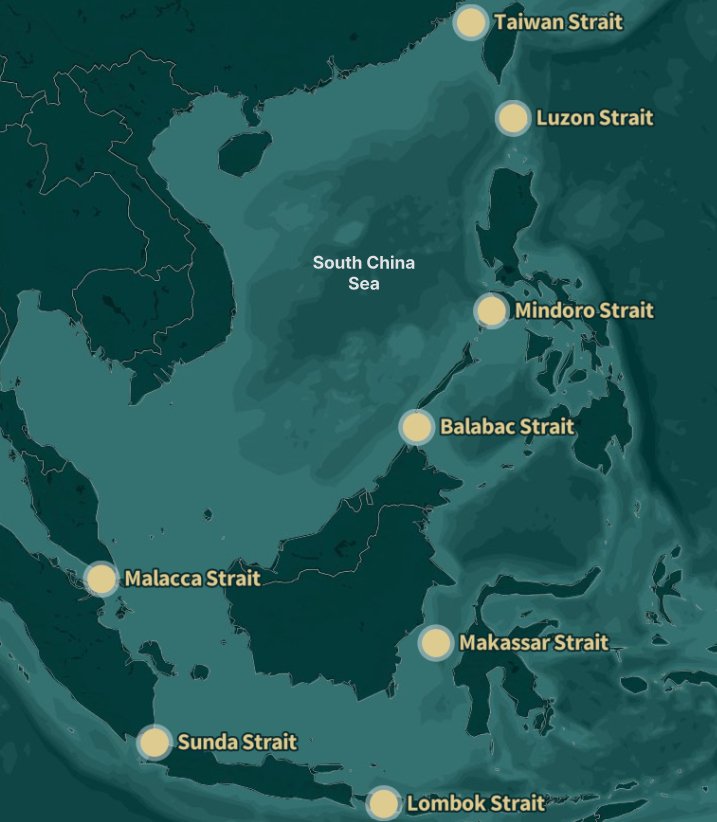
Strait of Malacca: The primary waterway connecting the Indian Ocean to the Pacific. Over 20% of global petroleum and liquid natural gas (LNG) shipments transit this passage.
Taiwan Strait: A vital route connecting the South China Sea to Northeast Asia, heavily utilized by global container ships.
Luzon Strait: A critical eastern chokepoint between Taiwan and the Philippines that allows ships to bypass the contested central South China Sea routes.
Conclusion
Sweeping political and hegemonic shifts have profoundly impacted the global and regional trade environment. Emerging economies in the Global South (like India and Brazil) are bypassing traditional hegemons to build strategic, localized partnerships.
China might soon control most of the world’s seaborne trade, if they don’t already.
The United States is fighting a war unpopular with Americans and with no exit strategy. A mid-June ceasefire is over; fighting has resumed. Less than 15% of normal traffic was achieved through the Strait of Hormuz on the best day; the strait is back to being effectively closed.
Tit for tat attacks between the Houthis and Saudi Arabia have just taken place. If the Houthis close the Strait of Bab-el-Mandeb over a third of the world’s seaborne oil will be stuck in ports or at anchor in two Straits.
If the Straits of Mandeb and Hormuz were closed, global markets would also lose access to a vast array of vital non-energy commodities. Essential goods stuck behind these chokepoints would include liquefied petroleum gas(LPG), naphtha, jet fuel, industrial inputs like methanol, sulfur, and graphite, as well as refined metals like aluminum and agricultural fertilizers.
A dual shutdown of these routes would force vessels to detour around the Cape of Good Hope, adding roughly 10 to 14 days to shipping schedules and severely spiking insurance and freight costs.
A closure of the South China Sea and the Taiwan Strait would disrupt over $6.4 trillion in global trade. Besides chips, the supply of energy (oil and LNG), rare earth minerals, chemical inputs, automotive parts, and retail goods would be critically impacted.
A closure of just the Taiwan Strait would cripple global logistics and halt manufacturing far beyond microchips. Because the strait is a primary maritime artery, the supply of raw metals, agricultural goods, and vital chemical inputs would face massive delays and price surges.
Is it a coincidence that Pakistan and Saudi Arabia signed a mutual defense pact in 2025, just a few months before the US attacked Iran? The US no longer buys Saudi oil, there is no longer any reason for the Saudis to own US dollars and invest them back into US Treasuries. Saudi Arabia has made it’s pivot.
China will play peacemaker in the Middle East.
China needs the Middle East’s oil and they need semiconductor chips, which they will achieve by taking over Taiwan — not by force but by blockade. The island nation imports almost everything: 97% of its power and 70% of its food come from outside. The country will last a maximum nine months if blockaded.
China has been actively practicing to blockade Taiwan, as demonstrated by multiple large-scale military exercises in recent years.
The United States, especially under the Trump administration embroiled in a forever Middle East war, will not come to Taiwan’s aid.
The US Navy can’t come within 3,000 km of Taiwan without getting bombarded by Chinese missiles. China has heavily invested in anti-access/area-denial (A2/AD) capabilities designed specifically to hold the US Navy at bay.
The People’s Liberation Army Rocket Force (PLARF) operates intermediate-range ballistic missiles (IRBMs) like the DF-26, which boasts a strike radius between 3,000 and 4,000 km. These are famously dubbed “carrier killers” or the “Guam Express” because they can strike mobile warships and major US hubs like Guam from the Chinese mainland.
Why China won’t go to war with Taiwan — Richard Mills
The US navy doesn’t have anything to replace the missiles they fire. Unlike China, they can’t fix damaged vessels in the Pacific. Even slightly damaged ships must head back to the US for repair. Vessels needing routine maintenance in dry dock already face long delays.
The US is facing significant strain on its missile stockpiles from the war with Iran. According to analyses by the Center for Strategic and International Studies (CSIS), by the time fighting had stopped in April, the US had expended roughly 30% of its Tomahawk cruise missiles, nearly half of its Patriot interceptors, and at least half of its THAAD ballistic missile interceptors. That was months ago and the war has restarted.
According to CNN, Key US weapons stockpiles remain significantly depleted and will come under even more intense pressure if strikes against Iran continue at the current rate, as President Donald Trump reiterated Friday that the ceasefire in the conflict is “over.”…
But replenishment rates are low for key missiles, Cancian said — according to current fiscal year delivery schedules, the Pentagon is receiving roughly 15 new Tomahawks and 20 new Patriot missiles per month. There are no THAAD deliveries forecast in 2026. CSIS estimated it would take three or more years to rebuild those inventories to pre-Iran war levels.
US risks running out of missiles in war with Iran — Richard Mills
China will take advantage of the US extinguishing their missile inventory. And remember, China has a bigger navy and is fighting in home waters.
The Pentagon’s acting financial officer told lawmakers in May that the cost of the Iran war was nearly $29 billion. The White House has requested an additional $87 billion from Congress.
Senate Democrats just blocked the $1.15 trillion annual defense policy bill (NDAA) in a 50-46 procedural vote. The rare setback for the traditionally bipartisan package centers on deep disagreements over the ongoing Iran war and proposed record-level Pentagon spending.
Congressional Republicans are attempting to pass a budget-reconciliation bill that includes massive funding boosts for the Pentagon—specifically driven by the Trump administration’s request for hundreds of billions in war spending. To offset these military costs, the White House and GOP leadership are pushing to slash funding for social programs, health services, and education.
Things may get worse before they get better. What happens if Hezbollah ramps up its actions? The terrorist group has not stopped fighting Israel. While both sides have engaged in trilateral ceasefire negotiations brokered by the United States, Hezbollah’s leadership has rejected the terms — which include their disarmament and withdrawal from southern Lebanon — and fighting has continued.
Syria and Turkey also don’t get along with Israel. What if the Arab states attack it? The US isn’t bound by a mutual defense treaty, as it is with NATO allies, but Israel is a major non-NATO ally. The US will come to its defense based on the Jewish lobby alone.
Imagine what defending Israel would further do to American’s diminishing missiles stockpile? The Iron Dome can only do so much to repel an attack, he who has the most missiles wins.
We’d be looking at the US being implicated in a forever war in the Middle East. But in the future if China were to offer to mediate?
And let’s not forget….
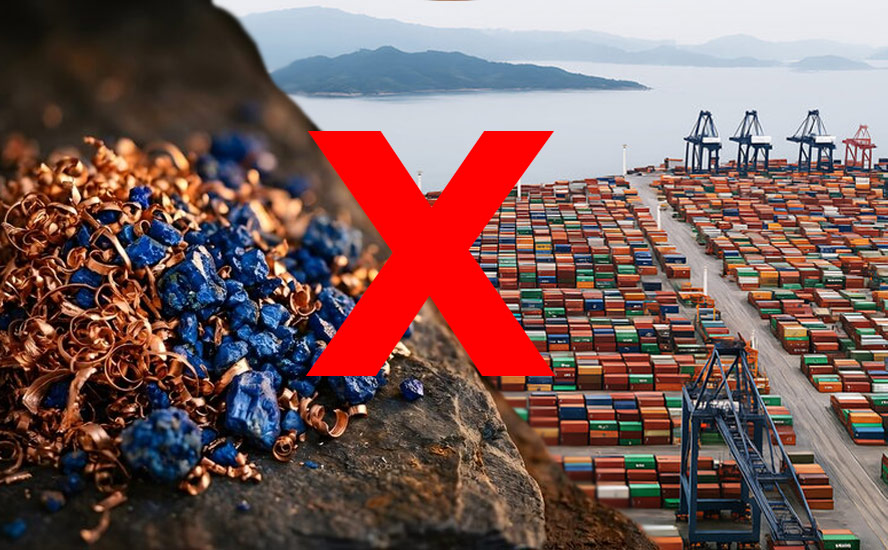
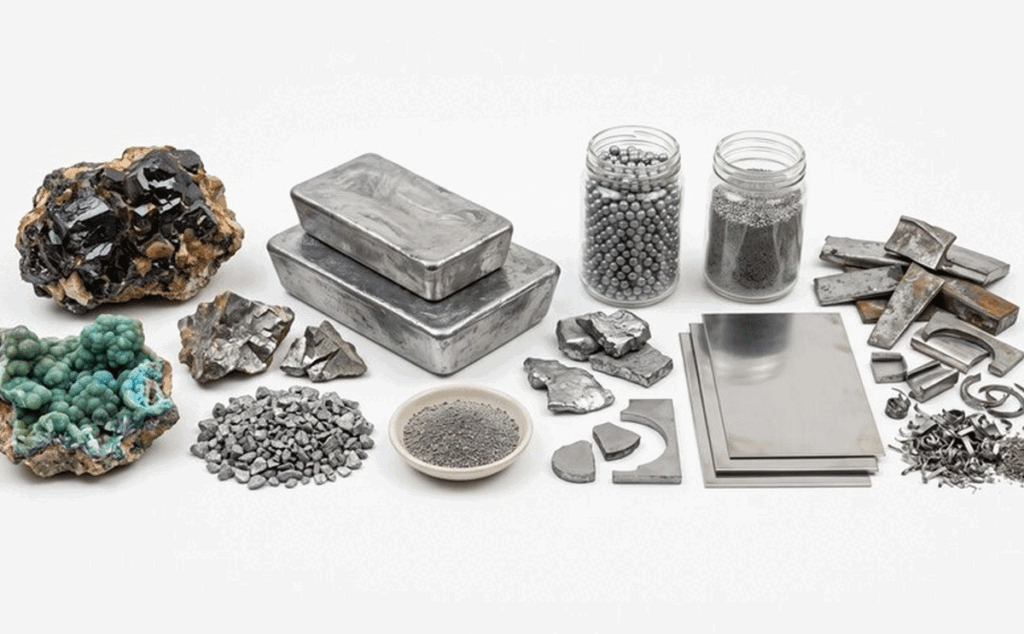
China completely dominates the global rare-earth and critical minerals supply chain. Controlling roughly 69% of rare earth mining output and up to 90% of processing and magnet production, Beijing has leveraged this monopoly by banning exports of critical technologies and denying sales to foreign military suppliers.
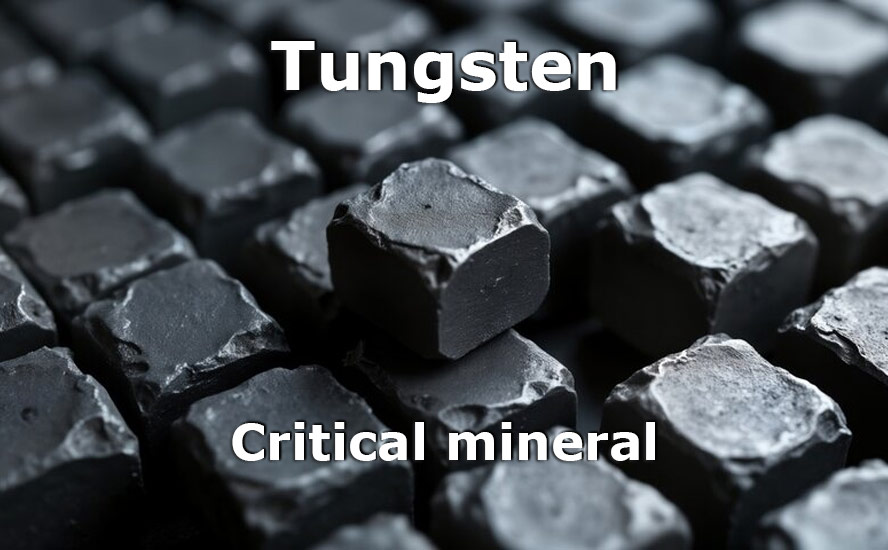
China’s dominance spans the entire mine-to-magnet pipeline, making allied defense supply chains uniquely vulnerable. China controls the lion’s share of global extraction for not just rare earths, but also 83% of tungsten, 79% of graphite, and 69% of the titanium used in advanced airframes.
Recent rulings by the Chinese Commerce Ministry explicitly block the export of rare earth extraction and magnetic manufacturing technologies to any companies affiliated with foreign militaries.
How China is Acquiring Control of Global Metal & Mineral
True historical drama is playing out on the world stage that will be analyzed, discussed and written about for centuries.
Richard (Rick) Mills
aheadoftheherd.com

Legal Notice / Disclaimer
Ahead of the Herd newsletter, aheadoftheherd.com, hereafter known as AOTH.Please read the entire Disclaimer carefully before you use this website or read the newsletter. If you do not agree to all the AOTH/Richard Mills Disclaimer, do not access/read this website/newsletter/article, or any of its pages. By reading/using this AOTH/Richard Mills website/newsletter/article, and whether you actually read this Disclaimer, you are deemed to have accepted it.