 RSS Subscribe
Energy is the master resource required to grow and harvest our food – AOTH
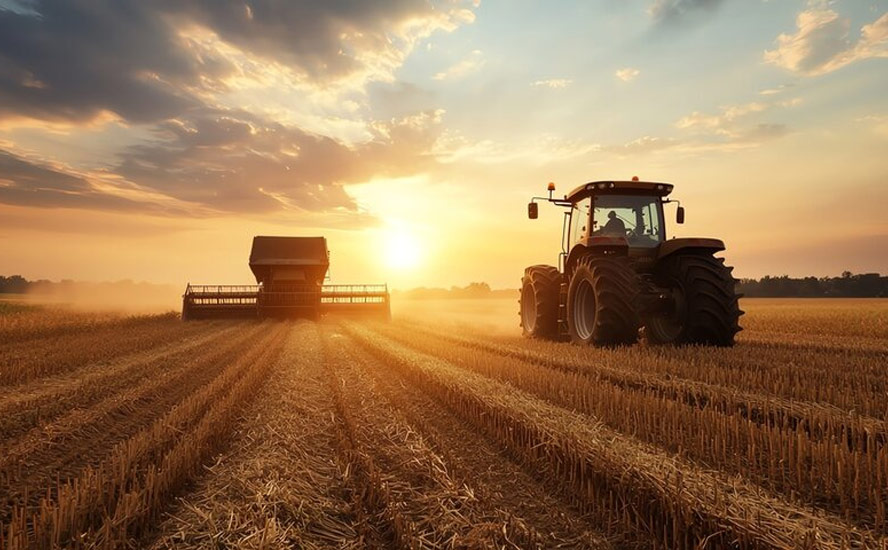
Headline from Reuters – Record US diesel prices squeeze farmers; food prices may rise
Diesel costs for US farmers are double last year’s level, diesel is widely used in ag, refrigeration and transportation – trucking and railroad. Add in fertilizer costs.
This year’s food prices were greatly affected by the war. Next year, even if the war ended now, is going to see a much broader effect. Delayed supply chain effects and extreme weather shocks in the grains and meats sectors mean next year’s grocery bills will be higher even if current conflicts stop.
Oil is still not priced right, with the Saudi’s stopping oil sales to Europe, and global oil reserves close to sucking bottom sludge we are due for a serious oil price rerating.
Crude oil prices are currently hovering between $100 and $104 per barrel, tracking roughly 54% higher than they were a year ago. If regional tensions escalate further or maritime chokepoints face prolonged closures, analysts warn that Brent crude could comfortably trade in a $100 to $120 bear-case range, with extreme shock models pointing toward a cap near $125 per barrel.
High natural gas prices create a double whammy on food prices driving up the manufacturing costs of chemical fertilizers which are responsible for 50% of the world’s food supply and about 3.5 to 4 billion people rely on for their daily sustenance.
Without the synthetic nitrogen produced via the Haber-Bosch process, global agricultural yields would plummet, as natural soil nutrients alone cannot support the current global population.
Staple grains like corn, wheat and rice are highly fertilizer-intensive. For example, modern corn production can rely on synthetic fertilizers for up to 50% to 60% of its total yield.
High-yield commercial produce farms rely heavily on precise chemical applications to ensure rapid growth and market-standard sizing for fruits and vegetables.
The global meat and livestock sector relies heavily on chemical fertilizers, consuming more synthetic nutrients than any other agricultural sector. While animals graze on fields, their entire production cycle—from feed crop cultivation to managed pastures and winter hay—is tightly bound to fossil-fuel-based fertilizer production.
In the United States, roughly 51% of all chemical nitrogen fertilizer is applied exclusively to grow livestock feed crops – Approximately 40% of all corn produced in the U.S. goes directly into animal feed.
Because hay is physically removed from the field every year, it strips massive amounts of nutrients out of the soil. A single ton of alfalfa hay removes roughly 50 lbs of potassium and 16 lbs of nitrogen.
To maintain high yields for subsequent cuttings, commercial hay farmers frequently apply intensive amounts of synthetic chemical fertilizers (specifically Nitrogen, Phosphorus, and Potassium). High natural gas prices can double or triple the per-acre production costs for hay farmers.
Dairy prices inevitably follow due to this deep upstream reliance.
Something that also affects food prices is when crude prices surge, like they are going to even further, there is huge economic incentive to turn palm, soybean, and vegetable oil crops into biofuels. The diversion from store shelves to fuel tanks creates an artificial food scarcity.
Canada relies heavily on transportation to import fresh winter produce from warmer climates.

Legal Notice / Disclaimer
Ahead of the Herd newsletter, aheadoftheherd.com, hereafter known as AOTH.Please read the entire Disclaimer carefully before you use this website or read the newsletter. If you do not agree to all the AOTH/Richard Mills Disclaimer, do not access/read this website/newsletter/article, or any of its pages. By reading/using this AOTH/Richard Mills website/newsletter/article, and whether you actually read this Disclaimer, you are deemed to have accepted it.