 RSS Subscribe
Solid-state batteries: next-generation energy storage – Richard Mills
2026.06.27
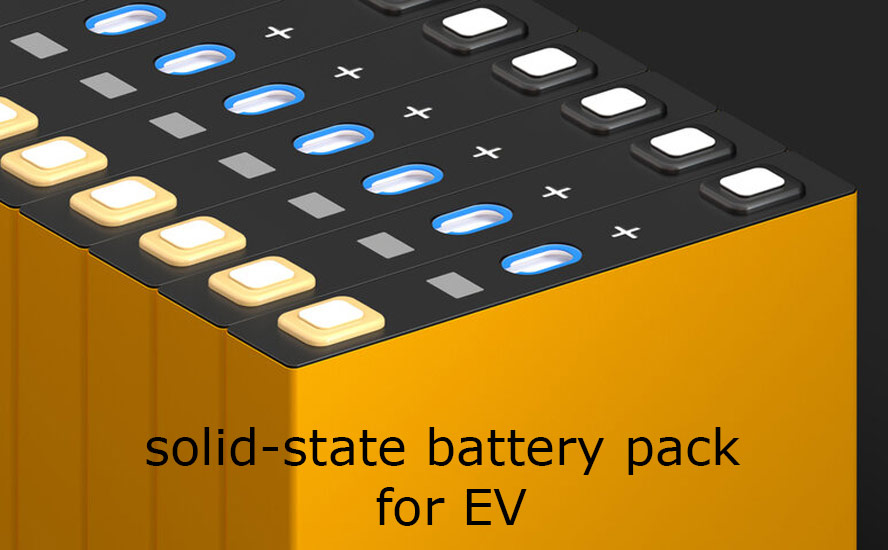
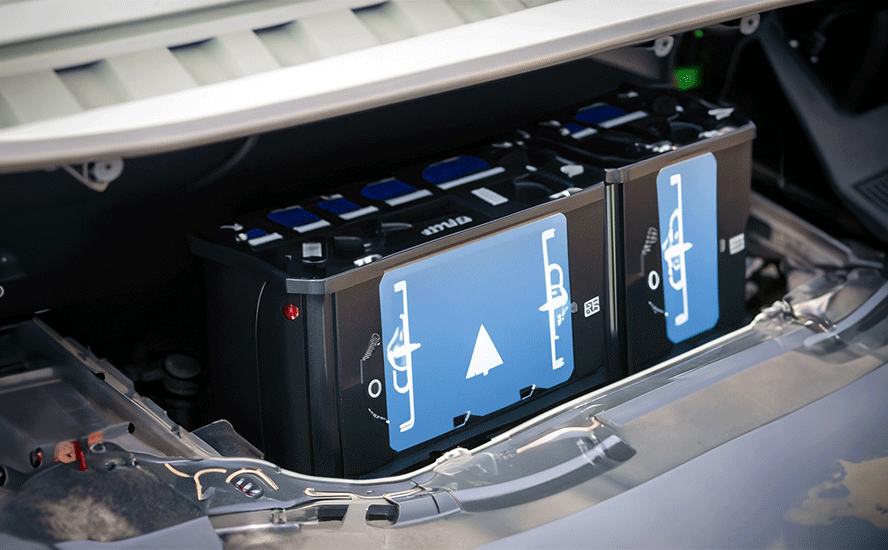
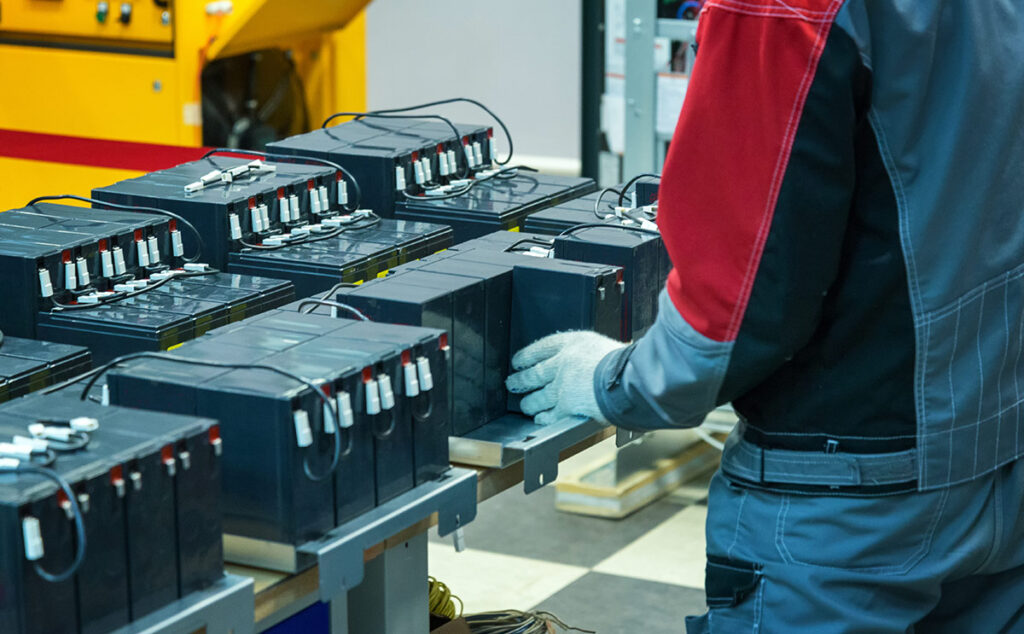
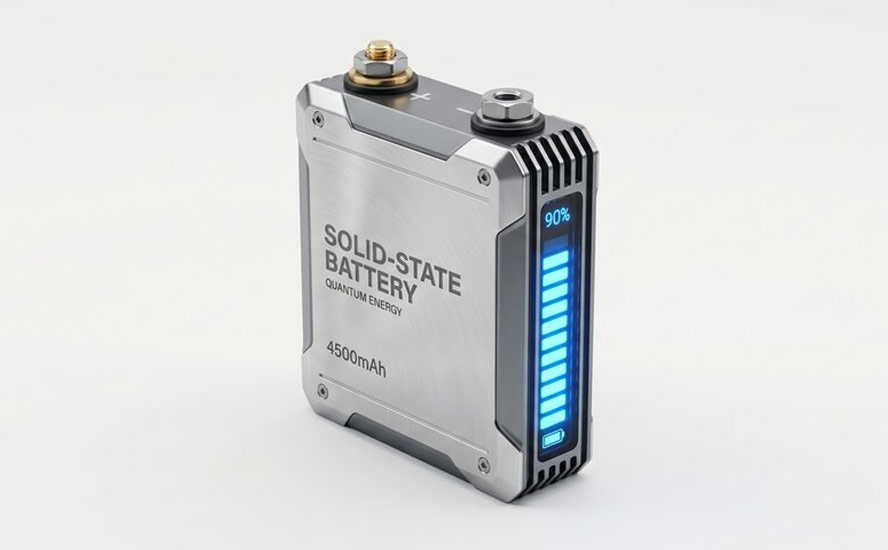
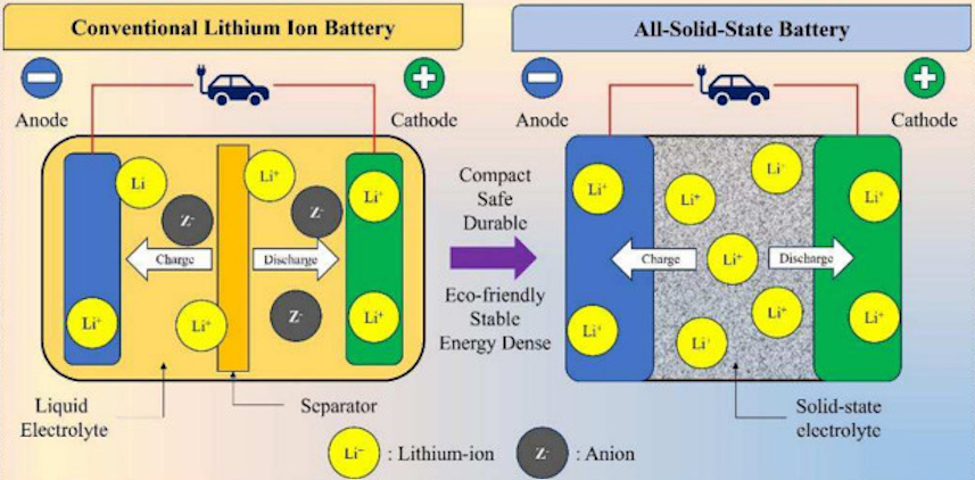
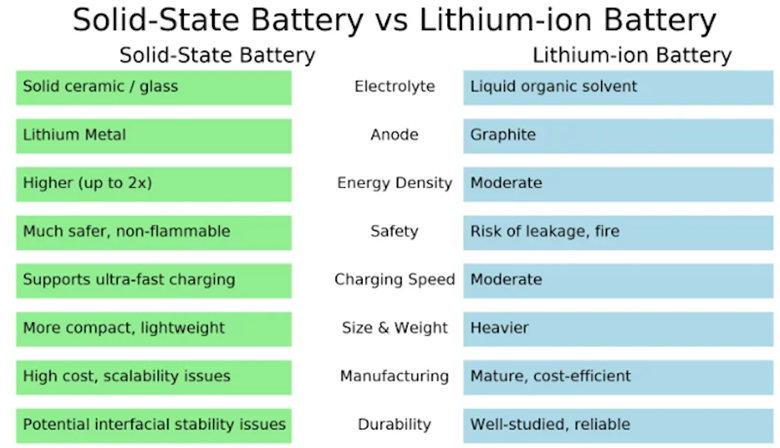
Solid-state batteries are an emerging technology that replaces traditional liquid electrolytes with solid materials. By enabling the use of lithium-metal anodes, they promise to drastically increase energy density, improve safety by eliminating flammable liquids, and allow for much faster charging times.
While solid electrolytes were first discovered in the 19th century, several problems prevented widespread application. Developments in the late 20th and early 21st century generated renewed interest in the technology, especially in the context of electric vehicles.
These batteries offer enhanced safety and higher energy densities.
The latest findings from Taipei-based intelligence provider TrendForce show that all-solid-state battery production volumes could have GWh levels by 2027. The rapid expansion will lead to cell price declines, reaching the CNY0.6-0.7/Watt-hour ($0.084-$0.098) level by 2035.
Materials
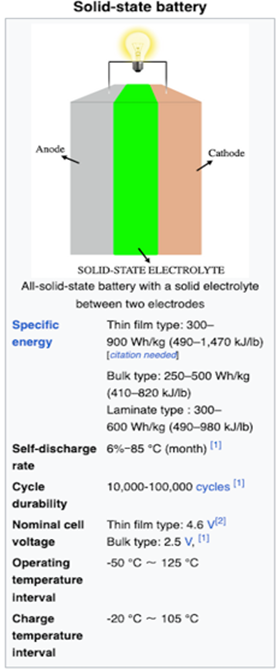
Solid-state batteries can use metallic lithium for the anode and oxides or sulfides for the cathode, thereby enhancing energy density. The solid electrolyte acts as an ideal separator that allows only lithium ions to pass through. For that reason, solid-state batteries can potentially solve many problems of currently used liquid electrolyte Li-ion batteries, including flammability, limited voltage, unstable solid-electrolyte interface formation, poor cycling performance and strength. (Wikipedia)
Materials proposed for use as electrolytes include ceramics (e.g., oxides, sulfides, phosphates), and solid polymers.
Use of manganese
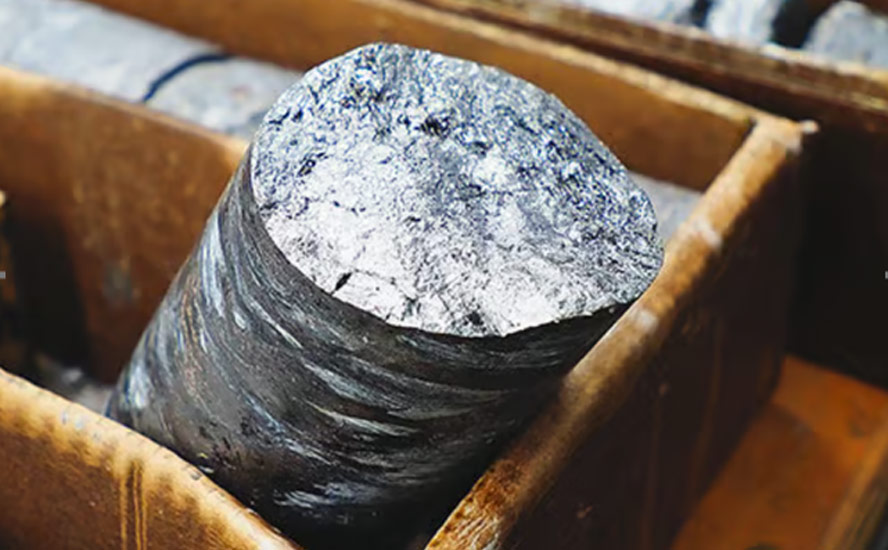
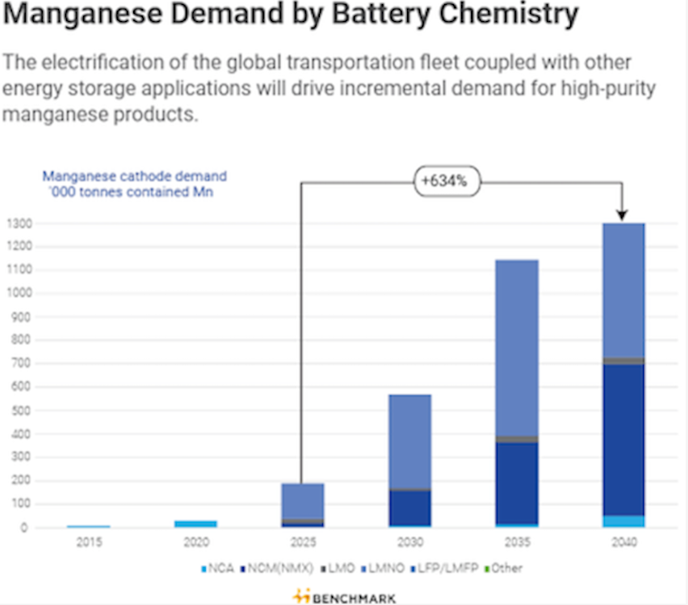
According to Benchmark Mineral Intelligence, manganese is a vital component in solid-state battery chemistry. It serves as a key element in advanced, high-voltage, and manganese-rich solid-state cathodes, such as lithium-nickel-manganese-oxide (LMNO) and lithium-rich manganese-based oxides (LRM).
Major EV and cathode material producers are increasing manganese in lithium-ion battery chemistries. As a result, manganese cathode demand is expected to grow by over 600% by 2040.
Manganese helps cathodes deliver higher operating voltages and greater specific capacities compared to traditional chemistries.
Manganese is significantly more abundant and less expensive than other transition metals like cobalt and nickel.
It provides unique cationic redox chemistry that works well within next-generation all-solid-state systems.
Solid-state battery researchers are actively utilizing manganese to stabilize high-voltage systems and pair them with metallic lithium anodes.
Manganese is highly sought after in semi-solid-state battery configurations like Li-Mn liquid semi-solid cells.
It’s also utilized in alternative solid-state setups, such as fluoride batteries using manganese trifluoride. (RSC Publishing)
Key advantages over lithium-ion
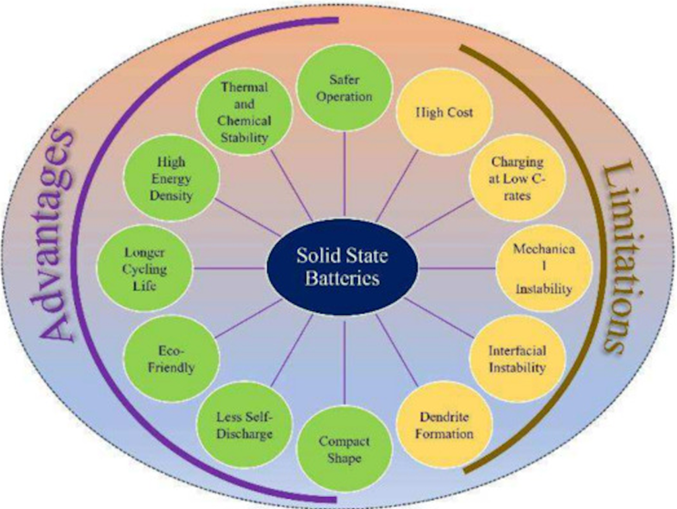
Solid state batteries are desirable due to their lighter weight and higher energy density compared to batteries with liquid electrolytes, which can potentially increase a vehicle’s range, reduce cost, and reduce curb weight, all of which are major challenges with current electric vehicles.
- Higher energy density: They can store more energy in the same volume, potentially offering much longer driving ranges for electric vehicles.
- Enhanced safety: Without a flammable liquid or gel, the risk of short-circuiting, thermal runaway, and fires is significantly reduced.
- Faster charging: The solid architecture allows for faster ion transfer and higher voltage capacities under specific conditions. (Science Direct)
Applications
EVs
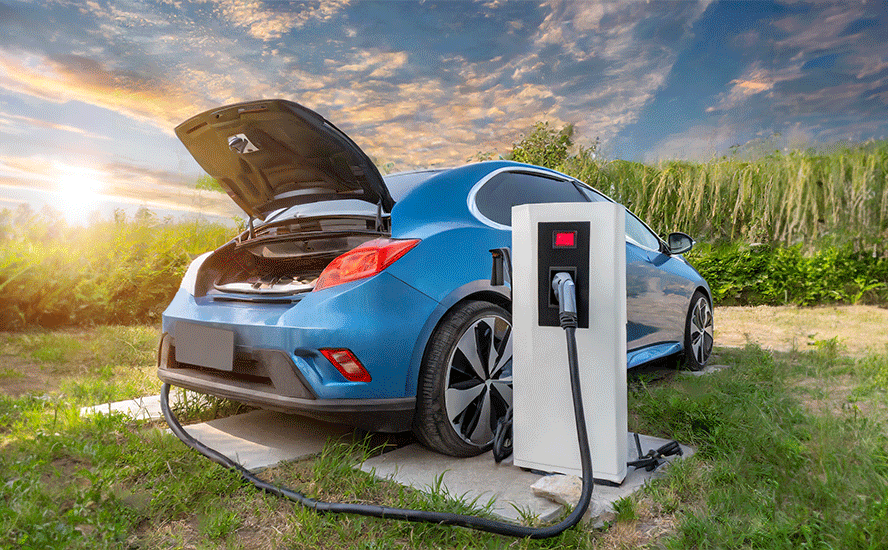
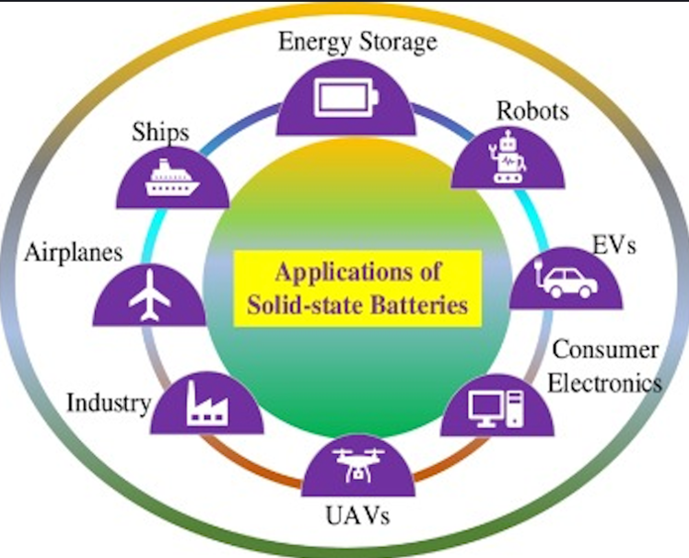
Electric vehicles are the primary driver of the technology. They offer EVs drastically longer driving ranges, faster charge times, and increased safety in crashes. (SINEXCEL-RE)
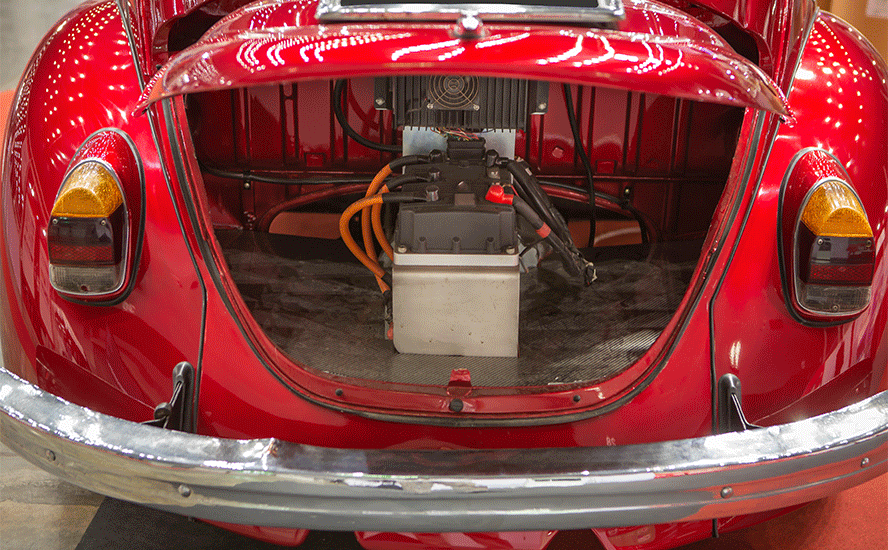
Hybrid and plug-in electric vehicles have used a variety of battery technologies, including lead-acid, nickel-metal hydride (NiMH), lithium ion, and electric double-layer capacitor (or ultracapacitor), with Li-ion batteries dominating the market due to their superior energy density. (Wikipedia)
As we enter the second half of this decade, many eyes in the battery world are on big promises and claims about solid-state batteries.
These batteries could pack more energy into a smaller package by removing the liquid electrolyte, the material that ions move through when a battery is charging and discharging. With a higher energy density, they could unlock longer-range EVs.
Companies have been promising solid-state batteries for years. Toyota, for example, once planned to have them in vehicles by 2020. That timeline has been delayed several times, though the company says it’s now on track to launch the new cells in cars in 2027 or 2028.
Historically, battery makers have struggled to produce solid-state batteries at the scale needed to deliver a commercially relevant supply for EVs. There’s been progress in manufacturing techniques, though, and companies could soon actually make good on their promises, Shirley Meng, a professor of molecular engineering at the University of Chicago, says.
Factorial Energy, a US-based company making solid-state batteries, provided cells for a Mercedes test vehicle that drove over 745 miles on a single charge in a real-world test in September. The company says it plans to bring its tech to market as soon as 2027. Quantumscape, another major solid-state player in the US, is testing its cells with automotive partners and plans to have its batteries in commercial production later this decade.
Before we see true solid-state batteries, we could see hybrid technologies, often referred to as semi-solid-state batteries. These commonly use materials like gel electrolytes, reducing the liquid inside cells without removing it entirely. Many Chinese companies are looking to build semi-solid-state batteries before transitioning to entirely solid-state ones, says Evelina Stoikou, head of battery technologies and supply chains at BloombergNEF, an energy consultancy. (MIT Technology Review)
Consumer electronics
Used in portable devices like smartphones, laptops, and wearables, solid-state technology enables slimmer, lighter designs and longer battery lifespans. (Science Direct)
Medical devices
Implantable devices and portable health monitors benefit from the reduced size, high reliability, and elimination of toxic liquid leaks. (Department of Energy)
Aerospace and drones
The lightweight profile and ability to operate reliably in extreme temperatures make them ideal for aerospace applications. (YouTube)
Grid energy storage
Used to store renewable energy, they offer highly durable and stable energy storage with very low self-discharge rates. (FOM Technologies)
Suppliers
According to an AI Overview, solid-state battery manufacturers are racing to commercialize cells that replace traditional liquid electrolytes with solid materials. While primarily targeting the electric-vehicle sector, developers span consumer electronics, aerospace and industrial applications.
Leading companies in the solid-state and semi-solid battery space include:
- QuantumScape: A Silicon Valley-based startup developing lithium-metal solid-state batteries. They focus on high energy density, fast charging, and safety, heavily backed by automotive giants like Volkswagen.
- Solid Power: Operating out of Colorado, they develop sulfide-based solid-state batteries. Backed by partners like Ford and BMW, they are testing silicon-anode solid designs for automotive integration.
- Factorial Energy: A US-based company utilizing proprietary polymer-based electrolytes to develop safe, scalable solid-state batteries for automotive, defense, and robotics applications.
- ProLogium Technology: A Taiwan-based manufacturer pioneering oxide-based solid-state batteries. They are heavily focused on scaling up GWh production facilities for mobility markets.
- Toyota: Widely recognized as a legacy pioneer and major patent-holder for full solid-state battery tech. They are heavily invested in making this technology a reality for their next-generation EV lineups.
- CATL (Contemporary Amperex Technology): One of the largest global battery manufacturers, heavily investing in both semi-solid and full solid-state battery research.
- LG Energy Solution: An industry powerhouse working on pilot production of solid-state solutions using sulfide and specialized solid electrolytes
Electric Metals
Electric Metals (USA) Limited (TSXV:EML, OTCQB:EMUS) has the highest-grade manganese deposit in North America and is potentially poised to emerge as a low-cost producer of 100% domestically sourced, high-purity, battery grade, manganese products (HPMSM) for the electric vehicle battery and energy storage sectors.
Electric Metals — Developing North America’s highest-grade manganese deposit —
Richard Mills
The North Star Manganese Project is owned and operated by EML subsidiary North Star Manganese, and consists of exclusive exploration, mining and processing rights of manganese ores in the Cuyuna Iron Range, Crow Wing County, Minnesota.
The project is off State Highway 6, and roughly 100 miles to I-35 and 150 miles to I-94 ports, which are major transportation centers for the shipment of bulk commodities. A Tier 1 BNSF railway, a 69 AC power line and three larger lines are all nearby.

At a 10% cutoff grade, the Emily deposit has an Indicated NI 43-101 resource of 7.6 million tonnes (Mt) of 19.07% manganese (Mn) and 22.33% iron (Fe), and an Inferred resource of 3.7Mt of 17.04% Mn and 19.04 % Fe.
This yields roughly 2.1Mt of contained manganese in the Inferred and Indicated classifications, or about 4.2Mt if the cutoff grade is 5%.
The project has been the subject of extensive technical evaluation, including a Preliminary Economic Assessment (PEA). Over $28 million has been invested to date.
It includes the construction of a 100,000 tonnes per year high-purity manganese sulfate monohydrate (HPMSM) plant with a 200,000 tonnes per year expansion planned. The company is evaluating multiple candidate sites in the Gulf Coast based on chemical input costs, power rates, transport logistics, permitting, workforce availability, incentives, and proximity to US battery manufacturers.
Electric Metals (USA) Limited
TSXV:EML, OTCQB:EMUS
2026.06.25 Share Price: Cdn$0.20
Shares Outstanding: 201.8m
Market Cap: Cdn$40.3m
EML website
Richard (Rick) Mills
aheadoftheherd.com

Subscribe to AOTH’s free newsletter
Richard does not own shares of Electric Metals (USA) Limited TSXV:EML).
EML is a paid advertiser on his site aheadoftheherd.com
This article is issued on behalf of EML
Legal Notice / Disclaimer
Ahead of the Herd newsletter, aheadoftheherd.com, hereafter known as AOTH.Please read the entire Disclaimer carefully before you use this website or read the newsletter. If you do not agree to all the AOTH/Richard Mills Disclaimer, do not access/read this website/newsletter/article, or any of its pages. By reading/using this AOTH/Richard Mills website/newsletter/article, and whether you actually read this Disclaimer, you are deemed to have accepted it.