 RSS Subscribe
Electric Metals – Developing North America’s highest-grade manganese deposit – Richard Mills

2026.04.16
Electric Metals (USA) Limited (TSXV:EML, OTCQB:EMUS) has the highest-grade manganese deposit in North America and is potentially poised to emerge as a low-cost producer of 100% domestically sourced, high-purity, battery grade, manganese products (HPMSM) for the electric vehicle battery and energy storage sectors.
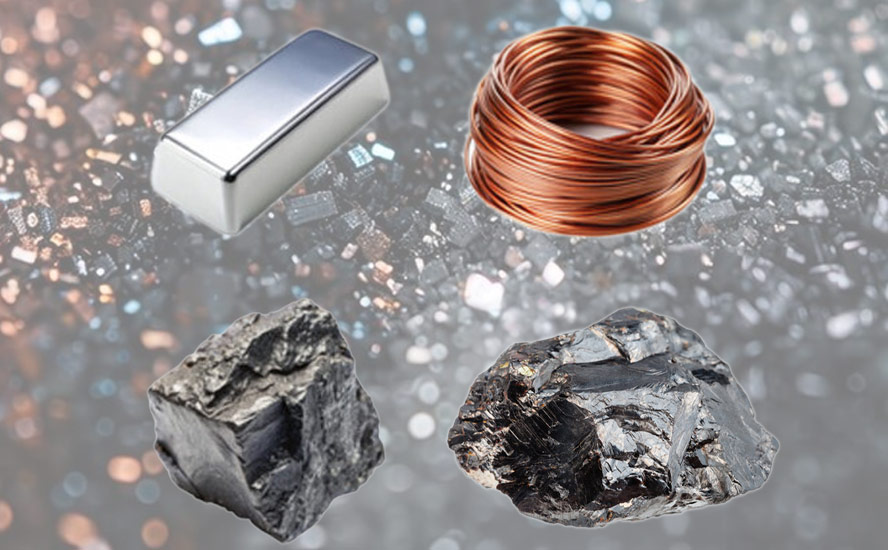
Manganese is a key metal in EV batteries/ energy storage due to its prominent role in lithium-ion battery chemistries.
Manganese
Aside from iron, manganese is the most essential mineral in the production of steel. It is the fourth used metal in the world.
Both Canada and the United States have numerous and vast iron ore deposits, yet neither country produces manganese. You can’t produce steel without adding 10 to 20 pounds of manganese per ton of iron.
From Mine to Battery — Richard Mills
According to the United Stated Geological Survey (USGS), the US is 100% dependent on imported supplies of manganese. Manganese has no substitutes in its many steel applications and has itself become a substitute for other more expensive metals in certain alloys.
The same circuits that make EMM make Electrolytic Manganese Dioxide (EMD) and High Purity Manganese Sulphate Monohydrate (HPMSM). EMD is a key ingredient in the production of alkaline batteries and HPMSM is a critical component in the production of most lithium-ion and new battery technologies. Manganese, for example, is used in emerging lithium-sodium-ion and lithium-iron-phosphate chemistries.
Since there are no mines producing manganese ore in the US or Canada, there are no domestic suppliers of EMM or HPMSM in North America, and North American EMD production is from foreign sourced manganese
The United States accounts for approximately 18% of global EMD demand and remains relatively self-sufficient in domestic production; however, that capacity has required protection, with the U.S. International Trade Commission recently extending tariffs in response to Chinese efforts to undercut and displace U.S. producers.
Alkaline batteries (i.e., AAs and triple AAAs) have long been made out of zinc-manganese. Manganese is crucial to the electric vehicle market and enables large-scale grid storage.
One of the most successful lithium-ion battery systems is a cathode combination of nickel, manganese and cobalt (NMC).
NMC batteries are used in power tools and in power trains for vehicles because they offer higher energy density and therefore greater range. NMC batteries are also preferred for electric vehicles due to their better charging performance at low temperatures. This makes them more reliable and efficient in cold environments.
NMC chemistries have advanced well beyond the original one-third nickel, one-third manganese, one-third cobalt formulation, with today’s batteries adopting higher nickel ratios such as 5:3:2 and 6:2:2, alongside a growing shift toward manganese-rich chemistries to reduce cost, limit cobalt exposure, and enhance supply chain resilience.
The cathode combination ratio of a NMC battery is usually one-third nickel, one-third manganese and one-third cobalt, meaning that the raw material cost is lower than for other options.
By 2030, battery demand for manganese is set to triple as two key technologies scale:
- NMC batteries that use nickel, manganese and cobalt
- New sodium-ion batteries that also rely on manganese
In addition to batteries and steel production, manganese is critical for high-strength alloys used in defense. It strengthens aircraft parts and defense electronics; hardens armor for tanks and military vehicles, supports missile fins and nozzles, protects navy ship hulls from stress and corrosion, and improves durability of guns, artillery and ammunition.
Other applications include aluminum cans, fertilizer, animal feed, wastewater treatment and water purification.
New uses
According to an AI Overview, new uses of manganese include green hydrogen production, where manganese shows potential as an electrocatalyst for water-splitting and an alternative to expensive metals like platinum; solar energy harvesting, where manganese-based compounds could replace rare metals like ruthenium and iridium; and advanced materials science, where manganese is used in 3D printing alloys, lightweight aluminum alloys, and even advanced rocket fuel.
Manganese market
Current tensions between the United States and China highlight the need for security of supply regarding the materials and minerals the US considers strategic and critical, including manganese.
Manganese has gone from being perceived as a commonplace alloy metal primarily used in steel production to being a key metal in electric vehicles and energy storage due to its prominent role in lithium-ion battery formulations.
Almost half of today’s lithium-ion batteries contain manganese, a figure that is expected to grow to above 60% by 2030. Global demand forecasts indicate that more high-purity manganese mines and processing plants are required than for any other battery metal.There are currently no active mines in North America, which is why manganese is listed as a critical mineral in the US and Canada (Canada-US Joint Action Plan on Critical Minerals Collaboration, 2020). It was added to the US Critical Elements list in 2018.
Government is streamlining permitting and offering financial incentives for domestic production. Significant tax incentives, grants, and low/no interest loans are available. Minnesota has a long history of favorable mining laws and support for new oxide projects.
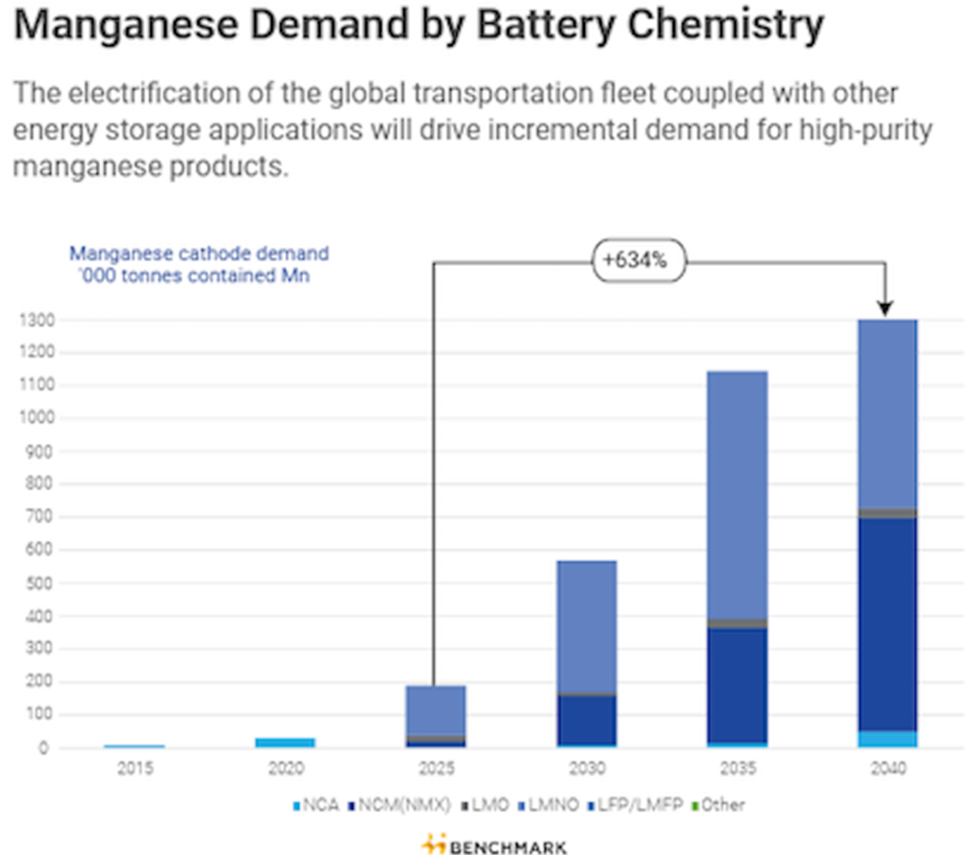
Major EV and cathode material producers are increasing manganese in lithium-ion battery chemistries. As a result, manganese cathode demand is expected to grow by over 600% by 2040.
“The USA depends on unreliable foreign sources for many of the strategic and critical minerals necessary for the clean energy transition. Demand for such materials is projected to increase exponentially as the world transitions to a clean energy economy.”
~ Presidential action under US Defense Production Act, 2022
US legislation such as the Inflation Reduction Act (IRA) is a huge boost to stimulating downstream cell and battery demand, but about 50% of IRA-compliant critical materials come from “Foreign Entities of Concern”, with China maintaining its dominance over chemical conversion, according to Benchmark Mineral Intelligence.
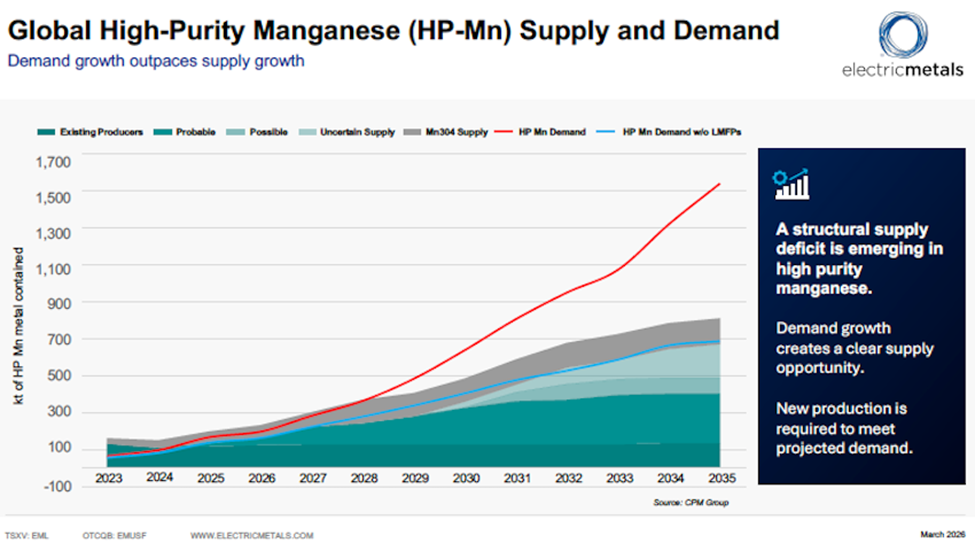
High-purity manganese demand is expected to surge 10-fold by 2029 due to demand for EV batteries and energy storage.
- 1TWh of additional battery capacity is to be built in North America by 2032, with nine gigafactories (316GWh) in the last 12 months.
- 242GWh of capacity was added to the US pipeline following the announcement of the IRA (e.g., LG Chem announced it will spend $3.2B to build cathode production).
- The US is growing at double the pace of Europe, with the latter forecasting a battery supply shortage.
A structural supply deficit is emerging for high-purity manganese, with new production required to meet projected demand.
US manganese crisis
As mentioned the United States has no manganese production; China controls 98% of EMM capacity and 96% of HPMSM processing.
Manganese ore is currently mined in Africa and shipped to China for processing, then transported to the US. Shipping routes are long, creating an immense carbon footprint and logistical risk.
Very little manganese is recovered through recycling, as end-of-life materials are rarely processed specifically for their manganese content.
With zero domestic supply — mines or processing capability — America is fully exposed to geopolitical events, such as export limits or tariffs from China which would choke supply overnight.
China controls refined manganese and can change the price or access to the commodity instantly.
Runaway battery demand means EV and grid storage growth are accelerating faster than US capacity currently in place to support it.
Defense systems depend on a material the US can’t produce, which is an unacceptable risk.
The upshot? America needs immediate action to build a secure mine-to-metal supply chain for manganese.
North Star Manganese Project
“The Emily District contains the highest-grade manganese deposits in the Northern Hemisphere,” states the US Geological Survey (USGS).
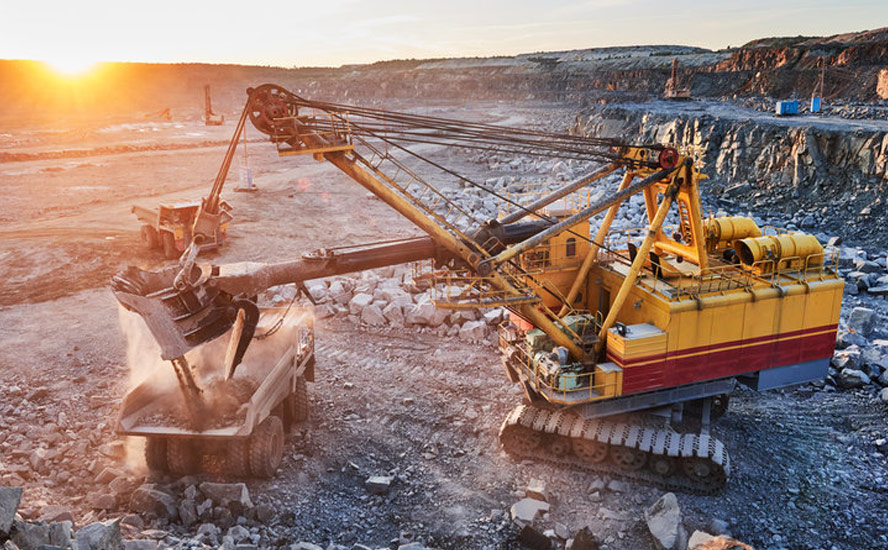
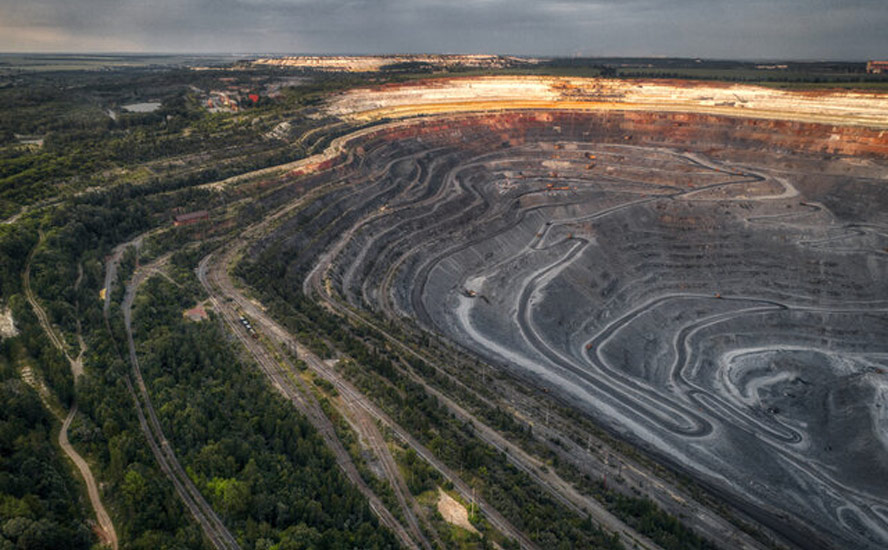
The North Star Manganese Project is owned and operated by EML subsidiary North Star Manganese, and consists of exclusive exploration, mining and processing rights of manganese ores in the Cuyuna Iron Range, Crow Wing County, Minnesota.
The project is off State Highway 6, and roughly 100 miles to I-35 and 150 miles to I-94 ports, which are major transportation centers for the shipment of bulk commodities. A Tier 1 BNSF railway, a 69 AC power line and three larger lines are all nearby.
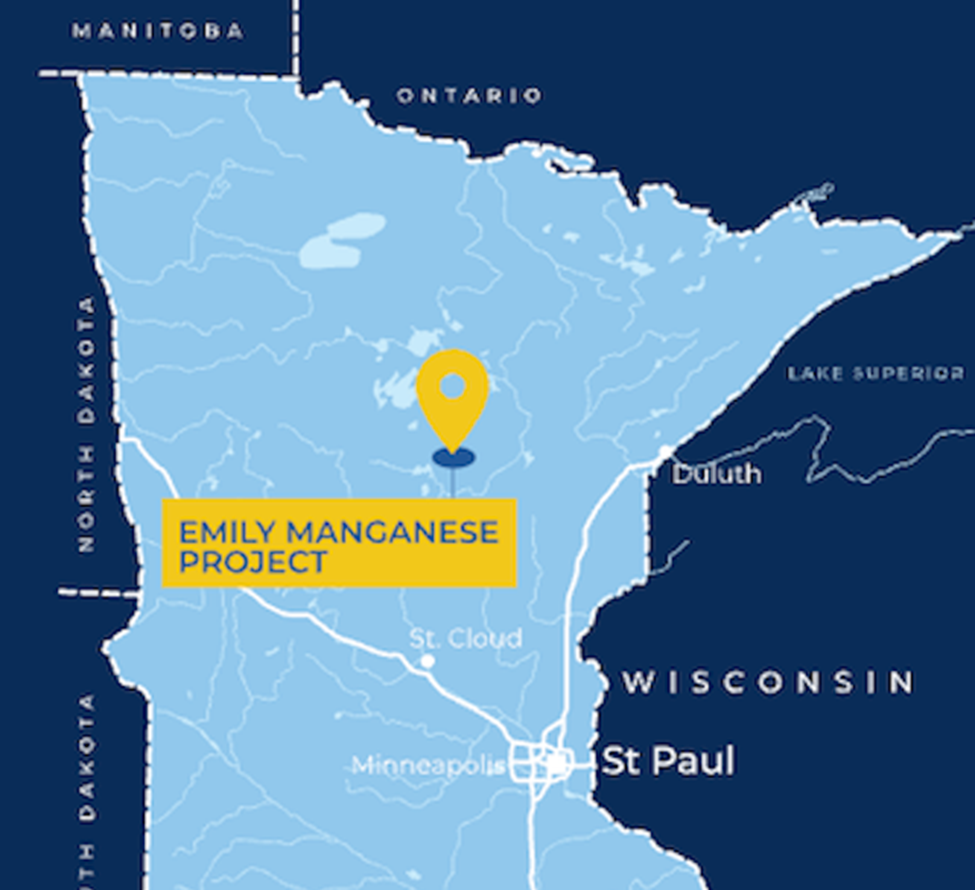
With Minnesota supplying over 90% of US iron ore production, the North Star project can leverage the existing workforce.
The Emily District was formed 2.2 to 1.7 billion years ago. It is similar to the current formation of deep-sea manganese reefs and nodules.
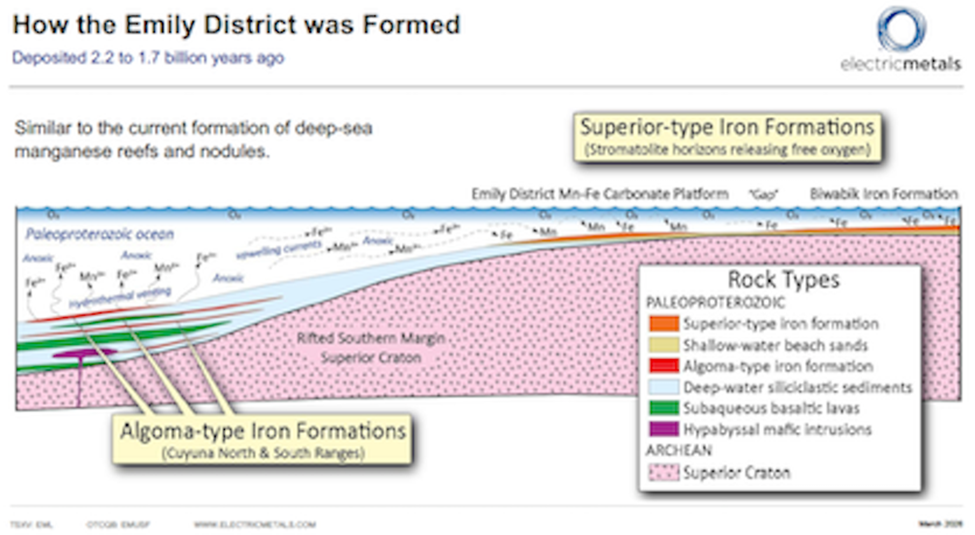
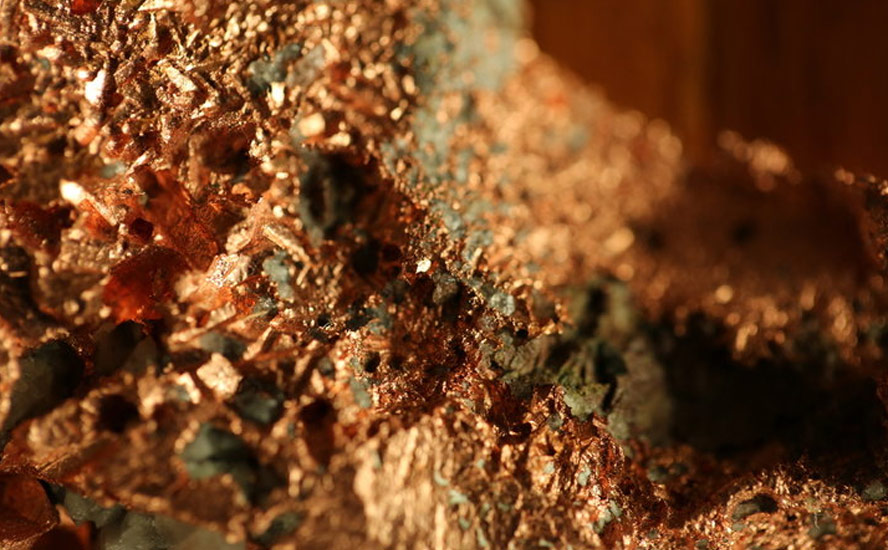
The primary mineral to be mined is manganite, a manganese oxide-hydroxide, not a sulfide, meaning the mineralogy is low impact.
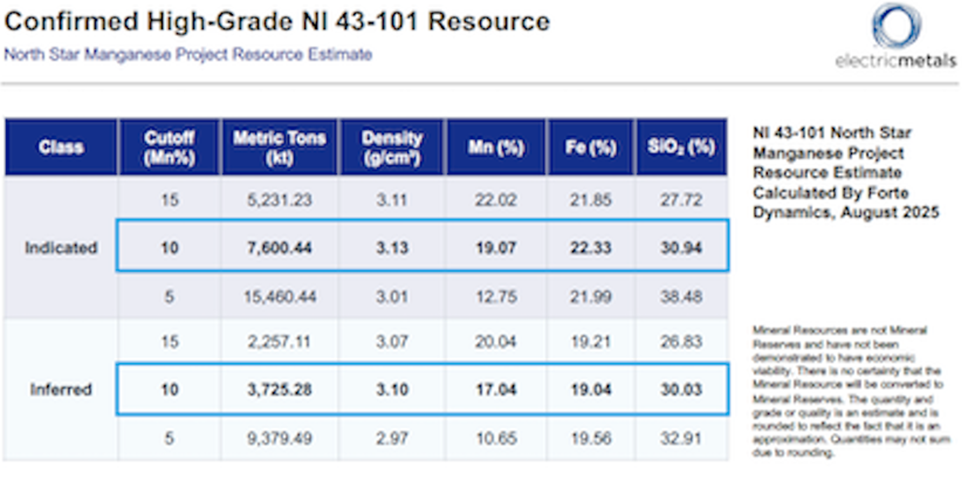
At a 10% cutoff grade, the Emily deposit has an Indicated NI 43-101 resource of 7.6 million tonnes (Mt) of 19.07% manganese (Mn) and 22.33% iron (Fe), and an Inferred resource of 3.7Mt of 17.04% Mn and 19.04 % Fe.
This yields roughly 2.1Mt of contained manganese in the Inferred and Indicated classifications, or about 4.2Mt if the cutoff grade is 5%.
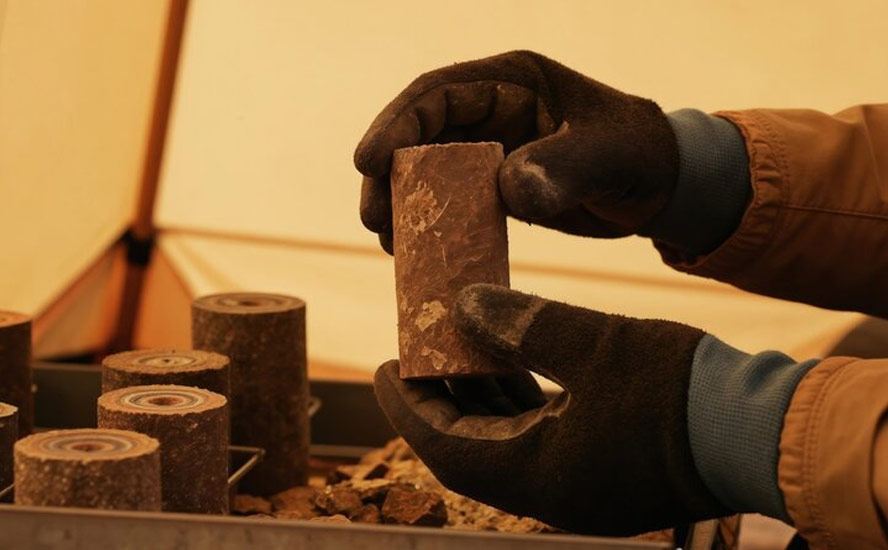
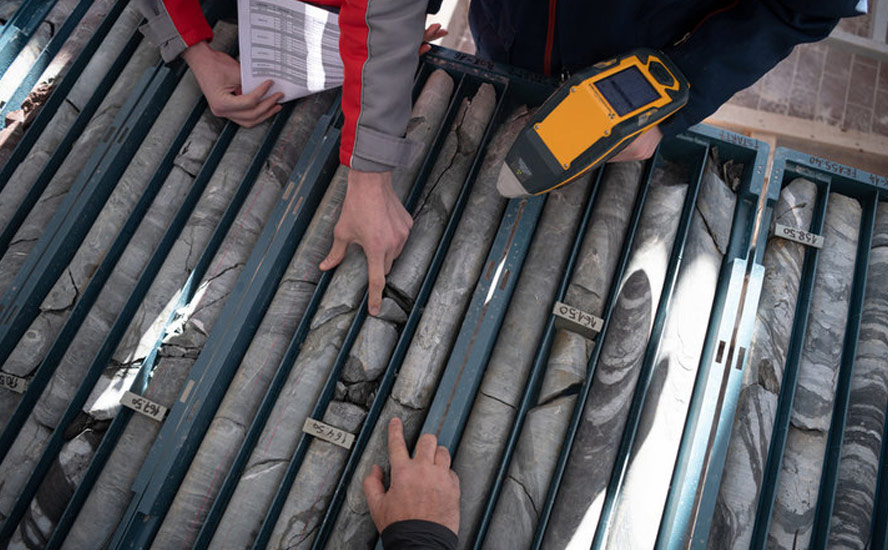
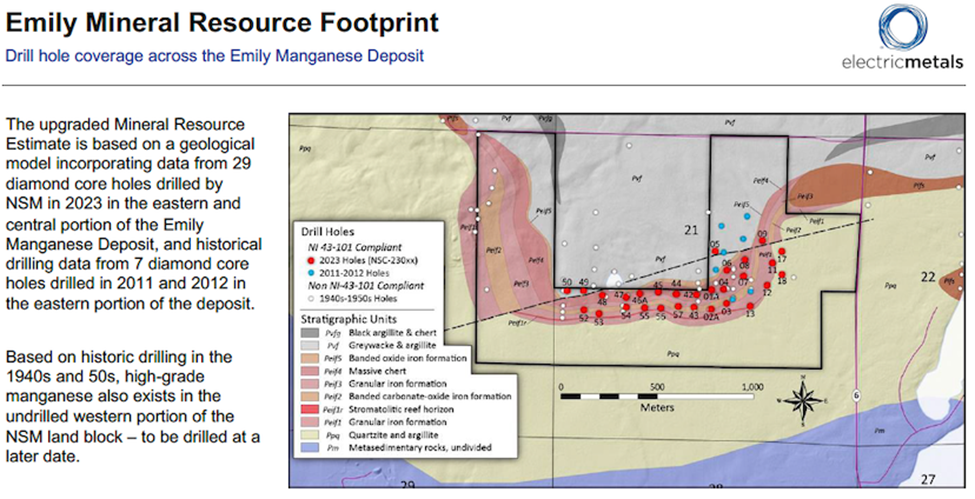
The upgraded Mineral Resource Estimate is based on a geological model incorporating data from 29 diamond core holes drilled by North Star Manganese in 2023 in the eastern and central portion of the Emily manganese deposit, and historical drilling data from seven holes drilled in 2011 and 2012 in the eastern portion of the deposit.
Based on historic drilling in the 1940s and 50s, high-grade manganese also exists in the undrilled western portion of the NSM land block (approximately 40% of the remaining block) – to be drilled at a later date.
Several historical drill holes have intersected grades above 50% manganese. Independent modeling of over 70 historical drill holes suggests a much larger deposit.
The project has been the subject of extensive technical evaluation, including a Preliminary Economic Assessment (PEA). Over $28 million has been invested to date.
It includes the construction of a 100,000 tonnes per year high-purity manganese sulfate monohydrate (HPMSM) plant at a yet-to-be determined location in the United States — a US first. The company is evaluating multiple candidate sites based on chemical input costs, power rates, transport logistics, permitting, workforce availability, incentives, and proximity to US battery manufacturers.
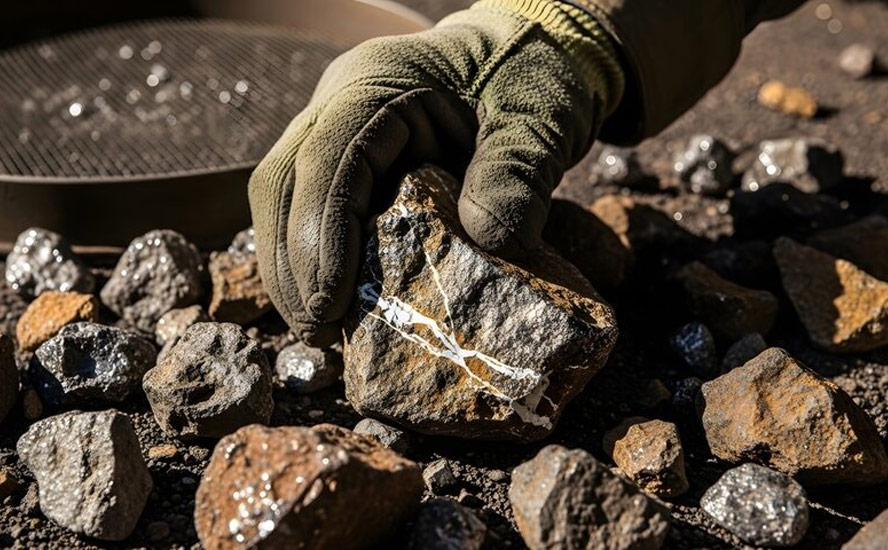
Benchmark processes using composite samples from the deposit have produced Electrolytic Manganese Metal (EMM), Electrolytic Manganese Dioxide (EMD), and High-Purity Manganese Sulfate Monohydrate (HPMSM).
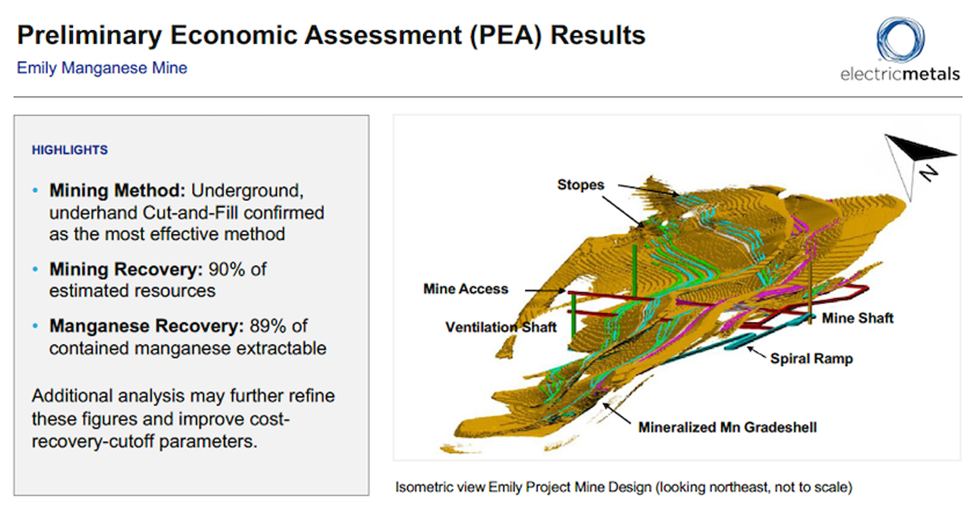
According to the PEA, underground, underhand cut and fill is the most effective mining method, with 90% mining recovery of estimated resources. Of this, 89% of contained manganese is extractable.
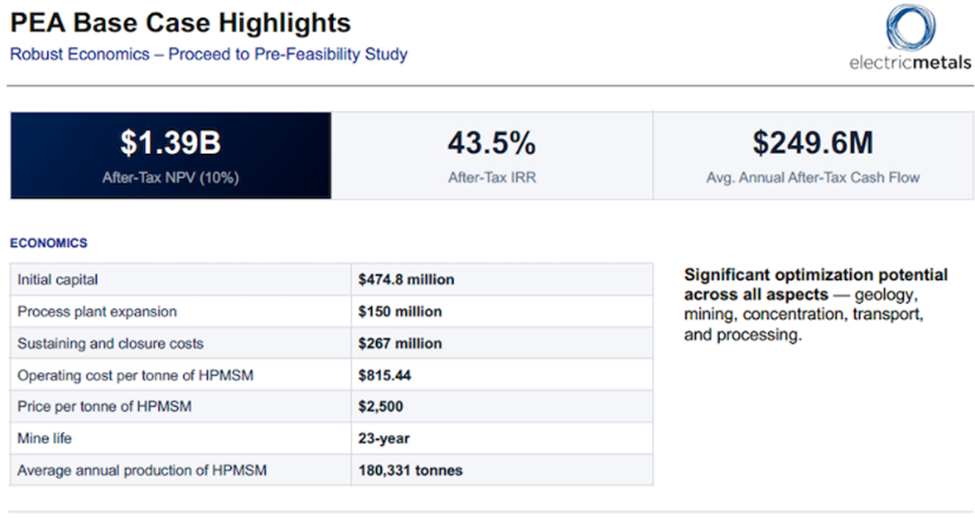
The report shows initial capex of $474.8 million would build a mine and processing plant capable of producing 180,331 tonnes of HPMSM per year, for a mine life of 23 years.
The project has an after-tax Net Present Value (10%) of $1.39 billion, after-tax IRR of 43.5%, and average annual after-tax cash flow of $249.6 million.
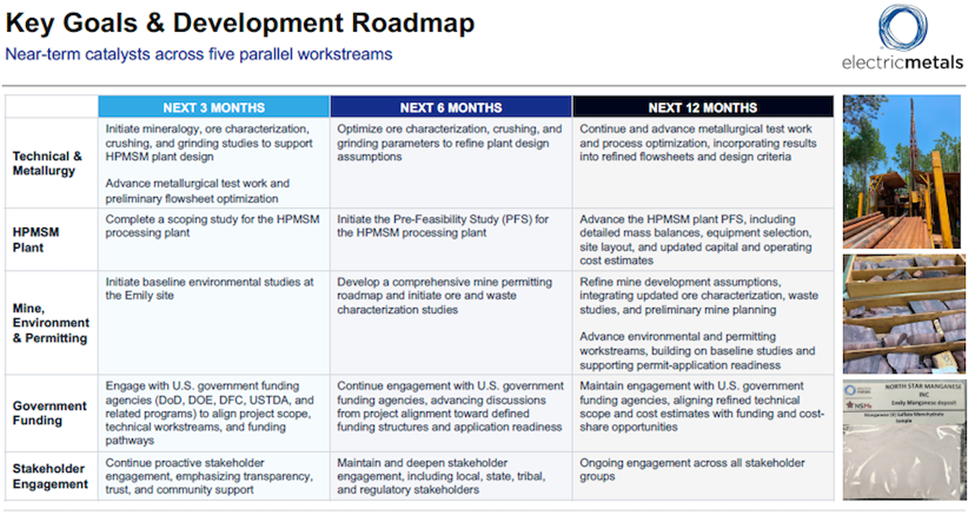
The company lists near-term catalysts across five parallel workstreams: technical & metallurgy, HPMSM plant, mine, environment & permitting, government funding and stakeholder engagement.
Metallurgical testing
Metallurgical test work from the Emily deposit achieved greater than 95% HPMSM leach extractions and confirmed the potential for producing high-purity manganese sulphate monohydrate (HPMSM), electrolytic manganese metal (EMM) and electrolytic manganese dioxide (EMD/MnO2).
Effective removal of impurities, including iron, potassium, and other trace elements was achieved.
Crystallization tests yielded HPMSM suitable for the battery-materials market.
The test work provides a strong foundation for the future development of a full-scale processing plant, including flowsheet refinement and further process optimization.
Team
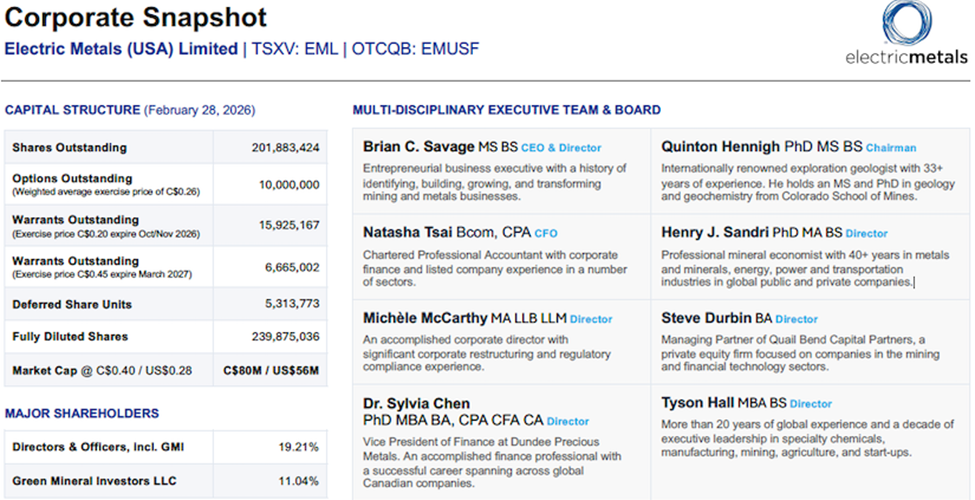
Electric Metals’ executive team and board includes CEO Brian Savage, who has a history of identifying, building, growing, and transforming mining and metals businesses, and substantial experience in the manganese industry; Dr. Sylvia Chen, a director who is VP, Finance at Dundee Precious Metals (TSX:DPM); director Dr. Quinton Hennigh, an internationally renowned exploration geologist with 33+ years of experience; and director Dr. Henry Sandri, a professional mineral economist with 40+ years in the metals and minerals, energy, power and transportation industries.
The Board also includes Tyson Hall, a director who has executive level operating experience in numerous basic materials including lithium and boron, Michele McCarthy, a director with significant restructuring and compliance experience, and Steve Durbin, a director who is Managing Partner at Quail Bend Partners, a mining and financial technology focused firm.
Conclusion
Manganese is a critical metal with applications including steelmaking, electric vehicles, energy storage, defense, fertilizer and water/wastewater treatment.
There are also a variety of new uses, detailed above.
Market dynamics show demand outstripping supply; manganese cathode demand is expected to grow by over 600% by 2040.
But China controls refined manganese and can change the price or access to the commodity instantly.
Defense systems depend on a material the US can’t produce, which is an unacceptable risk.
America needs immediate action to build a secure mine-to-metal supply chain for manganese.
Enter Electrical Metals, developing the highest-grade manganese deposit in North America, Emily, which it has deemed the North Star Manganese Project.
The company is well on its way down the development path, having come out with a mineral resource estimate of roughly 2.1Mt of contained manganese in the Inferred and Indicated classifications based on a 10% cutoff grade.
The resource was formulated from the results of 29 diamond drill holes in 2023 plus historical drilling data.
The PEA features robust economics of $1.39 billion NPV and an IRR of 43.5% after taxes.
Metallurgical test work provides a strong foundation for the future development of a full-scale processing plant, which would be a US first.
A site is being scouted to build a 100,000 tonnes per year high-purity manganese sulfate monohydrate (HPMSM) plant. A benchmark pilot process has produced Electrolytic Manganese Metal (EMM) and Electrolytic Manganese Dioxide (EMD).
The company is cashed up from a CAD$4 million financing in October led by Eric Sprott and Crescat Capital.
Near-term catalysts include:
- Positive scoping study for high-grade Emily manganese deposit
- Potential non-dilutive funding: Department of Defense and/or Department of Energy grants; royalty financing
- Strategic partnerships; offtake agreements with battery and auto manufacturers
- Design and construction decision of HPMSM plant
Electric Metals (USA) Limited
TSXV:EML, OTCQB:EMUS
2026.04.16 Share Price: Cdn$0.285
Shares Outstanding: 201.8m
Market Cap: Cdn$57.5m
EML website
Richard (Rick) Mills
aheadoftheherd.com

Legal Notice / Disclaimer
Ahead of the Herd newsletter, aheadoftheherd.com, hereafter known as AOTH.Please read the entire Disclaimer carefully before you use this website or read the newsletter. If you do not agree to all the AOTH/Richard Mills Disclaimer, do not access/read this website/newsletter/article, or any of its pages. By reading/using this AOTH/Richard Mills website/newsletter/article, and whether you actually read this Disclaimer, you are deemed to have accepted it.