 RSS Subscribe
Donald Trump’s bullying of Canada is endless

From The Economist
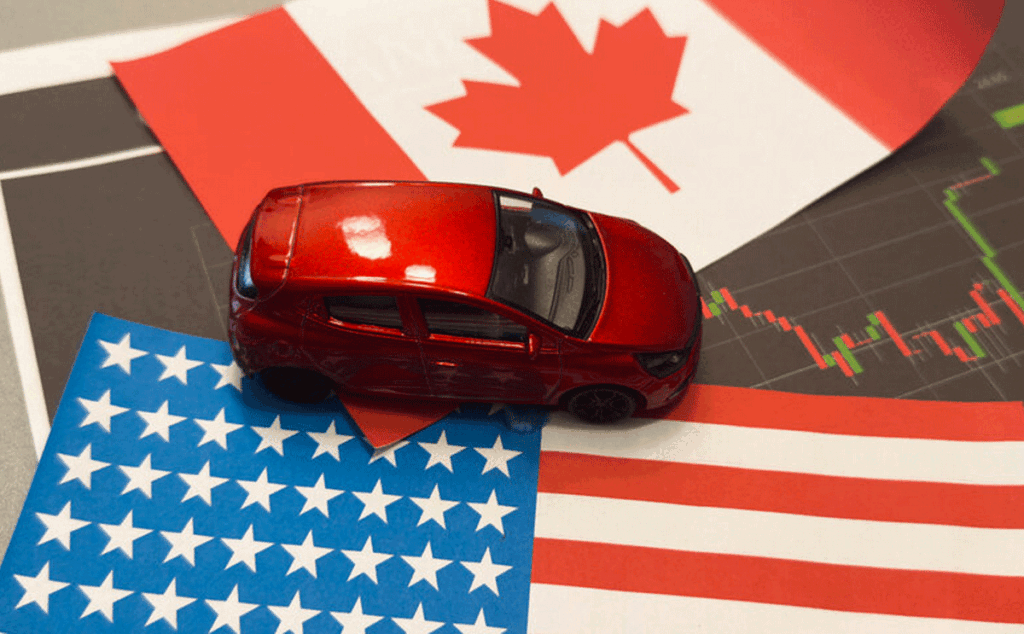
If the new tariffs come into force on August 19th, Canada will be the first country ever to be subjected to tariffs under Section 338 of the Smoot-Hawley Tariff Act, a law passed in 1930 that allows the president to respond to perceived trade discrimination. Tariffs under that act, unlike the emergency duties struck down by the US Supreme Court in February, need no congressional approval. “This looks a lot like the future of Donald Trump’s trade policy because it gives him flexibility,” says Eric Miller, head of the Rideau Potomac Strategy Group, a trade consultancy in Washington.
Mr Trump is using that freedom to place tariffs on $20bn-worth of Canadian exports, from hockey sticks to honey. These would pile up next to older duties that have hobbled the Canadian car, steel, aluminium, wood and copper industries. Crucially, and unlike the emergency tariffs imposed in 2025, the new tariffs also apply to goods covered by the USMCA, the North American free-trade pact.
Mr Carney seems to think he has room to negotiate. He had better be right. His surprise election win in 2025 came after he promised to stand up to Mr Trump. Mr Carney committed to delivering “an even better deal” than the USMCA. One concession has followed another since then: Canada abandoned its digital-services tax on mostly American social-media giants, then dropped most of its retaliatory tariffs and a different tax on streamers such as Netflix. Mr Trump’s response has been indifference. “We don’t need them,” Mr Trump said on July 28th ahead of negotiations with the two other parties to USMCA, Mexico and Canada. “The deal is important for them. It’s not important for us.”
Legal Notice / Disclaimer
Ahead of the Herd newsletter, aheadoftheherd.com, hereafter known as AOTH.Please read the entire Disclaimer carefully before you use this website or read the newsletter. If you do not agree to all the AOTH/Richard Mills Disclaimer, do not access/read this website/newsletter/article, or any of its pages. By reading/using this AOTH/Richard Mills website/newsletter/article, and whether you actually read this Disclaimer, you are deemed to have accepted it.