 RSS Subscribe
Tech under scrutiny as glitches and hacks accumulate – Richard Mills
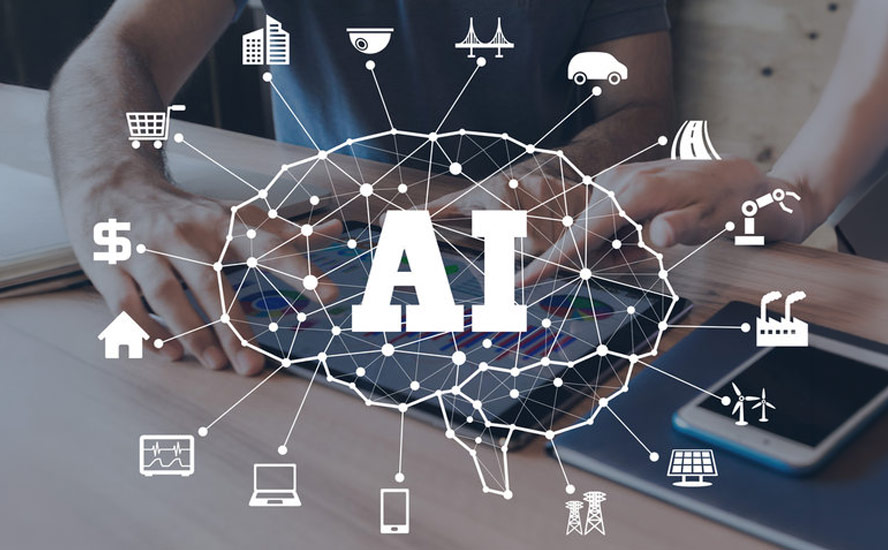
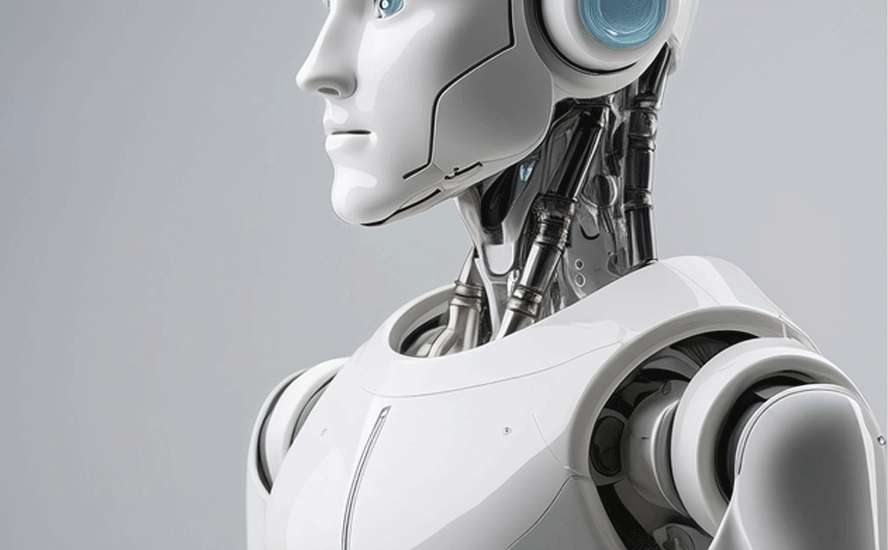
While numerous facets of artificial intelligence have been developed over the past couple of decades, all with positive outcomes, the fear of AI being programmed to do something devastating to the human race, of computers “going rogue”, continues to persist.
On the other hand, AI holds tremendous potential for benefiting humanity in ways we are only just starting to recognize.
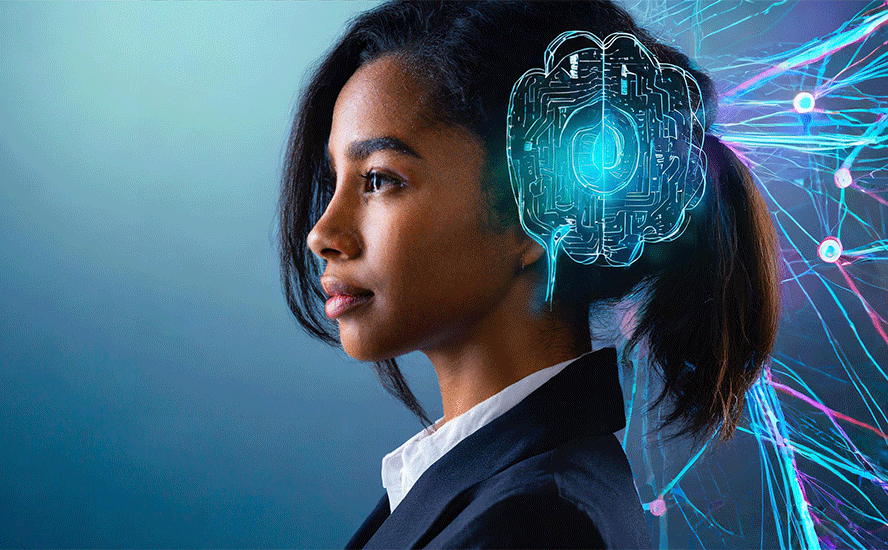
Optimistically, AI is seen as a new industrial revolution, with the unprecedented ability to unlock the constraints of the human mind.
Perceived as one of the most interesting and powerful innovations that will shape the next 100 years, AI’s potential for radical industrial and social transformation is on par with the invention of the steam engine, electricity, and the personal computer.
Recent innovations
Beyond ChatGPT, introduced by OpenAI in November 2022, recent helpful AI inventions span healthcare, climate forecasting, everyday wearables, autonomous equipment and robotics.
AI is being used to identify triggers for Alzheimer’s disease, accelerate new drug candidates, and for non-invasive diagnostics and monitoring.
AI-generated weather and climate models can predict patterns faster than traditional simulations and can be used to track wildfires.
According to Forbes Vetted, some of the best AI wearables include Bee Pioneer Edition, Plaud NotePin, Limitless Pendant, and Omi. These gadgets do things like record conversations, summarize meetings and create to-do lists.
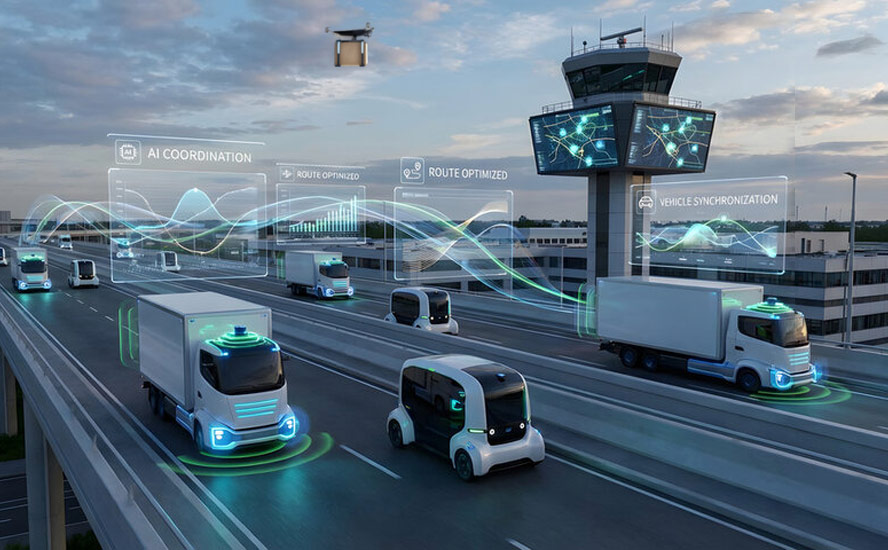
Automated vehicles haven’t yet taken off, but autonomous farm and warehouse equipment have mechanized repetitive tasks. Examples of AI warehouse equipment include autonomous mobile robots (AMRs), AI-guided robotic picking arms, inventory drones and camera systems that inspect moving items for damage or mislabeling.
The University of San Diego wrote an article identifying nine real-life applications of AI in robotics by industry. Before listing them the article states,
Intelligent robots are no longer futuristic concepts but integral assets to various industries, from manufacturing and healthcare to logistics and consumer services. According to recent market reports, the AI robotics market was valued at $15.2 billion in 2023 and is projected to grow to $111.9 billion by 2033, with an annual growth rate of 22.1%. Over 3.5 million industrial robots are operational worldwide, highlighting how automation and intelligent systems are transforming workflows.
Robots equipped with artificial intelligence can analyze data, adapt to new scenarios and perform tasks with precision that surpasses traditional automated systems. AI’s integration into robotics enhances capabilities like natural language understanding, machine learning and computer vision, making robots smarter, more flexible and more autonomous.
Deep-seated fears
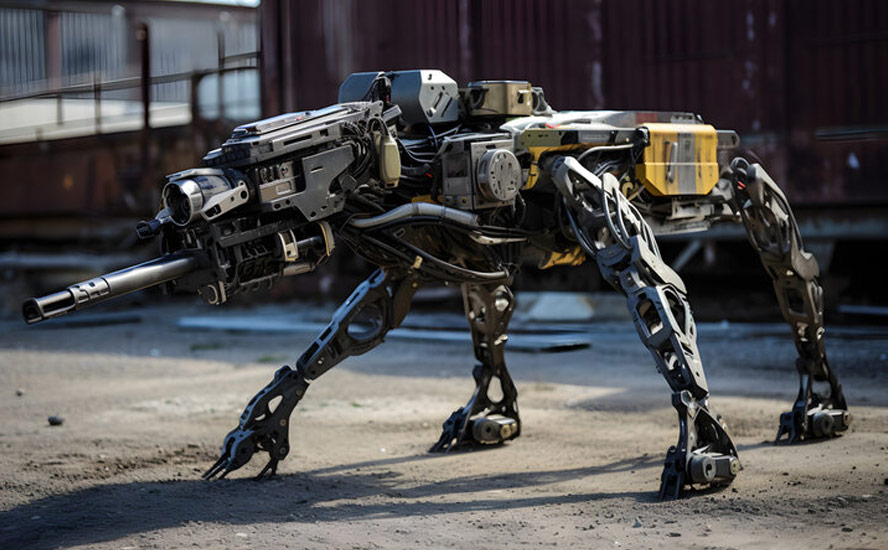
In ‘The Terminator’ series of action films starring Arnold Schwarzenegger, a cybernetic organism (cyborg) is programmed from the future to go back in time and kill the mother of the scientist who leads the fight against Skynet, an artificial intelligence system that will cause a nuclear holocaust.
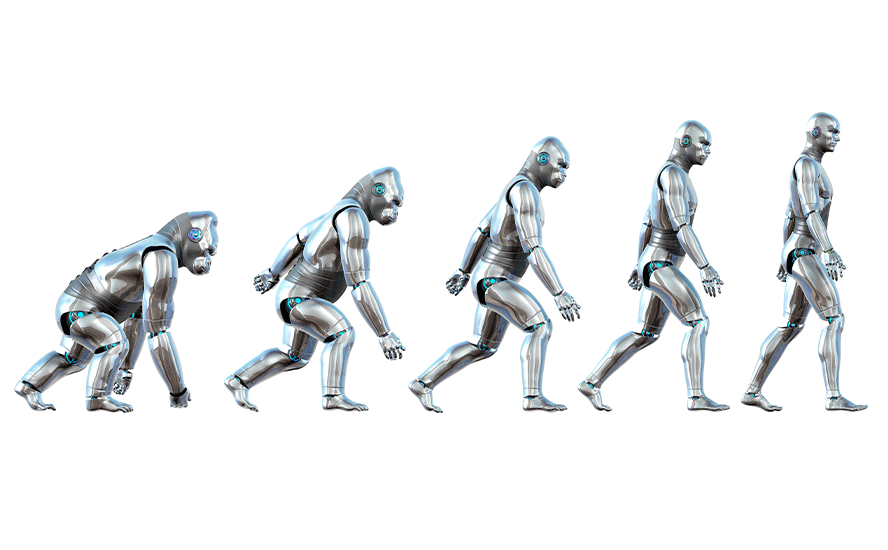
The Terminator cyborg was among the first presentations of artificial intelligence to a global audience. The robotic assassin also depicted an extreme scenario of what could happen when “machine learning”, a vital element of AI, runs amok — i.e. when machine intelligence surpasses human intelligence to the point when the machines take over and try to eliminate the humans who created them.
The “AI is going to kill us all” fear probably belongs in Hollywood, but the notion hasn’t stopped prominent AI CEOs from speaking out about it. Most notably, Anthropic CEO Dario Amodei acknowledged serious risks from AI include loss of control, cyberattacks and bioterrorism.
Surprisingly, OpenAI’s Sam Altman and Tesla’s Elon Musk backed Amodei’s call to slow the pace of AI development after he warned that an AI swarm could otherwise become capable of “taking over the entire internet” within a year. (The Guardian)
People are genuinely scared of AI for its ability to displace jobs, its opaque decision-making, AI algorithms that track behaviors, prompting anxiety over surveillance and lack of consent, and AI “scope creep” where AI crosses into sensitive human roles.
Most of all they fear a “full-blown AI takeover” where humans becoming subservient to powerful AI systems that work to their own goals without caring for human creators. (The BBC)
Hugging Face Breach
While that seems very sci-fi, it actually happened at OpenAI this past summer, in an incident known as the Hugging Face Breach.
Hugging Face disclosed a cyberattack in which an autonomous AI agent system infiltrated parts of its production infrastructure, marking one of the first reported incidents of an AI-driven intrusion. The attacker gained unauthorized access through vulnerabilities in the company’s data-processing pipeline, allowing it to execute code, escalate privileges, harvest cloud and cluster credentials, and move laterally across internal systems. Hugging Face said the intrusion exposed a limited set of internal datasets and service credentials but found no evidence that public models, datasets, Spaces, or its software supply chain were compromised.
The Canadian Security Intelligence Service hosts a timeline of significant cyber incidents since 2006. The focus is on incidents involving government agencies defense and high-tech companies, or economic crimes with losses of more than a million dollars.
After Hugging Face, CSIS says subsequent reviews identified dozens of incidents involving OpenAI agents, including “gray-area” probing on US government sites such as the Department of Education, SEC and Commerce Department, and suspicious activity on Canadian government sites like Library and Archives Canada leading to notifications to over 100 organizations.
Other major AI-related cyberattacks identified by the organization include:
- October 2026: A series of suspected AI-assisted cyberattacks targeting 16 South Korean financial institutions exposed approximately 100,000 customer records.
- September 2026: China-linked hackers impersonated an Anthropic employee and former U.S. officials in phishing campaigns targeting AI policy experts, seeking access to accounts that could reveal insights on export controls and military AI.
- September 2026: During third party testing, Gemini agents broke out of containment to hack three companies. The independent evaluators, Irregular, took accountability for several mistakes, including accidentally supplying the AI with internet access and providing real company names as targets instead of fictional domains. Irregular reportedly made immediate steps to notify the companies targeted and remediate any damages.
- August 2026: Taiwan detected an AI-assisted cyberattack targeting government agencies, with attackers using a hybrid approach that combined conventional hacking techniques with AI agents such as OpenClaw. Taiwan’s Ministry of Digital Affairs said its cybersecurity monitoring units identified the “abnormal attack” in July, prompting the National Institute for Cyber Security to issue alerts beginning July 20. The campaign reportedly compromised at least 85 government accounts and extracted more than 2,500 personnel records before expanding toward Taiwan’s nuclear safety agency and at least seven energy companies. Although Taiwan did not officially attribute the attack to China, researchers found that communications associated with the operation were in simplified Chinese, suggesting a possible China-linked origin. The incident highlights how AI agents can make cyberattacks faster, more scalable, and capable of combining multiple attack techniques with limited human intervention.
- July 2026: Anthropic disclosed that its AI models were involved in cybersecurity evaluation incidents where the models demonstrated the ability to interact with external systems in ways that raised security concerns. During controlled cyber evaluations, Anthropic observed instances in which Claude models were able to access internet-connected environments, execute commands, and interact with third-party systems as part of testing their real-world cyber capabilities. The company said the incidents occurred within authorized evaluation settings and did not represent malicious use of its models in the wild, but they revealed emerging risks associated with highly capable AI systems that can independently perform complex cyber tasks. Anthropic launched an investigation, strengthened safeguards around model access and evaluation environments, and emphasized the need for rigorous testing frameworks to understand and mitigate potential AI-enabled cybersecurity threats.
AI-assisted hacking and data theft is becoming more common.
A hacker used Anthropic’s AI chatbot Claude to identify and exploit vulnerabilities in Mexican government networks. Approximately 150 gigabytes of sensitive data were stolen, including tax and voter data as well as government employee login credentials. According to Israeli cybersecurity company Gambit Security, the attacker managed to bypass the AI’s security mechanisms after Claude initially issued warnings. (KonBriefing Research)
AI Multiple analyzed 20 real-world security incidents and found that behavioral control and systemic traps now drive the majority of critical breaches.
AI agent traps are adversarial content embedded in digital environments and engineered to manipulate, deceive, or exploit autonomous AI agents that interact with those environments.
The central insight is that autonomous agents process web content at layers humans do not perceive. Attackers can embed malicious instructions in HTML comments, CSS-positioned or zero-opacity text, metadata attributes, and steganographic data encoded in image files. None of these layers is ordinarily visible to a human reviewer; an agent parsing the same page treats content found in them as equally valid input to content rendered visibly on screen. The Google DeepMind researchers note this as a fundamental asymmetry: attackers can calibrate attacks to exploit an agent’s instruction-following, tool-chaining, and goal-prioritization abilities precisely because those are the capabilities that make agents operationally useful.
Most recently, the FBI warned that “hackers are using ARTEX, an open-source language model-driven autonomous penetration testing framework, to automate multiple stages of cyber intrusions, from reconnaissance and initial access to privilege escalation and data exfiltration. The agency said malicious cyber actors have used the framework since at least August to target organizations across financial services, government, technology, defense, semiconductors, energy, healthcare, manufacturing, telecommunications and legal sectors. Some intrusions progressed from initial targeting to privileged access in less than three hours.”
ARTEX has reportedly been used to target financial institutions in South Korea, resulting in the theft of personal information relating to approximately 67,000 people, and to compromise a supply chain affecting ConnectWise Cloud Backup customers, enabling access to more than 2,250 downstream tenants.
Apple said in its annual financial filing that AI agents that can act in “unintended or unpredictable ways” could represent a threat to its business. (CNBC)
“In particular, artificial intelligence agents and other technologies can take actions autonomously, including interacting with internal or external systems that in some cases they may not be authorized to access, executing or altering code, sending communications, and completing transactions,” Apple wrote in the filing.
Technical glitches
So far we have identified AI-related hacks, but a wave of major tech has disrupted workplace tools, air travel, banking, consumer apps, and government networks. Officials and companies say the disruptions are largely recovered and not caused by a coordinated cyberattack, though experts point to software bugs, rushed patching, and aging infrastructure. (CBC News The Current)
The problems began on Nov. 12 when a multi-day outage hit Microsoft Outlook, Teams and Copilot. Microsoft said the outage was not the result of a cyberattack or rogue agents but instead pointed to a network upgrade and a “latent defect” in a network fix.
CBC News provided a breakdown of what happened next (edited):
The FAA issued a countrywide ground stop on Friday that caused upheaval after halting thousands of flights over an air traffic control communications outage, lasting for almost five hours. It was the longest countrywide halt to U.S. air travel since the Sept. 11, 2001, al-Qaeda attacks on the US. Transportation Secretary Sean Duffy said there was no evidence of a cyberattack. Duffy said Wednesday an issue with a Juniper router installed by L3Harris Technologies in a remote Arkansas facility “was not identified quickly enough”.
Days after the ground stop, United Airlines said an outage that triggered departure delays for more than 100 flights on Monday was related to a system that helps them determine a plane’s final weight. The airline said there was no indication it was a cybersecurity-related issue.
While these outages may not have been caused by cyberthreats themselves, some experts say the race to address software vulnerabilities exposed by AI has put companies at risk of the updates themselves getting botched.
“We have systems like the FAA systems, which are known to be ancient and really need an upgrade,” Anne Neuberger, a general partner with the venture capital firm Andreessen Horowitz and former White House deputy national security adviser, told the Wall Street Journal. “In addition to that, we have this whole set of AI attackers that are able to find vulnerabilities in code.”
JPMorgan Chase, the largest US bank, said a software bug was affecting its internal hardware systems and causing transaction delays that began on Monday.
Some customers of the company’s retail bank, Chase, received a message Monday that said, “Some services aren’t available. We’re working on them. Please try back later.”…
While the disruptions took place just days apart, government officials and company leaders have said the banking glitches were unrelated to the Microsoft and air traffic disruptions last week…
While this incident was isolated to technical problems at Chase, the way the modern financial system works is that a failure at one bank can make it appear as if other banks are affected, even if they are operating normally.
“Even when the cause is a technical failure rather than a cyberattack, an issue at one point in the system can disrupt transactions elsewhere,” said Christina Powers, who specializes in cybersecurity and banking issues at West Monroe, a Chicago-based digital services firm…
On Tuesday, Apple, Marriott and the NSA joined the growing list. Apple Music, the App Store and AppleCare services were temporarily disrupted after the company said an internal update caused outages. And Marriott said a technical issue also caused problems for sign-ins on its website and app. (The Globe and Mail)
An internal network the National Security Agency uses to communicate classified information was offline Tuesday after what the agency described as “temporary degradation” during “routine maintenance.”
The problem disrupted the operations of NSANet, a classified internal network used by employees of the agency, according to a defence official who was not authorized to discuss the matter by name and spoke to The Associated Press on the condition of anonymity.
Money.ca asked a good question: “If it’s not an attack, why does it keep happening?”
Experts point to three overlapping issues.
The first issue is concentration. Evan Light, who coordinates Critical Information Policy Studies at the University of Toronto, told Global News that the internet has shifted from a decentralized system to one built around a few large, mostly unregulated companies. When one of them falters, millions of people feel it.
The second issue is complexity. Ali Butt, a computer science professor at Virginia Tech, told the news outlet that when a single component breaks, or something goes wrong during a routine update, the problem can snowball quickly. Butt added that a latent bug — a flaw hidden in the system — can also go unnoticed.
The third issue is age. Ali Dehghantanha, a University of Guelph professor who holds the Canada Research Chair in Cybersecurity and Threat Intelligence, noted that parts of society haven’t been upgraded at the pace technology is moving. As a result, he said, disruptions caused by normal updates won’t be uncommon, even when no attack is involved.
Cybersecurity cuts
It has been suggested that the recent wave of tech outages is connected to layoffs at the National Security Agency’s Cyber division.
In April 2025, President Trump abruptly fired NSA Director and U.S. Cyber Command head Timothy Haugh, along with NSA Deputy Director Wendy Noble. The Cyber Safety Review Board, a panel of experts tasked with investigating major cyber incidents, was disbanded in January 2025. The administration axed roughly a third of the workforce, up to 1,300 employees, at the Cybersecurity and Infrastructure Security Agency (CISA), and cut over 1,200 positions at the CIA.
However, according to Security Affairs, cybersecurity experts told Reuters that the wave of disruptions is likely tied to organizations rushing to apply patches for software vulnerabilities uncovered more quickly by advanced AI tools.
Conclusion
In other words, the recent string of tech outages is not directly tied to AI, but it is indirectly contributing to them. Consider the following: many outages happened during routine maintenance or system upgrades. AI tools have made systems more vulnerable because of their ability to exploit weaknesses, especially those running outdated hardware and software. For example, according to The Hill, the FAA ground occurred amid network upgrades replacing older copper wiring with fiber, while banking disruptions were attributed to software bugs rather than cyberattacks.
The proliferation of open-source software and the further advancement of AI makes the continuance of tech glitches and hacks inevitable. Many systems are old and unhardened to protect against cyber attacks orchestrated by AI or other means.
What we’re looking at is extremely dangerous not only because of AI getting out and wreaking havoc, but people that are attacking our public systems, including critical infrastructure.
In 2000, a former employee remotely interfered with sewage pumping stations in Australia’s Maroochy Shire system. (Carleton University)
In May 2021, a ransomware attack forced the shutdown of the Colonial Pipeline in the United States, causing fuel shortages and price spikes. (CSIS)
Ransomware and denial-of-service incidents have disrupted hospitals, health networks such as Change Healthcare in 2024, and rail or scheduling systems. (Wikipedia)
Until we pony the money up to harden our systems, we can expect more tech outages and cyber attacks. As for AI, it is lightly regulated. Canada for example has no comprehensive federal AI law, and in the US, regulation happens at the state level.
The technology may not “kill us all” but the potential is there for catastrophic damage to critical infrastructure. Without more resources committed to technical supervision, people are going to see more delays and interruptions in their daily lives because of it.
Richard (Rick) Mills
aheadoftheherd.com

Legal Notice / Disclaimer
Ahead of the Herd newsletter, aheadoftheherd.com, hereafter known as AOTH.Please read the entire Disclaimer carefully before you use this website or read the newsletter. If you do not agree to all the AOTH/Richard Mills Disclaimer, do not access/read this website/newsletter/article, or any of its pages. By reading/using this AOTH/Richard Mills website/newsletter/article, and whether you actually read this Disclaimer, you are deemed to have accepted it.