 RSS Subscribe
Profits Over Security? How Washington Facilitated Nvidia’s Chip Pipeline to Beijing – AOTH
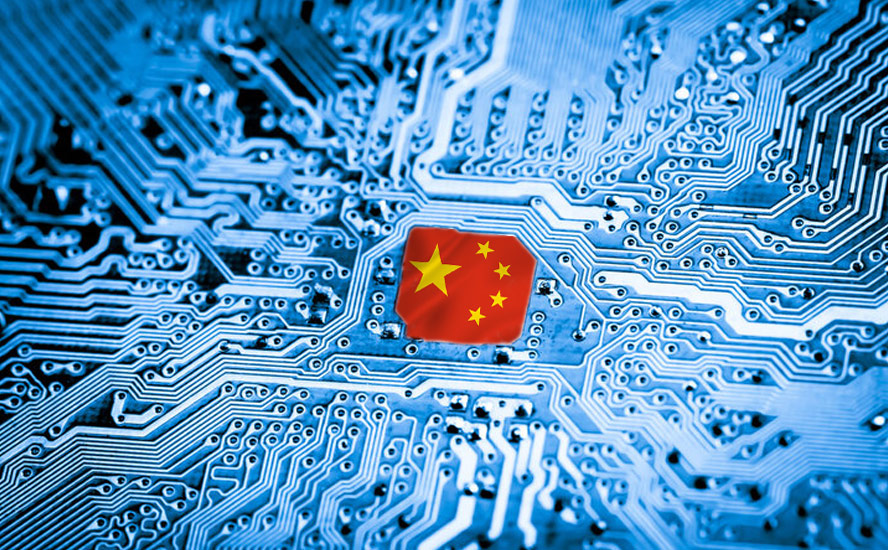
The fallout surrounding Nvidia CEO Jensen Huang’s resignation centers heavily on U.S. export controls, national security, and the U.S.–China AI race, extending far beyond the personal conduct and espionage headlines.
Reporting from outlets including The New York Times, The Washington Post, Axios, and the BBC details how policy decisions by President Donald Trump and Commerce Secretary Howard Lutnick directly shaped China’s access to advanced Nvidia hardware.
Following direct lobbying from Jensen Huang—including meetings at Mar-a-Lago in spring 2025—President Trump lifted restrictions on Nvidia’s H20 chip in July 2025.
Later in 2025, Trump agreed to allow Nvidia to sell its more advanced H200chips to China in exchange for the U.S. government receiving a 15% cut of the revenue. Commerce Department lawyers were reportedly tasked with finding ways around federal laws banning export taxes to facilitate the arrangement.
While the administration kept a ban on selling Nvidia’s top-tier Blackwell series directly to China, critics argued that allowing H20 and H200 sales—alongside remote cloud access—eroded the U.S. technological lead.
U.S. officials suspected that Singapore-based cloud firm Megaspeed—where alleged Chinese intelligence asset Alice Huang was an executive—acquired over $4 billion in Nvidia hardware and diverted restricted chips to China.
According to Axios and The New York Times, officials from the State, Treasury, and Defense departments pushed for months to add Megaspeed to the Commerce Department’s trade blacklist (“Entity List”).
Commerce Secretary Howard Lutnick reportedly delayed action at least three times in 2026, even after President Trump signed off on a crackdown, warning colleagues that tighter restrictions could antagonize Beijing and spark a trade war. Additionally, the Commerce Department’s investigation into Megaspeed was reportedly stalled after intervention from Nvidia’s legal counsel. (The Commerce Department has denied accounts of internal confrontations over the delays.)
Critics—including Treasury Secretary Scott Bessent, former Trump national security officials, and congressional lawmakers—argue that chip leakage and relaxed export rules hand Chinese firms and military-linked institutions a vital advantage in training frontier AI models.
Jensen Huang and supporters of looser controls argued that cutting off Nvidia sales only accelerates China’s domestic chipmaking independence (such as through Huawei). Meanwhile, reporting notes that President Trump weighed intelligence warnings against preserving trade relations with Beijing and protecting Nvidia’s massive role in driving U.S. stock market growth.
The facilitated sales of advanced Nvidia chips to China—and the White House decisions that enabled them—are often framed as a distant battle between tech billionaires and Washington insiders. However, national security experts, economists, and lawmakers point to several direct ways these decisions affect ordinary Americans’ safety, wallets, and daily lives.
Advanced AI chips are the foundational engines behind modern military technology, including autonomous drone swarms, hypersonic missile guidance, and battlefield surveillance.
Defense officials warn that helping China’s military modernize faster weakens the U.S. technological edge that deters conflicts—such as a potential crisis over Taiwan—where American service members could be put in harm’s way.
Frontier AI models powered by high-end chips can also automate the discovery of software vulnerabilities and launch large-scale cyberattacks.
U.S. intelligence agencies have repeatedly warned that Chinese state-backed hackers target American power grids, water systems, hospitals, and financial networks—systems that ordinary families rely on every day.
The U.S. economy relies heavily on leading the world in innovation, software, and advanced manufacturing, which support millions of high-paying domestic jobs and retirement accounts.
Analysts note that if China uses American hardware to build dominant AI systems in healthcare, logistics, and manufacturing, U.S. companies could lose global market share, slowing domestic wage growth and job creation.
China already dominates global supply chains for pharmaceuticals, electronics, and critical minerals. Ceding leadership in AI gives Beijing even greater economic leverage during trade disputes.
If U.S.–China tensions escalate into broader trade restrictions or supply chain disruptions over advanced tech, the resulting tariffs and shortages ultimately show up as higher prices for everyday consumer goods, vehicles, and appliances.
When top officials arrange custom revenue-sharing deals or stall trade blacklists against the advice of defense and intelligence agencies, it raises questions about whether public safety is being weighed fairly against corporate lobbying and stock market gains.
How Washington handles these export rules sets the standard for whether sensitive American inventions are treated as strategic national assets or bargaining chips in political and trade negotiations.
Conclusion
It is easy to dismiss the Nvidia fallout as just another Washington scandal—a tangle of corporate lobbying, Silicon Valley intrigue, and espionage headlines that feels worlds away from the kitchen table. But the decisions made behind closed doors at the White House and the Commerce Department are not abstract policy debates. They shape the security of the power grids that keep American homes running, the strength of the military that deters global conflict, and the future of the industries that drive middle-class jobs.
For years, U.S. export controls were built on a simple premise: America’s most advanced technology should not be used to arm a strategic rival. When top officials override national security warnings, stall enforcement blacklists, and cut custom revenue-sharing deals to keep high-end chips flowing to Beijing, they are trading away a hard-won American advantage for short-term market gains.
As Congress prepares to investigate these deals and question the officials who approved them, the central question isn’t just who broke the rules or who lobbied whom. It is whether the federal government will treat critical technology as a vital safeguard for the American public—or as just another bargaining chip up for sale.

Legal Notice / Disclaimer
Ahead of the Herd newsletter, aheadoftheherd.com, hereafter known as AOTH.Please read the entire Disclaimer carefully before you use this website or read the newsletter. If you do not agree to all the AOTH/Richard Mills Disclaimer, do not access/read this website/newsletter/article, or any of its pages. By reading/using this AOTH/Richard Mills website/newsletter/article, and whether you actually read this Disclaimer, you are deemed to have accepted it.