 RSS Subscribe
Tungsten and antimony: mission critical exploration – Richard Mills

2026.05.07
Tungsten and antimony are two of the most sought-after metals in the world. Both are facing severe supply restrictions due to heavy concentration in China. Both have also been designated critical minerals by the United States and Canada, driving urgent exploration by non-Chinese sources.
Antimony
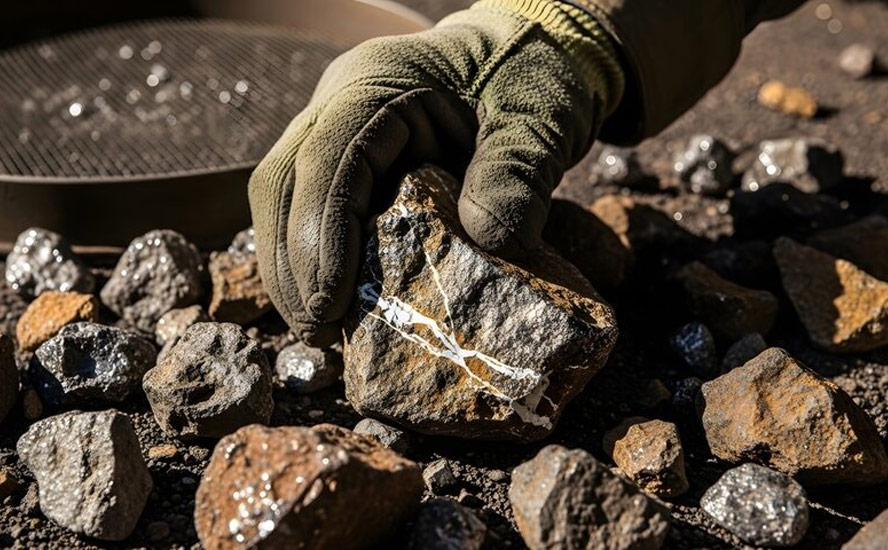
Antimony (Sb) is primarily found in the mineral stibnite (the primary ore mineral of antimony, containing 71.4% antimony and 28.6% sulfur). It is widely used across several industries including defense applications, where it is a key component in flame-retardant materials, armor-piercing ammunition and explosives.
The metal is also an important ingredient in lead-acid batteries; in the production of semiconductors (diodes and infrared detectors); in flame-retardant materials used in plastics, textiles and electronics; and it is alloyed with lead and tin to increase hardness and durability for bearings, ammunition and solders.
Antimony’s criticality is due to its essential role in national security, energy infrastructure and industrial manufacturing. China produces nearly 80% of global supply and retains control over both antimony mining and downstream processing. In 2024, Beijing placed export restrictions on antimony, raising supply concerns for countries like the United States and Canada which rely on Chinese imports.
While a total ban on exports to the US was suspended in November 2025, antimony remains on China’s dual-use export control list, requiring licenses for foreign sales, with prohibitions on exports to US military users still in effect until November 27, 2026.
In February 2025 China added tungsten to its export restrictions, requiring permits and end-user certification to supposedly protect national security and resources. The controls target semiconductors and the electric vehicle industry. For 2026-27, only a limited number of Chinese companies are allowed to export these materials — 15 for tungsten and 11 for antimony.
Antimony prices increased in July of 2025 to USD$59,750 per tonne following a massive rally driven by China’s export bans on antimony. While currently cooling from the record peak, the market is expected to remain tight, with prices remaining historically elevated.
Among the companies exploring for gold and antimony are New Age Metals (TSXV:NAM), which has 11 gold-antimony properties in Newfoundland; Au Gold Corp (TSXV:AUGC), which has a gold-antimony project in the state of Victoria, Australia; Antimony Resources Corp (CSE:ATMY), exploring the Bald Hill Antimony Project in New Brunswick; and NSJ Gold Corp (CSE:NSJ), which has a 35-square-kilometer antimony property, also in New Brunswick.

New Age Metals (TSXV:NAM)
New Age Metals has established a presence in central Newfoundland by map-staking a strategic land package totaling 19,125 hectares, focused on gold and antimony mineralization.
The 765 newly staked claims are adjacent to and along strike of the Swanger Cove gold-antimony target and Le Pouvoir gold-antimony showing in south-central Newfoundland, and along strike of the Beaver Brook antimony mine, Canada’s only primary antimony producer, and adjacent to the large Queensway gold project, owned by New Found Gold (TSXV:NFG).
Au Gold Corp (TSXV:AUGC)
Au Gold’s Havelock Gold-Antimony Project includes two large-scale (over 10 kilometers combined) structural gold-bearing trends, minimally explored with multiple undrilled targets: Shaw-McFarlane Trend, Shaw-McFarlane Shaft, McFarlane Dam, and Leviathan-Mariner’s Trend.
The project is located within the Victorian goldfields near Maryborough, roughly halfway between Bendigo and Ballarat and about a 90-minute drive from Melbourne. Paved roads and gravel tracks provide year-round access. Land ownership is a combination of Crown land and private property.
Historical gold production from the Maryborough Goldfield is estimated to be more than 1 million ounces. The district-scale (11,663-ha) property hosts multiple structural trends with significant strike lengths of gold-bearing reef mineralization.
The Shaw-McFarlane Trend hosts at least four shafts and one recent discovery along a 5-km strike length. Historical gold grades from all sites consistently averaged above 20 g/t.
Antimony is associated with a number of the gold-bearing sites at Havelock yielding comparisons to a “Fosterville”-style epizonal setting.
Agnico Eagle’s (NYSE:AEM) discovery of the Eagle and Swan zones at the Fosterville mine in 2015 transformed it into one of the highest-grade gold mines in the world.
Southern Cross Gold (TSX:SXGC) discovered high-grade gold-antimony veins in 2022 at Sunday Creek. Both projects are gold-antimony, as is Alkane Resources’ (TSX:ALK) Costerfield mine.
Historical exploration campaigns suggest mineralized zones have developed parallel to the Shaw-McFarlane Trend and have never been followed up. No diamond drilling has been recorded.
The recent surface discovery of gold-bearing mineralization at McFarlane Dam suggests high potential for shallow, near-surface mineralization.
According to CSIRO, via Australian Mining, Australia has the potential be an “emerging, strategic option” for reliable and secure supply of antimony due of to having the world’s fourth-largest reserves.
Another article by the same publication quotes James Sorahan, executive director of the Minerals Council of Australia, who said antimony stand out as a mineral of growing significance for the state of Victoria.
“Victoria is a big part of Australia’s critical minerals future. We are currently the only state mining antimony,” Sorahan said. “Although antimony has been produced in New South Wales previously, Victoria now holds the country’s active operations and some of its most promising exploration projects.
“Victoria is producing probably four or five per cent of the world’s supply of antimony.”
Strategic reserve to secure Australia’s critical mineral supply
Antimony Resources Corp (CSE:ATMY)
Antimony Resources’ Bald Hill property is known for its high-grade antimony, with drilling outlining a deposit over 700 meters long to depths of 400m and open in all directions, averaging widths of over 3 meters and grades of 3% to 4% Sb.
The project is located in New Brunswick, accessible via provincial and regional highways with a deep-sea port 45 kilometers away.
Forty holes have been drilled since 2008. There are three antimony-bearing breccias and hydrothermal vein zones. Discovery hole DDH08-03 returned 4.51m @ 11.7% Sb, including 2.29m @ 20.9% Sb.
Trenching has uncovered 2.90% Sb over 8.18m, including 5.79% Sb over 1.75m and 8.47% Sb over 1.53m.
On Jan. 26 ATMY published assay results from drill holes BH-25-22 to BH-25-31. The company says high-grade antimony-bearing stibnite mineralization continues to be intersected between 75% to 80% of the drill holes. BH-25-22 intersected 2.38% Sb over 9.6m and in BH-25-27 6.79% Sb over 2.3m was encountered.
On Feb. 3 Antimony Resources announced it has expanded and outlined further massive stibnite mineralization at the newly discovered Marcus (West) Zone and have exposed the mineralization in bedrock over 25 meters.
NSJ Gold Corp (CSE:NSJ)
NSJ Gold’s Antimony 2.0 Project is located about 25 km west of Fredericton, New Brunswick, and 15 km northeast of the historical Lake George antimony mine — which operated from the 1860s to 1998, and between 1970 and 1992 supplied up to 4% of global antimony demand.
The property is accessible via paved roads and logging roads and has nearby hydro power infrastructure.
Antimony has been detected at highly anomalous levels in soil samples. The geology is similar to the Lake George mine, consisting of interbedded Silurian greywacke and argillite. Previous work includes a 395-sample reconnaissance soil survey and drone magnetic survey, identifying three robust soil anomalies.
Upcoming work includes analysis of over 400 soil samples, and a 5-km Induced Polarization (IP) survey to define drill targets. The IP will focus on anomalous zones to map potential mineralized structures and subsurface resistivity variations.
Tungsten
Tungsten (W) is one of the world’s hardest and hardest-to-source materials. It tolerates the most extreme-temperature environments, making it useful for lights, transistors, construction equipment, and parts for cars and aircraft. Tungsten-based alloys are used in a variety of industries, including defense, aerospace, energy and electronics.
Because tungsten is extremely hard, it is essential for armor-piercing munitions and high-end tooling. This has turned tungsten into a frontline strategic material. No wonder that several countries, including Canada and the US, have classified it as a critical mineral.
According to Investor News, “without tungsten, the modern military-industrial machine quite literally grinds to a halt.”
Even mining depends on tungsten, as diamond drill bits rely on tungsten components.
Just over half of the globe’s tungsten reserves are in China. Other reserve holders include Canada, Russia, the US, Vietnam and Bolivia, in descending order. Canada’s only producing tungsten mine, Cantung in the Northwest Territories, closed in 2015. Vietnam is boosting its output to overtake Russia.
Tungsten supply isn’t keeping up with demand, which is why Chinese tungsten prices rocketed 200% in 2025, while at the end of January, prices of ammonium paratungstate, used to make tungsten metal, were trading at $1,125 to $1,150 per metric ton unit (mtu) in China, a record high. Factors include China cutting its mining quota by 6.5% last year, Chinese export controls and industrial demand.
In tungsten trading, an MTU is a pricing unit equal to 10 kilograms of contained tungsten trioxide (WO₃). It’s the standard benchmark used globally when quoting prices for APT (ammonium paratungstate) and tungsten concentrates.
What MTU Means in Tungsten Sales.
- MTU = Metric Tonne Unit
- 1 MTU = 10 kg of WO₃ content, not 10 kg of raw ore.
- Tungsten concentrates and APT are priced per MTU of WO₃, because ore grades vary and buyers pay for the actual tungsten content, not the bulk weight.
Recent Tungsten Prices (2026 market context).
Ammonium Paratungstate (APT) – the main benchmark for tungsten pricing:
- ~$1,100–$1,150 per MTU in China (record highs as supply tightens)
- ~$1,000–$1,050 per MTU in Europe (CIF Rotterdam) according to recent trade data
- Traders have cited APT in some spots around $900–$1,080/MTU depending on region and timing.
Outside of China, which accounts for 83% of global supply, there are only a few tungsten mines, making exploration imperative.
Among the juniors exploring for tungsten are Fireweed Metals (TSXV:FWZ), Rackla Metals (TSXV:RAK), Allied Critical Metals (CSE:ASM) and Western Star Resources (CSE:WSR).
Fireweed Metals (TSXV:FWZ)
The Mactung Project straddles the Yukon-Northwest Territories border and is adjacent to Fireweed’s flagship MacPass Project. The company acquired Mactung in the spring of 2023.
After its discovery in 1962, extensive drilling, engineering, metallurgy, geotechnical and environmental studies were completed over the next decades in support of a 2009 feasibility study and a positive environmental assessment in 2014.
Fireweed is undertaking technical and environmental studies in support of project licensing to advance their tungsten project.
Also, Fireweed was awarded USD$15.8 million under the Defense Production Act (DPA) Title III to advance the project to a Final Investment Decision (FID), a key precursor to the construction and production of domestic tungsten concentrates for the North American industrial base.
The existing North Canol Road (Yukon Highway 6) is a major constraint to project development, roughly 250 km of road from Ross River to the project requires improvements for future mine construction and concentrate transport and as of early 2026 there is no way to transport concentrates across the Pelly River. Barges were used but need to be replaced/permitted. As well a 138 kV transmission line is under consideration.
Rackla Metals (TSXV:RAK)
While conducting regional exploration, Rackla evaluated three Cretaceous intrusions at the historical Lened tungsten deposit in the Northwest Territories. Lened is located about 50 km (about 4 kilometers from the Howard’s Pass access road), north of the road accessible past-producing Cantung tungsten mine, which has a non-NI 43-101-compliant resource of 3.84 million tons in the indicated category @ 0.97% WO3, and 1.37Mt inferred @ 0.8% WO3 (not to be relied upon for investment purposes).
One of the stream sediment samples from Lened Creek returned a strong gold anomaly of 6.5 g/t Au. Rackla crews found much of the historical core was on the property and recoverable. The company became aware that the deposit was much more advanced that it had previously recognized, thus immediately staked it.
Discovered in 1960, in 1976 Union Carbide purchased the Lened tungsten deposit, extensively exploring the site from 1977 to 1982. The project was advanced to the prefeasibility stage.
Their work included geological mapping, geochemical and geophysical surveys, metallurgical testing, drilling 26,900 meters in 178 holes, and economic and environmental studies. Another 15 tungsten occurrences were discovered over a 15-km strike along the northeastern bank of Lened Creek.
In 1980, Union Carbide produced the first mineral resource estimate for the project — an indicated 2.82 million tonnes at a grade of 1.27 WO3 (not NI 43-101-compliant and not to be relied on for investment purposes). Union Carbide reported the deposit to contain copper, and gold grades up to 1 g/t in selected core samples. There are several zones outside of this resource with high-grade tungsten, in places up to 10% W03.
Rackla has acquired the original Union Carbide documents, which are currently being scanned and catalogued. Once received Rackla will bring the dataset into 3D visualization software and design an exploration program to bring the resource up to an NI 43-101 standard.
Plans for 2026 include recovering, re-logging and re-sampling of the historical core to test for copper, gold and any other metals that might be associated with the tungsten, and testing of the other high-grade showings tungsten showings on the property.
Allied Critical Metals (CSE:ASM)
Allied Critical Metals is focused on two historically significant tungsten mining projects in northern Portugal — Borralha and Vila Verde.
Borralha is an advanced-stage brownfield project with an updated 2025 resource of 13 million tonnes at 0.21% WO3 (measured and indicated), and 7.7Mt inferred at 0.18% WO3. There was historical production from 1904 to 1985 of over 10,280 tonnes wolframite concentrate at an average grade of 66% WO3.
The project is currently undergoing an Environmental Impact Assessment.
Villa Verde is 45 km southeast of Borralha and it is triple the size.
Seventeen diamond drill holes totaling 2,103m revealed a 2.1 km x 1 km tungsten-tin mineralized system at the Cumieira Zone, and a 1 km x 500m tungsten-tin mineralized system at the Porqueira deposit.
Villa Verde has an inferred resource of 7.3 million tonnes with a cut-off grade of 500 grams per tonne WO3, including 4.0 million tonnes WO3 grading 1,347 g/t WO3 and 264 g/t tin at the Cumieira deposit, and 3.3 million tonnes grading 961 g/t WO3 at Porqueira.
The company has signed a Letter of Intent with Global Tungsten Powders based in Pennsylvania for the sale of tungsten concentrate.
Western Star Resources (CSE:WSR)
In September 2025, Western Star Resources signed a Letter of Intent to acquire Real American Corp. and optioned the Rowland property in Nevada.
The project represents past-producing operations with established infrastructure and known high-grade mineralization. It previously outputted 1,000 tonnes with grades up to 3.38% WO3.
Rowland is located in the Jarbidge mining district, and according to the company, host the same rocks as the Tennessee Mountain Tungsten Project owned by Trigg Minerals’ (ASX:TMG) which is rebranding to American Tungsten & Antimony Ltd. (ASX:AT4).
Tennessee Mountain has a historical resource estimate of 708,602 tonnes grading between 0.3% and 0.5% WO₃ reported by the US Defense Minerals Exploration Administration (DMEA) in 1957.
“We plan to get crews out on the ground as soon as possible to start with geophysics, channels sampling and mapping. The goal with the first phase of exploration is to get the project to a drill-ready stage, ready for its maiden program early next year,” CEO Blake Morgan said in November.
Richard (Rick) Mills
aheadoftheherd.com
Subscribe to AOTH’s free newsletter
Richard owns shares of Au Gold (TSXV:AUGC) and Rackla Metals (TSXV:RAK). RAK and AUGC are paid advertisers on his site aheadoftheherd.com This article is issued on behalf of RAK and AUGC.
Legal Notice / Disclaimer
Ahead of the Herd newsletter, aheadoftheherd.com, hereafter known as AOTH.Please read the entire Disclaimer carefully before you use this website or read the newsletter. If you do not agree to all the AOTH/Richard Mills Disclaimer, do not access/read this website/newsletter/article, or any of its pages. By reading/using this AOTH/Richard Mills website/newsletter/article, and whether you actually read this Disclaimer, you are deemed to have accepted it.