 RSS Subscribe
This Experimental Cancer Drug Made Tumors Vanish, Without the Dangerous Side Effects
From .SciTechDaily
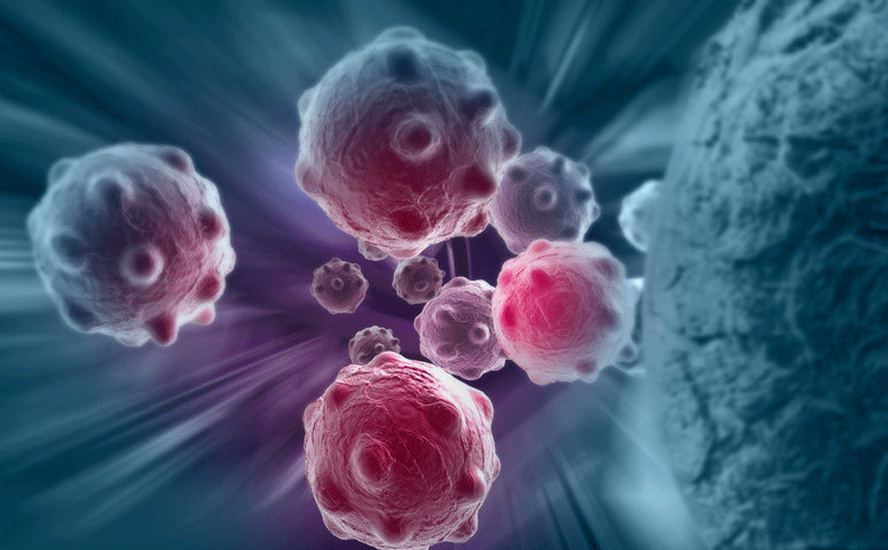
For two decades, cancer therapies known as CD40 agonist antibodies have raised hopes while repeatedly falling short. In laboratory animals, these drugs strongly stimulated immune attacks on tumors, but results in human trials were far less encouraging. Patients often saw little benefit and experienced serious side effects, including widespread inflammation, reduced platelet levels, and liver damage, even when the drugs were given at low doses.
In 2018, researchers led by Jeffrey V. Ravetch at Rockefeller University reported a potential way forward. His team showed that a redesigned CD40 agonist antibody could be made more effective while also being delivered in a way that reduced dangerous side effects. These results were based on studies in mice that were genetically engineered to reflect key human immune pathways. With those findings in hand, the researchers moved toward testing the approach in people.
Legal Notice / Disclaimer
Ahead of the Herd newsletter, aheadoftheherd.com, hereafter known as AOTH.Please read the entire Disclaimer carefully before you use this website or read the newsletter. If you do not agree to all the AOTH/Richard Mills Disclaimer, do not access/read this website/newsletter/article, or any of its pages. By reading/using this AOTH/Richard Mills website/newsletter/article, and whether you actually read this Disclaimer, you are deemed to have accepted it.