 RSS Subscribe
Torr Metals successfully outlines large supergene system at Bertha target, Kolos Copper-Gold Project in southern BC – Richard Mills
2025.12.05
I do love it when a plan comes together.
Torr Metals (TSXV:TMET) set out to drill the Bertha target at its Kolos Copper-Gold Project with the goal of identifying potential supergene mineralization, analogous to that found at the producing New Afton copper-gold mine, located 28 kilometers north-northeast of Kolos.
It turns out they’ve done that, and with 6,000 additional meters left to drill at Bertha, they’re not finished yet.
The model
The following three paragraphs are from the July 8, 2025 news release:
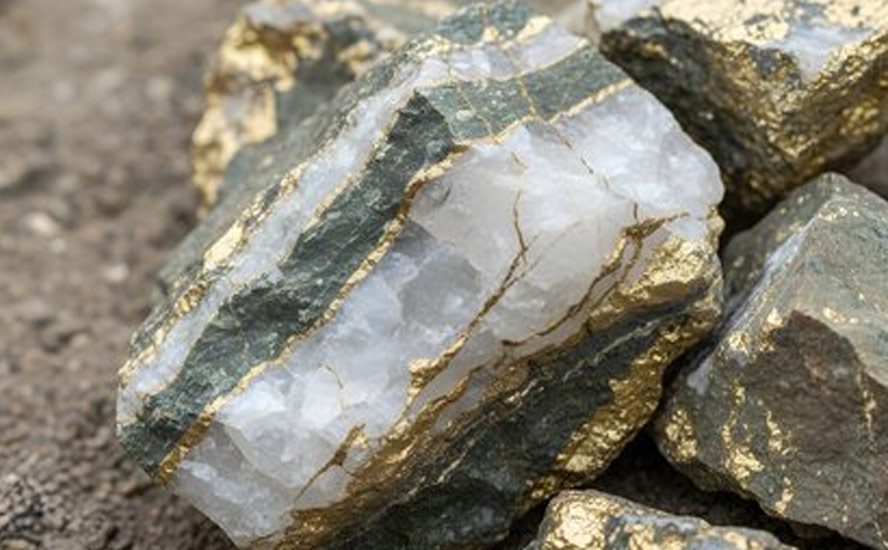
“The Bertha Zone represents a highly prospective, underexplored high-grade copper target where recent fieldwork has confirmed supergene-style copper mineralization, primarily sooty chalcocite, native copper, and malachite nodules hosted within brecciated volcanic rocks. This style and setting are geologically significant and comparable to the supergene enrichment zone at New Afton, located just 28 km to the north.”
“Supergene mineralization happens when copper-rich fluids from deeper underground move up through cracks in the rock, usually helped by rainwater or groundwater. As these fluids rise closer to surface, they interact with oxygen and other elements from rainwater or groundwater. This chemical reaction causes high-grade copper minerals, like chalcocite, native copper, and malachite, to form near surface.”
“At New Afton, the presence of a well-developed supergene blanket, characterized by abundant native copper and sooty chalcocite, was critical to the early economic success of the mine. This zone accounted for approximately 80% of the initial orebody, enabling low strip ratios, enhanced metal recoveries, and early cash flow. It overlies a deeper primary hypogene copper-gold porphyry system hosted within the Cherry Creek intrusion of the Iron Mask batholith, where brecciation and hydrothermal fluid pulses played a key role in both metal deposition and alteration zoning.”
When we talk about a New Afton style of mineralization, we are referring to the presence of iron-rich picrite forming a barrier to the mineralized flow of hot liquids and the iron acting as a reducing agent. Picrite is impermeable and has a very high iron content. Mineralized fluids are stopped at contact and the iron acts as a reducing agent causing the minerals, i.e., copper and gold, to drop out along contact. While picrite is impermeable it is also elastic; it can fold and have large empty spots within it. These become highly mineralized pods and lenses.
At the New Afton mine, the picrite unit forms a significant southern boundary for the main ore body. This massive, basaltic picrite unit is interpreted to have acted as a chemical and/or physical buffer that helped focus and precipitate the mineralizing fluids. This contact is often a steeply dipping fault zone and is a key structural control on the copper-gold mineralization. The copper-gold mineralization is associated with primary hypogene minerals like chalcopyrite and bornite, and supergene native copper where oxidation weathering occurs closer to the surface.
Drill program
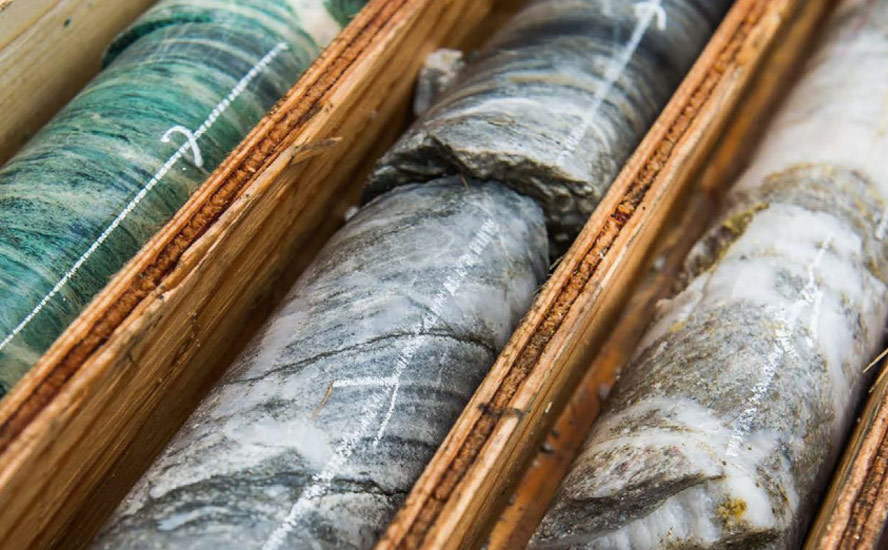
In mid-October Torr started drilling the Bertha target. The inaugural drill program at Kolos was slated for up to seven holes, designed to test the 900m by 500m moderate-to-high chargeability induced polarization (IP) anomaly.
Torr Metals starts drilling Bertha target at Kolos Copper-Gold Project — Richard Mills
Recent rock grab sampling from outcrops on the margins of the IP anomaly returned up to 16.9% copper (Cu) and 8.48 grams per tonne (g/t) silver (Ag). These results come from a series of parallel quartz-carbonate veins extending along a 30-meter strike length within the historical Bertha exploration pit, which reported past production of 30 tonnes averaging 2.14% Cu and 27.43 g/t Ag.
But the real reason Bertha is the priority is due to potential high-grade “supergene” mineralization, as well as the presence of a “picrite” unit which, combined, present an analog to the nearby New Afton mine.
Finding another New Afton would be an extraordinary discovery, one that has evaded mining companies for decades.
Torr Metals: Chasing a potential New Afton-style look-alike in the Quesnel Trough — Richard Mills
On Nov. 19 Torr came out with a drilling update, announcing that 2,100 meters had been completed in seven holes, and that the program is advancing towards 2,800m — a significant increase to the original 1,500m planned. Assays are pending.
According to President and CEO Malcolm Dorsey, “This supergene-style mineralization is very analogous in terms of host rock style of alteration and mineralization to the New Afton deposit; New Afton being one of the highest-grade copper-cold porphyries in British Columbia. Really, the only other comparable is the deeper sections of the Red Chris mine now owned by Newmont up in northern British Columbia.
“I’m starting at a target that had historical exploration at 30 tonnes at 2.14% copper, we’ve also defined surface mineralization along a strike length of 450 meters to the southwest, indicating a significant untested strike extent.
“None of it has been drilled. We’re the first to do IP geophysics as well. That IP geophysics shows us a chargeability anomaly that’s at least 900 meters in strike length.
“We can see it continues for over 600 meters vertical depth, and its dimensions are very similar to the structural controls of what you would see up at the New Afton system.”
The news
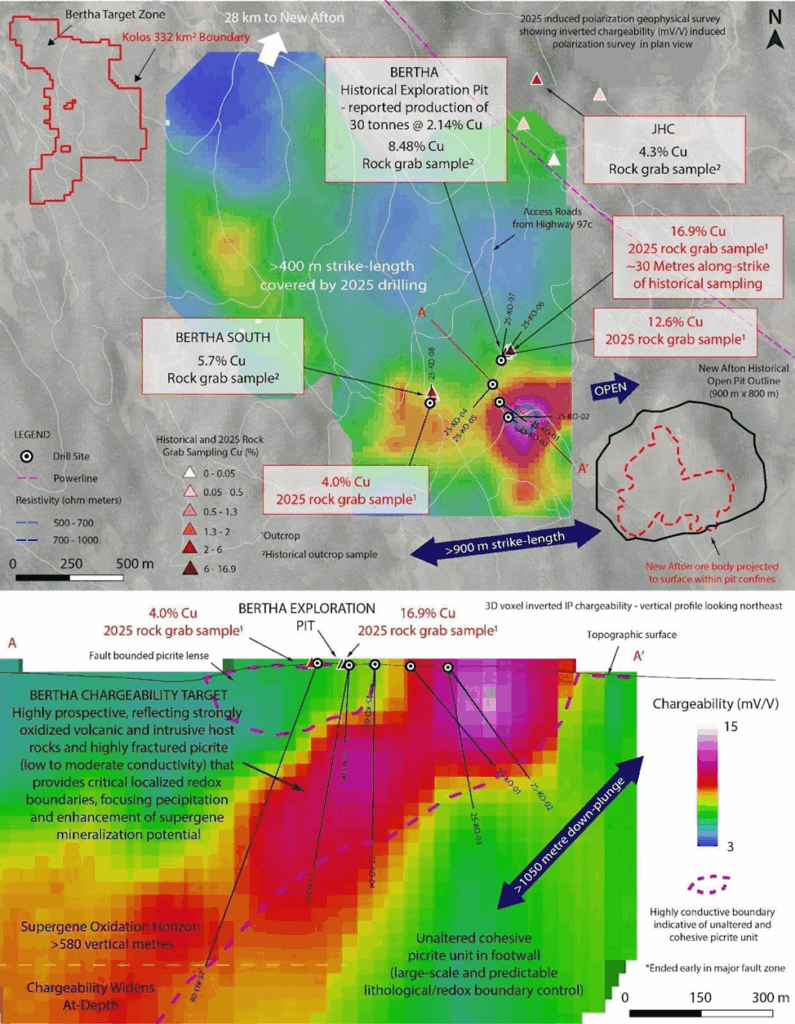
Torr announced on Dec. 4 that 2025 drilling at Bertha is now complete; 2,733 meters of diamond drilling was accomplished in eight holes.
Drilling tested about 400 meters of strike length and nearly 900 meters of down-plunge extent across the moderate-chargeability induced polarization (IP) geophysical anomaly (Figure 1).
The anomaly reflects strongly oxidized volcanic and intrusive host rocks, interspersed with shattered picrite, which provides critical local redox boundaries that enhance precipitation of supergene mineralization from copper-bearing fluids. (i.e., it conforms to the model above)
According to TMET, the first-ever drilling program on the Bertha IP chargeability target, designed to evaluate the strike, down-dip, and down-plunge continuity of the supergene system, is now confirmed to extend with strong structural controls to greater than 580 meters vertical depth.
In other words, they nailed it.
Compare this to New Afton, where supergene mineralization typically extends to depths of 400-500 meters in the western portion of the ore body and continues beyond 600 meters depth along major fault and fracture corridors, with the picrite contact serving as a critical structural-lithological boundary; an important control that is likewise well-defined at the Bertha target.
“The completion of 2,733 metres of drilling across eight drill holes at Bertha represents a major milestone for Torr and has significantly strengthened our confidence in the scale and geological setting of this newly recognized supergene system. We have now confirmed more than 400 metres of strike and close to 900 metres of down-plunge continuity of the system along a strongly structurally controlled corridor; an exceptional outcome for a first-pass drill program,” Dorsey stated in the Dec. 4 news release. “With assays pending for all eight holes, we are eager to share the geological context and clarity that these results will bring to the market as they begin to roll out over the coming months. With full funding for an additional 6,000 metres, Torr plans to return to Bertha following analysis in late Q1 or early Q2 2026 to continue advancing what we believe has the potential to become a significant brand-new copper-gold discovery in the region.”
Torr Metals
TSXV:TMET
2025.12.04 Share Price: Cdn$0.185
Shares Outstanding: 31.883.8m
Market Cap: Cdn$9.615.5m
TMET website
Richard (Rick) Mills
aheadoftheherd.com

Subscribe to AOTH’s free newsletter
Richard does not own shares of Torr Metals (TSXV:TMET). TMET is a paid advertiser on his site aheadoftheherd.com This article is issued on behalf of TMET
Legal Notice / Disclaimer
Ahead of the Herd newsletter, aheadoftheherd.com, hereafter known as AOTH.Please read the entire Disclaimer carefully before you use this website or read the newsletter. If you do not agree to all the AOTH/Richard Mills Disclaimer, do not access/read this website/newsletter/article, or any of its pages. By reading/using this AOTH/Richard Mills website/newsletter/article, and whether you actually read this Disclaimer, you are deemed to have accepted it.