 RSS Subscribe
Running on empty
2019.04.05
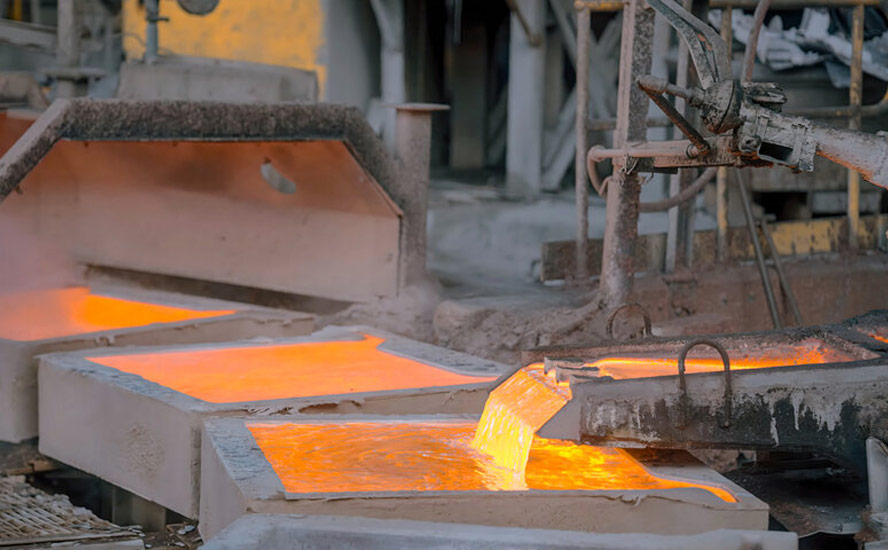
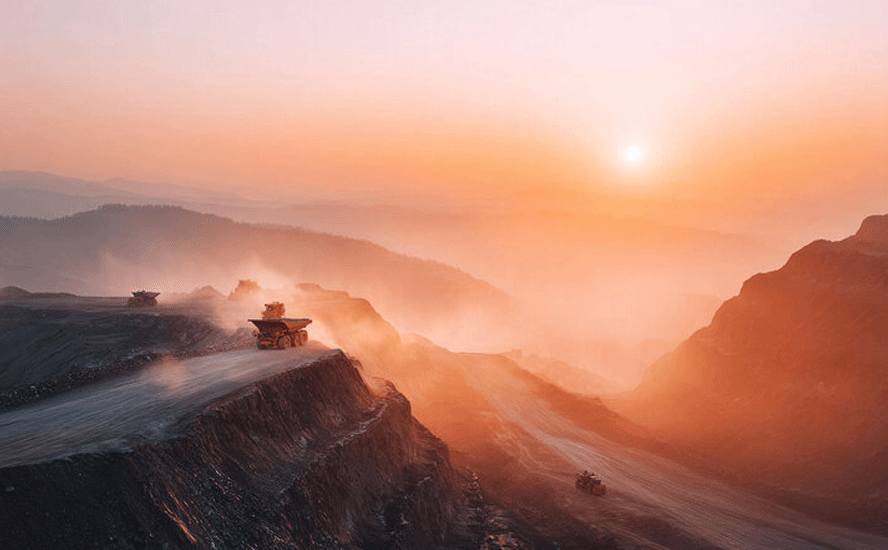
Mining is all around us, though invisible to urban dwellers, so it’s easy to forget that we live in a world of finite resources. Unlike forestry or agriculture, whose crops are renewable, once ore comes out of the ground and is processed into metals, it’s gone for good. Some industrial metals are recycled after mining, like copper, but this only extends the life of the resource; it doesn’t renew it.
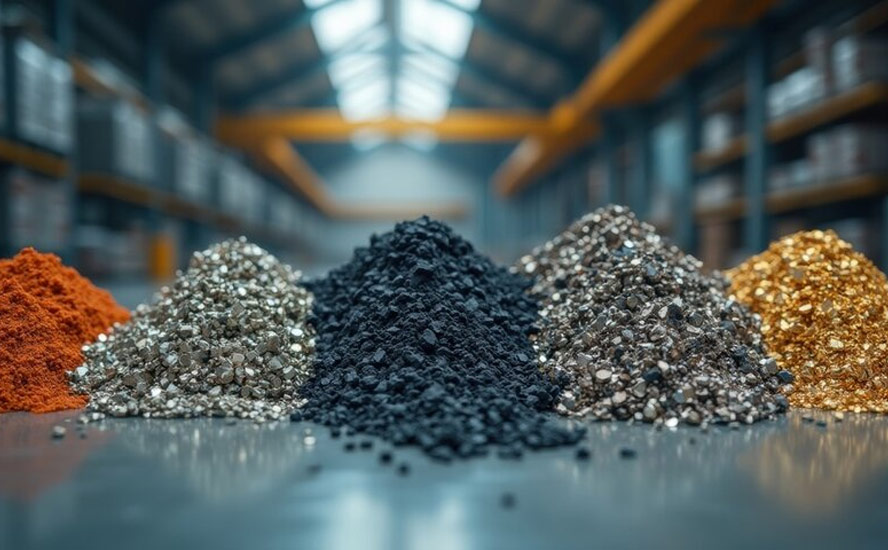
We know this intuitively, yet we continue to mine. The reason, of course, is because we need the materials, and companies with the expertise and money are eager to prospect and extract, especially high-value minerals like diamonds, battery metals and heavy rare earths.
We are facing a supply crunch for copper, zinc and lead – all crucial to the functioning of a modern economy. Imagine a world without copper? There would be no copper wiring, therefore no means of electrifying new buildings, no material for solder, no computers, TVs, circuit boards, semiconductors, microwaves, modems and routers.
The transportation industry is reliant on copper for components of airplanes, trains, cars, trucks and boats. A commercial airliner has up to 190 kilometers of copper wiring, while high-speed trains use up to 10 tonnes of copper per kilometer of track.
In electric vehicles (EVs), copper is a major component used in the electric motor, batteries, inverters, wiring and in charging stations. Without a copper substitute (there is none), the shift from gas-powered cars to EVs would abruptly stop.
For more read our The coming copper crunch
The counter-argument to peak metal is that a small percentage of the Earth’s crust has been mined. Finding more metals is just a matter of looking harder, spending more money, and going further afield. Such is the impetus behind asteroid and undersea mining. The problem is, no company is going to mine at a loss. It’s simply a matter of inputs and outputs. If the inputs (resources needed to mine, like water, fuel, power, machinery, labor) cost more than the output (the realized metal price), it makes no sense to mine. Unless we get to the point where government are paying mining companies to absorb their losses, because the materials are essential to society. Subsidized mining paid for by every taxpayer. We’re not there yet, but we are abruptly moving towards resource depletion in a number of areas. This article explains why.
Global material use
In our modern-day service economy, where old-school metal and wood mills are becoming a thing of the past or tucked away in remote corners of civilization, some like to disparage mining for its effects on the environment.
It’s true that mining cannot be done without disrupting the Earth. There have been leaks, spills, explosions, accidents, cave-ins. We could be doing more to improve safety and environmental controls. But overall, mining has been very good for society at large.
Let’s look at some facts and figures from a recent report by UN Environment, called ‘The Global Resources Outlook 2019’:
Global gross domestic product has doubled since 1970, enabling immense progress, and lifting of billions of people out of poverty. At the same time, this economic growth has been fueled by a relentless demand for natural resources. At no point in time nor at any level of income, has our demand for natural resources wavered.

Copper price/demand
Think about that. For the past 50 years, there has never been a period where demand for natural resources did not increase. How many businesses can say that? Sure, metals prices have fluctuated, but the need for metals has not diminished. In fact, mining is becoming even more important, as the transportation system goes from fossil-fuel-powered to electric, requiring a new mix of metals for batteries and components.
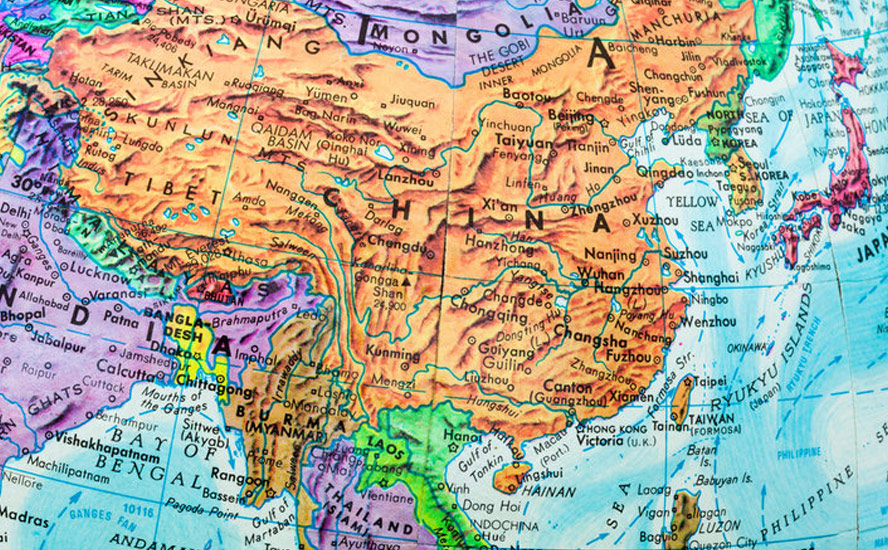
According to the UN report, over the last five decades, mineral extraction has tripled – and accelerated since 2000 as new economies (ie. China and India, “Chindia”) require huge amounts of materials for building new infrastructure. China is not only the world’s top metals consumer, it is also the leading producer of a number of mined commodities, such as rare earths, gold, antimony, indium, tellurium and tungsten.
The emergence of China as a world power, one of the most important stories of the 21st century, and to a lesser extent India and southeast Asia, has also changed material consumption patterns. In 1970 North America, Europe and the Asia-Pacific region each required about a quarter of the world’s raw materials. In 2017, Asia-Pacific accounted for nearly 60% of the total.

All of this material extraction has come at a price to the environment.
Without a way to replace all the resources we consume – harvested food, fertilizers, energy, metals, etc. – we are gradually depleting nature’s bounty, at a rate that is unsustainable, long-term. If we keep going, and economies keep growing, we’re eventually going to run out. The problem is made worse by the global population increasing, along with the continuing wants of people in the developed world (“the West”) and in less-developed countries (who are demanding houses, cars, fridges, cell phones, etc.), putting more pressure on our finite resources.
The evidence of this “Earth overshoot” is in the report:
[G]lobal water use is increasing and 30 per cent of global river basin area – excluding hyper-arid zones and Antarctica – have been under severe and mid water stress since 2010. Between 2000 and 2010, total global cropland area increased by 1.34 per cent from 15.2 million to 15.4 million km2.
For more on this, read We are the lemmings
Growing economies, population
What drives natural resource extraction? It’s actually very simple: population and GDP. The age of the large extended family may be over in North America and Europe, but in Asia and Africa, people keep having babies. Lots of them.
Since 1950, the world’s population has gone from 2.5 billion people to 7.6 billion. No less than 75 million people a year are added to this number.
According to the United Nations, the world’s population is expected to reach 9.7 billion by the year 2050. A 2017 study in the journal Bioscience suggested that to feed that number of people, global food production will need to increase from 25% to 70%.
An economy that isn’t growing is in trouble. Like any business, to stop growing is to die. Luckily, just about every country’s economy has grown. Since the 1970s, global gross domestic product (GDP) has quadrupled.

Put that together with a population explosion, notwithstanding contraception, and you have large amounts of resources required to fuel economic development, and billions worth of bricks and mortar infrastructure – schools, hospitals, recreation centres, power plants, etc.
Not only that, these new citizens want what we want. Consider this: Another 2.1 billion people will be added to the world between now and 2050. Most will not be Americans but they are going to want a lot of things that we in the Western developed world take for granted – electricity, plumbing, appliances, AC etc.
And mining is trying to give it to them. According to the report, resource extraction reached 92 billion tons in 2017, compared with 27 billion tons in 1970. That’s an average annual growth rate of 2.6%, something any country would kill for, if that number was in the growth of GDP. Put another way, each person demanded 7.4 tons of materials in 1970. Fifty years later, they each want 12.2 tons. That’s a lot more copper, iron ore, steel, aluminum, etc.


Can people afford to buy so much more consumer goods that start off as raw materials? The answer is yes. According to the report, per capita GDP has doubled over the last 50 years, from US$5,198 to $10,606. On a macro scale, this works out to 3% annual growth, from US$18.9 trillion in 1970 to US$80.73 trillion in 2017.

Economic growth has expanded faster than global population.

The report finds as people get richer, growing affluence becomes a more important driver of material extraction than basic population increase. In other words, wants trump needs.
Logically then, material consumption should slow when economies slow down, right? Wrong. The report notes that even though global GDP and population growth has slowed since 2000, material extraction has accelerated – at 3.2% a year from 2000 to 2017. Their economy might be sucking wind, but people still want their stuff.
Status quo scenario
Here’s where it gets interesting. Most readers who follow mining are aware of these close correlations between resource extraction and population/ GDP growth. It’s required listening at resource investment shows. But what about the future? Is our current pattern of resource extraction sustainable? Will we eventually run out of materials? The UN report constructed a “status quo” and a “sustainable” scenario, the first being business as usual and the second where a number of measures are taken to mitigate the effects of extraction on the environment – thereby making mining, oil and gas, farming, more sustainable.
The results show that in both cases, we’re screwed, to put it plainly. Assuming that population grows annually at 0.7% (reaching 10.2 billion by 2060) and GDP growth is 2.2% a year, global material use would more than double – to 190 billion tons by 2060. Recall that 92 billion tons of resources were extracted in 2017. This is presuming “all things are equal” ie. no change to current patterns of production, consumption, government policies and infrastructure.
“This scale of growth in resource use – without improvements in managing the impacts of extraction, use and disposal of materials and resources – would result in substantial stress on resource supply systems and unprecedented levels of environmental pressures and impacts,” states the report.
The report makes a big deal of the “sustainable” scenario’s reduced impacts on the environment, but even with major improvements to extraction, resource use ends up being just 25% below the business-as-usual number, by 2060.
Running on empty
This is pretty bleak stuff, but at Ahead of the Herd, we’re even more pessimistic. As mining commodity experts, we know something the UN report authors don’t; namely, that we are facing serious supply pressures way before 2060, particularly with respect to industrial metals.
Look at copper, zinc and lead.

Copper
Total mined copper was just under 20 million tonnes in 2017.
Global refined copper demand has risen steadily from 2005, when it was around 18 million tonnes, to the current global consumption of about 24 million tonnes. Immediately we can see that demand is currently outstripping supply by about 4 million tonnes, annually.
Even if we mined every last discovered, and undiscovered, pound of land-based copper, the expected 8.2 billion people in the developing world would only get three quarters of the way towards copper use parity per capita with the US, if we assume 10 billion people by 2050.
Unless new investments arise, existing mine production will drop from 20 million tonnes to below 12 million tonnes by 2034, leading to a supply shortfall of more than 15 million tonnes. That’s because over 200 copper mines are expected to run out of ore before 2035, with not enough new mines in the pipeline to take their place.
Except for the restart of Katanga’s copper mine in the DRC, a 300,000 tonnes-per-year operation, there were no major new copper mines started in 2018.
KPMG is predicting that by 2020 global copper demand will outstrip mine output By 2020 the consultancy says copper consumption will reach 24.5 million tonnes “driven by growth in global industrial production and higher investment in energy infrastructure.” An acceleration in demand for EVs and renewable energy over the next two years are expected to be the main copper demand drivers.
We can’t forget China, the largest copper consumer. It’s estimated that China’s Belt and Road Initiative (BRI) will generate an extra 2.2 million tonnes of copper demand, between now and 2030, worth US$13 billion based on a copper price of $2.75 a pound. Where is all this copper going to come from?
Zinc
The setup for a zinc supply shortage has been several years coming. Some very large zinc mines have been depleted and shut down, with not enough new mine supply to take their place.


MMG’s shuttered Century mine for example used to supply 4% of the world’s zinc. Between the shutdown of the Lisheen mine in Ireland, Century, and Glencore’s Brunswick and Perseverance mines in Canada, over a million tonnes was ripped from global zinc production.
The closed mines represent an estimated 10 to 15% of the zinc market. On the flip side, there have been few discoveries or big zinc projects planned. This is setting the zinc market up for a supply shortage.
The International Lead and Zinc Study Group predicts the zinc market will be in a deficit position of 72,000 tonnes in 2019.
Zinc inventories have fallen to the point where there is less than two days worth of global consumption locked in London Metal Exchange (LME) warehouses. The paucity of the metal used to prevent rusting caused prices to spike recently, to the highest they’ve been since last June.
Lead
Like copper and zinc, lead was also pulled into the trade war vortex that had base metals flailing for most of 2018. Lead started last year at $1.15 a pound but had sunk to under 90 cents by year-end. The underperformance of several key lead mines was made up for by supplying the market with previously held stocks of the metal – thereby depleting LME lead warehouses.

For the first three-quarters of the year, world refined lead demand outstripped supply by 110,000 tonnes, notes the International Lead and Zinc Study Group.
Earlier this year lead warehouse levels fell to their lowest since 2014.
Conclusion
Wood Mackenzie thinks that base metal mine closures, attrition and demand growth will require 2.2 million tonnes of new mine capacity a year. That’s good news for exploration companies that are staking fresh ground and hoping to develop the next big base metals deposit.
Thinking more globally, it doesn’t surprise me that the UN is worried about how our over-zealous extraction and consumption of resources is calling for a more sustainable approach. That’s all well and good, but it ignores a more pressing fact of life: we are getting alarmingly close to depleting some of our most important industrial metals, necessary for modern economies.
Unless there is a major push for exploration, resource depletion will arrive a lot sooner than 2060.
Richard (Rick) Mills
Ahead of the Herd Twitter
Ahead of the Herd FaceBook
Legal Notice / Disclaimer
This document is not and should not be construed as an offer to sell or the solicitation of an offer to purchase or subscribe for any investment. Richard Mills has based this document on information obtained from sources he believes to be reliable but which has not been independently verified. Richard Mills makes no guarantee, representation or warranty and accepts no responsibility or liability as
to its accuracy or completeness. Expressions of opinion are those of Richard Mills only and are subject to change without notice. Richard Mills assumes no warranty, liability or guarantee for the current relevance, correctness or completeness of any information provided within this Report and will not be held liable for the consequence of reliance upon any opinion or statement contained herein or any omission. Furthermore, I, Richard Mills, assume no liability for any direct or indirect loss or damage or, in particular, for lost profit, which you may incur as a result of the use and existence of the information provided within this Report.
Legal Notice / Disclaimer
Ahead of the Herd newsletter, aheadoftheherd.com, hereafter known as AOTH.Please read the entire Disclaimer carefully before you use this website or read the newsletter. If you do not agree to all the AOTH/Richard Mills Disclaimer, do not access/read this website/newsletter/article, or any of its pages. By reading/using this AOTH/Richard Mills website/newsletter/article, and whether you actually read this Disclaimer, you are deemed to have accepted it.