 RSS Subscribe
Boots on the ground – Richard Mills

2026.02.21
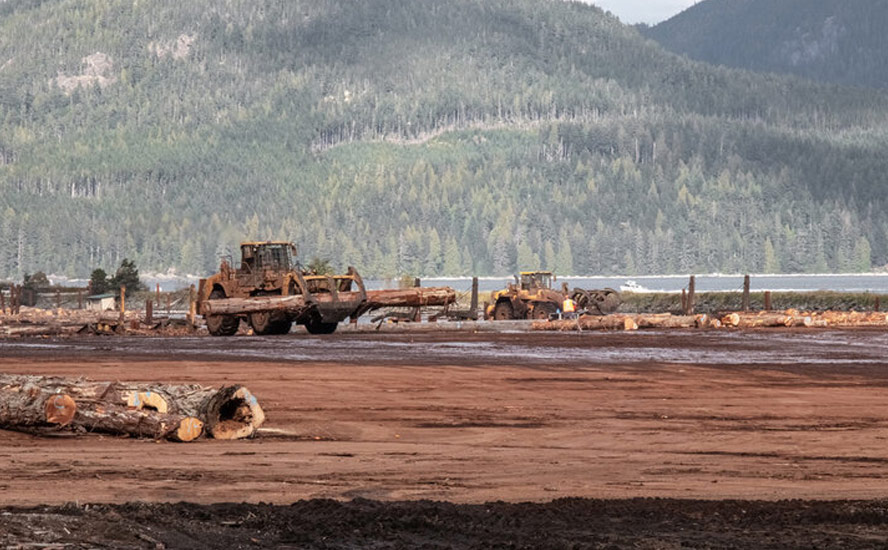
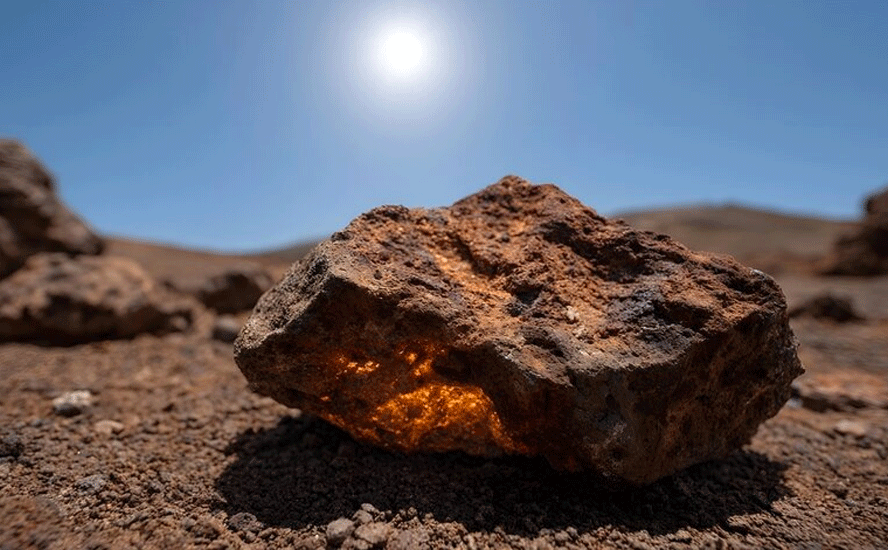
A junior resource company’s place in the food chain is to acquire projects, make discoveries and hopefully advance them to the point when a larger mining company takes it over. Discoveries won’t be made if juniors don’t have boots on the ground, if they aren’t out in the bush poking around and busting rocks.
Indeed, juniors have one of the toughest jobs in the industry. Finding and advancing new projects is difficult and capital-intensive. The kicker is the juniors have no revenue stream to finance their exploration activities; they typically rely on outside sources for funding.
Investing early in the development cycle of the right junior, one that has an excellent project in a safe jurisdiction led by experienced management with the ability to raise money, can reap huge rewards — 5, 10, even 20 times your money isn’t uncommon.
At the beginning, these companies are often financed by accredited investors who buy shares in private placements. The junior then tries to advance its project, beginning with prospecting, through to drilling and completing economic assessments and feasibility studies.
Few exploration companies have the money or technical expertise to “go mining”. For many, the goal is to hit upon a deposit that’s good enough to attract a major who will acquire the asset. Another pathway is for the junior to partner with a larger company. An option or joint venture (JV) agreement is a way for juniors to gain access to the financial and technical resources needed to build the mine.
Juniors are extremely important to major mining companies because they are the firms finding the deposits that will become the next mines. In this way, juniors help the majors to replace the ore that they are constantly depleting in their operating mines – put another way, juniors find the resources for major’s to turn into mineable reserves.
AOTH Assistant Editor:
Rick, in this interview we are going to talk about investing strategies for the junior resource sector. You have over 23 years of experience investing in juniors so your input would be extremely valuable.
Rick Mills, Editor/ Publisher, Ahead of the Herd:
Investors need to learn the difference between the companies, what they’re offering, what stage they are at, grassroots exploration, pre-discovery, post discovery, moving forward to a mineral resource estimate (MRE), or are they even further derisked and have travelled further down the road to becoming a potential mine. Each stage offers different risk-reward, and each investor needs to know their own risk profile.
AE: There’s a lot of interest in mining and exploration these days. Have the demographics changed? Up to now, it’s been primarily older investors in attendance.
RM: It does seem like the demographics are changing, overall attendees are younger, more young men tilting the figures, although women’s attendance seems to be increasing as well. Several CEO’s and VP Corporate Development people I talked to recently said they’re getting calls now from a huge variety of new possible investors, US investment banking firms for example. They’re all trying to dive into resources.
Michael Campbell’s World Outlook Financial Conference was quite interesting because it’s not your average resource investor. You got a lot of interest from people who maybe haven’t been so interested in exploration, development and mining, crypto and AI investors for example. They are craving knowledge on the industry, craving knowledge on commodities.
They’re trying to learn about resources, and making comments like, “This is real stuff.”
Commodities: the last safe haven standing — Richard Mills
AE: I think bitcoin failed a stress test — really all cryptocurrencies did. What a crash they had, the whole time commodities and precious metals soared.
RM: Well, look at some chart comparisons of precious metals and commodities to crypto’s.
AE: There certainly is no shortage of companies to invest in. As a new investor, or even an experienced one, how do you decide where to place your money?
RM: One of the strategies I follow is from Julian Baring, quite a famous European institutional investor back in the day.
He says take 10% of the MRE, the value of the metal in the ground, called in-situ, and divide it by the outstanding shares fully diluted (osfd). The number you get, according to Julian, places a theoretical value on the shares. The stronger the market the closer to the 10%.
Is the value of the buyout several times more than what the company’s trading for presently in the market? And when you do that, now you know that there’s potential price appreciation movement left in the stock price to actually come closer to the value of the metal in the ground.
I’ve been using it for 23 years and will continue using it because it tells me there is potential for the stock price to move.
AE: Can you give me an example?
RM: Sure. Let’s say Company ABCD has an MRE of 2.4 million tonnes of copper and 1.6 million ounces of gold.
The in-situ value of that is $33.5 billion, @ $4,500 gold and $5 copper, use conservative trailing numbers. The outstanding shares fully diluted (osfd) of this company is 400 million.
$33.5B / 10= 3,500,000,000 / 400,000,000= $8.37/share. But it’s trading for $1.00/sh. That tells me there is a lot of room for the stock price to grow.
AE: Are we in a bull market now?
RM: It’s started but it hasn’t hit frenzy level yet. When retail gets more involved, I predict that things will really heat up.
Capital is going to go to the companies that have the most advanced assets and then trickle down to earlier-stage juniors. I keep telling people, go back to 2002, 2007, that’s the last fundamentals-driven bull market in the resource sector.
And we are in a fundamentals-driven market right now.
It’s completely different from 2011, 2020, those are little blips of bullishness, but they weren’t fundamentally driven. That’s the biggest difference, and people just can’t comprehend what those types of fundamentals will do to the market.
AE: The completion of technical reports is obviously important. First is a maiden resource estimate. Next is the PEA, or Preliminary Economic Assessment. What do you look for in a PEA?
RM: Three things. The IRR, or Internal Rate of Return, is important. When I see a company’s PEA, the first thing I look at is the IRR. And if it’s less than 25%, I get very leery.
I want a long life of mine (LOM). Better than ten years, it can take 20 plus years from discovery to mining, so I want it to be a long life asset. And third potential discovery to add more ounces or pounds through brownfields discovery or metal price increases.
AE: What about cutoff grades and head grades? Could you first explain the difference?
RM: Sure. Cutoff grade is the minimum grade needed to make mining economically viable, distinguishing ore from waste, while head grade is the actual average grade of ore sent to the mill.
When metal prices are high, like currently, a mining company can lower its cutoff grade because it’s economically viable to process lower-quality ore. Increased prices also extend the life of mine (LOM).
if you look at the mines today, a lot of them were worried about the LOM, that they were running out of ore. But with the metals price increase, it allows mining to go on for longer.
AE: There’s been a lot of mining M&A recently. What does this mean for the metal markets?
RM: The M&A is great for both majors and the junior resource companies we focus on, but, caveat, it doesn’t increase global mining reserves.
It just takes from Peter’s pocket and puts it in Paul’s. It doesn’t increase anything.
I think, okay, maybe there’s going to be, in a few years, five, six major miners. And the miners are becoming more diversified. Let me give you an example.
Barrick used to be a gold miner. It was Barrick Gold. Now they’ve changed to Barrick Mining, mostly because they want copper.
There’s not going to be concentration on just one or two metals. The miners are not going to be solely copper. They’re not going to be solely coal. They’re not going to be solely gold. They’re going to be truly diversified miners.
Sooner or later the world’s major miners are going to have eaten each other. There will be nothing left to consolidate, no more mining reserves to chase.
AE: What then?
RM: Well, in my opinion, they will have to start looking at the juniors, because it’s the junior resource companies that own the resources that will become the world’s future reserves.
That’s what’s playing out right now in front of us with all this M&A, is the lockup of the world’s mining reserves.
The game started for juniors start when majors realized it and they’ve started making moves. And you can see some of them already in the links below.
The mining industry is on the hunt — Richard Mills
Majors are moving in on the world’s resources owned by juniors.
AE: Which juniors will get acquired?
RM: Well, the first ones the ones with that large quality existing resource base and potential further resource growth. You would also prefer mining related infrastructure, roads, power, railway, local workforce, all the things that make the company a quality acquisition for a major mining company. Those are going to be the first to be taken out.
Than you look at those with earlier stage projects, more grassroots.
AE: The majors, like you said, are getting bigger. But there are not many large projects in the pipeline, correct?
RM: No, there aren’t, much of the low hanging fruit has been picked.
AE: I don’t know how they’re going to move the needle of these monster mining companies.
RM: Eventually they’re going to have to come in and consolidate districts, British Columbia’s Southern Quesnel Trough is one example that might be consolidated.
AE: Investors wait for something to happen, instead of getting ahead of the herd, and then the herd drives the stock up. Instead of doing their own calculations, and figuring out, for instance, “Okay, they’re going to come out with a resource estimate.”
RM: That’s right, it’s a good example of buying in, being able to establish a position over time, knowing a MRE is being drilled. This is, imo, an excellent opportunity for entrance into a junior. If you put out a decent MRE, your share price usually goes up, a lot of times it’s what is needed to better reflect some of that in-situ value in the share price.
A coming resource estimate is one of the catalysts for getting involved in a company. Investors should be alert to that, but many aren’t. In the junior resource sector, your share price appreciation often comes in chunks, I buy for that drill program, usually after due diligence on that news, and wait for the resource estimate come out. You are buying between post discovery and pre resource definition.
AE: These stocks have value in the ground, and when that gets recognized, the share price can change quickly, and you don’t get the opportunity anymore.
RM: That’s right, recognize the opportunity, get in and show some patience while your chosen team works for you. But I see all the time on the forums. “Oh, I’ll wait. I’ll wait until they get some drill results and then I’ll jump in or I’ll wait until the MRE comes out and take a look at it.” I always wonder, “What are they thinking”?
AE: You always talk about this being a people business, management being the single most important thing.
RM: My philosophy is, and always has been, if you want to make the real money you buy management.
If real estate’s all about location, then junior resource companies are all about management, because everything flows from management. The acquisition of projects, the development of projects, avoiding excessive dilution, story telling, the raising of money, everything.
You look at a CEO’s background, you look at what he’s done, you look at everything, look at the team around him, what have they done?
If you think they are serious people who have made discoveries, been successful in making shareholders money, than you can put some money behind them.
This whole game is people. And when you’re investing in people, you’ve got to have the patience to let them go to work and deliver results.
If they don’t meet your expectations, on timeliness, dilution, story telling, and most important results, you exit. But you picked them based on their history, so thankfully that usually doesn’t happen. Derailment would have to be caused by forces not under control, there are enough of those, but it won’t be by management
If they’re good, you stay. Because they’re adding value all the time. Whether it’s recognized immediately in the market or not, it doesn’t matter, it will come with the work. Nobody’s an overnight sensation.
Much of the value in a company is the intellectual capital and talents of the people, let them go to work for you. For those with a tolerance for risk, investing in junior mining stocks can be a lucrative venture.
AE: Thank you for your insights, Rick.
Richard (Rick) Mills
aheadoftheherd.com
Legal Notice / Disclaimer
Ahead of the Herd newsletter, aheadoftheherd.com, hereafter known as AOTH.Please read the entire Disclaimer carefully before you use this website or read the newsletter. If you do not agree to all the AOTH/Richard Mills Disclaimer, do not access/read this website/newsletter/article, or any of its pages. By reading/using this AOTH/Richard Mills website/newsletter/article, and whether you actually read this Disclaimer, you are deemed to have accepted it.