 RSS Subscribe
Arctic mines face thawing permafrost disaster

2021.03.21
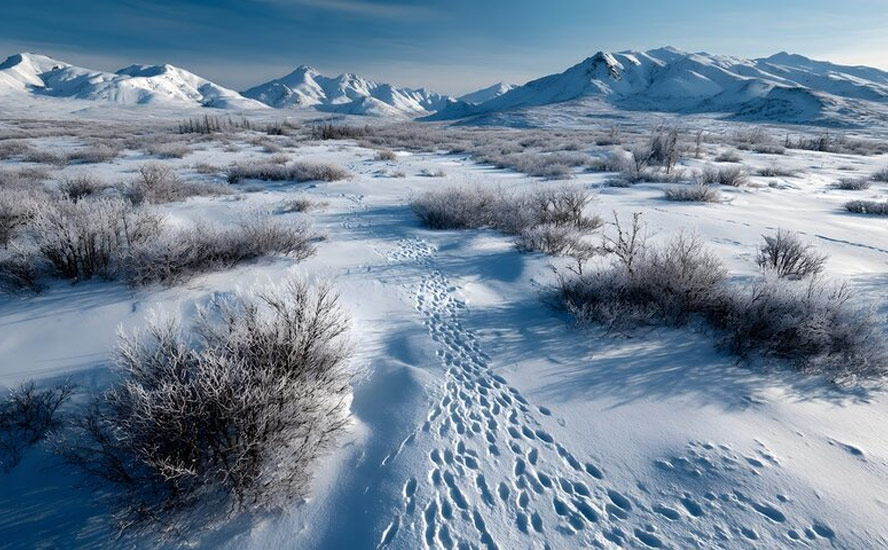
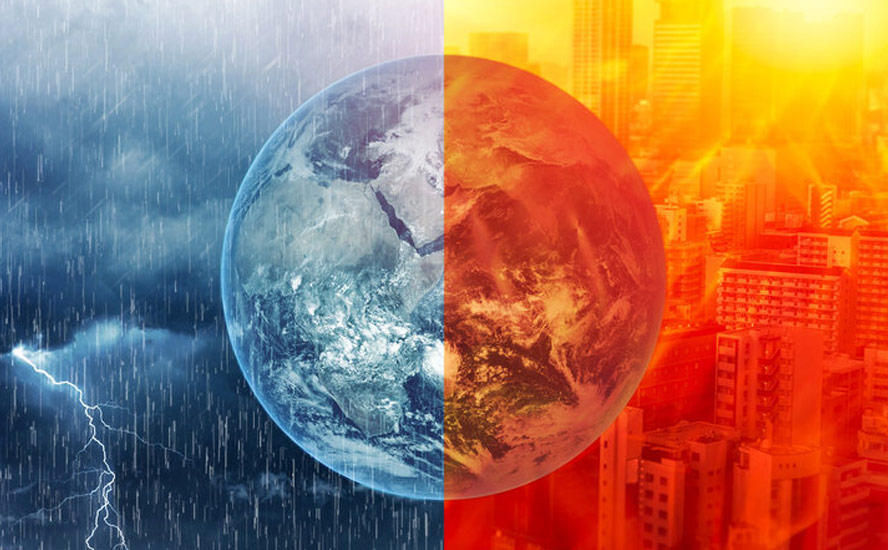
It is no secret that the Canadian Arctic, and its polar neighbors touching the Arctic Circle, have a serious problem with global warming. In 2019 the federal government released a scientific report claiming that Canada is warming at a rate twice as fast as the rest of the world — and will continue to warm at more than double the global rate.
Canada’s annual average temperature has warmed an estimated 1.7 degrees C (3F) since 1948; in northern Canada, the temperature increase was approximately +2.3C.
According to the report, rapid warming is due to several factors, including loss of glaciers, snow, and sea ice, thereby increasing absorption of solar radiation, and causing larger surface warming than in other regions.
Along with calving glaciers, shrinking ice caps, and disappearing sea ice, evidence of Arctic warming can also be seen in the thawing of permafrost. Permafrost is land that is permanently frozen except for the top layer, which freezes in the winter and thaws in the summer; 70% of Russia sits on permafrost, which in some areas is over a kilometer deep. When it melts, permafrost exposes carbon dioxide and methane, a greenhouse gas that is about 30 times more powerful than CO2, in terms of its ability to trap heat.

Arctic permafrost in 2017 reached record warm temperatures. It is estimated that this phenomenon could release between 300 million and 600 million tons of net carbon per year into the atmosphere.
Another negative impact of thawing permafrost, is subsidence. This is what happens when the surface layer gets deeper, and structures (like houses and industrial buildings) on or embedded in it start to fail as the ground beneath them expands and contracts.
Climatologists predict that an estimated 2.5 million square miles of permafrost, or 40% of the world’s total, could disappear by the end of this century, significantly accelerating global temperature rise.
Landscape changes
Subsidence’s effect on indigenous communities living in the far north, and the escape of methane (and CO2), are the two most discussed effects of thawing permafrost.
A third less known area of concern is the changing landscape.
As Arctic temperatures rise and the permafrost thaws, the number of landslides is increasing, such as the kilometer-long, 100-meter-deep Batagaika Crater in Siberia.

Also known as thaw slumps, parts of the landscape that were previously frozen-solid and covered in berries and lichens that provided a rich food source for animals and game for hunters, are being transformed into tracts of mud, silt, and peat.
As described by Yale Environment 360:
The disintegration of subterranean ice that glues together the peat, clay, rocks, sand, and other inorganic minerals is now triggering landslides and slumping at alarming rates, resulting in stream flows changing, lakes suddenly draining, seashores collapsing, and water chemistry being altered in ways that could be deleterious to both humans and wildlife.
“We’re seeing slumping along shorelines that can drain most of the water in a lake in just days and even hours,” says [Philip] Marsh, a former Canadian government scientist who is now a professor of hydrology at Wilfrid Laurier University in Ontario. “It’s not surprising when you consider that as much as 80 percent of the ground here consists of frozen water. When that ice melts, the frozen ground literally falls apart.” As a result, says Marsh, indigenous communities, the resource industry, and the government need to better understand how a warming climate is impacting water resources and permafrost ecosystems.”
His research in the Canadian Arctic has led Marsh to conclude that hydrological changes this century could dry up one-third of the 45,000 lakes in the Mackenzie River Delta, one of the largest deltas in the world.
“As with other northern aquatic ecosystems, climate change and contaminants, especially long-range contaminants, pose the greatest concerns to the health of plants, animals, people and fish that live in and along the shores of the Mackenzie River. Hazards resulting from climate change are already found along the Mackenzie, including unusual floods and thinner ice roads. There is concern that as permafrost thaws, drilling waste from oil and gas exploration will be exposed and could contaminate local environments. Future changes in streamflow are also anticipated because of warming. Specifically, changes in the snowpack and melting will lead to lower water levels in spring and summer along the river, but higher levels in fall and winter. Climate change is interacting with contaminants like mercury and polychlorinated biphenyls (PCBs) that are found in the Subarctic and Arctic but originate elsewhere. Levels of these toxins in burbot, a top predator in the Mackenzie River, and an important food source for local communities, have increased significantly since the mid-1980s. Mercury is also flowing from the Mackenzie River into the Beaufort Sea and Arctic Ocean where it is consumed by beluga whales and other species.”
Another scientist, geographer Antoni Lewkowicz at the University of Ottawa, reported satellite imagery showing a 60-fold increase in slumping along 288 lakes in the Canadian High Arctic, from 1945 to 2015.


These changes to the local geography are exposing wildlife and human populations to wastes from current and former oil and gas and mining operations.
In the Mackenzie Delta, scientists are finding that hundreds of sumps, excavated by the oil and gas industry in the 1970s and ‘80s, are thawing. Toxic petroleum waste that was supposed to be contained forever in 200 frozen pits is migrating into freshwater systems.
The problem is not confined to Canada. Most of the world’s permafrost is found in northern Russia, Canada, Alaska, Iceland, and Scandinavia. Even in the coldest places in the Arctic, permafrost thaw is accelerating, states Yale Environment 360.
On May 29, 2020, in the Siberian city of Norilsk, a fuel tank collapse spilled 21,000 tons of diesel fuel into the Ambarnaya River, polluting an 180,000-square-meter area. The leak was blamed on abnormally warm weather and thawing permafrost, which weakened the structural integrity of the tank.

The spill originated from the power plant at Norilsk Nickel, the world’s largest producer of refined nickel and palladium — forcing the company to pay $2 billion in compensation.
There are worries among the local population that with a large share of Russian oil and gas operations concentrated in the Arctic, there will be more such environmental disasters.
High North News notes that cleaning up oil in cold environments is especially difficult due to low biodegradation rates, citing the 1989 Exxon Valdez crude oil spill in Alaska.
AMD risk
Acid mine drainage, or AMD, is what occurs when air and water react with mine tailings. The process generates sulfuric acid, which can leach heavy metals into nearby soils and waterways.
For decades, northern Canadian mine operators have stored waste rock and tailings — a pulverized rock slurry filled with chemicals like arsenic, lead, and mercury — in frozen dams reinforced by permafrost.
This method was cost-effective compared to building artificial tailings structures, and up to now there appeared to be little risk of the dam walls thawing. That, however, is changing.
With Canadian mining producing a million tons of waste rock and 950,000 tons of tailings per day, the prospect of widespread AMD in the far north due to permafrost enclosures failing is frightening to say the least.
“Once a chemical process is underway- let’s say, the oxidization of mining waste and leaching of heavy metals and acid drainage – it’s much, much harder to stop that chemical process than just preventing it from the outset,” Ugo Lapointe, Canadian coordinator for MiningWatch, told Vice in a 2016 feature article on the topic. “It has its own momentum once it starts. Also, the plume of contamination downstream or underground are much harder to clean up and control once it starts, it is very, very costly.”
A report by A National Roundtable on the Environment and the Economy called the impacts of tailings waste “environmentally and socially disastrous, causing irreversible degradation of sensitive habitat and human health impacts.” The worst-hit are likely to be local indigenous such as the Inuit and Dene people, that regularly hunt, fish and trap in areas likely to be affected by a spill, and caribou herds that feed on vegetation that grows on top of tailings ponds.
It is not so much the big mines that concern experts on AMD, but the hundreds of small mines that have been abandoned and are not on anybody’s radar. Vice reports That could become a serious problem when precipitation increases due to climate change and spikes the probability of air and water socializing with long-frozen tailings.
The Canadian government estimates it would cost over C$555 million to clean up abandoned mines in the north, but there are currently no requirements in mine closure planning to consider climate change.
More positively, the Vice article notes there are new technologies emerging to keep tailings frozen, like “thermosyphons” which remove underground heat, thick gravel covers and dry stack tailings. Some sites are also removing permafrost before construction.
At Agnico-Eagle, which owns the massive Meadowbank gold mine in Nunavut, part of the company’s environmental impact assessment reportedly now includes a climate change model that anticipates a worst-case temperature rise of 6.5 degrees C, over the next 100 years.
Anticipating permafrost thaw, Agnico’s Meliadine mine, which started producing in 2019, was modeled using the dry stack tailing method.
However, this is likely not the norm. Vice quotes a 2009 survey of mining practitioners wherein only 24% identified mine drainage as the aspect of the company’s operations most likely to be impacted by climate change — well behind processing at 43% and on-site transportation at 41%.
Water management
Soil, groundwater, and creeks fouled by toxic waste from mining and oil and gas is not the only risk from thawing permafrost. There is also the delicate issue of water management.
In 2019 Teck Resources, which operates the Red Dog zinc mine in northwestern Alaska, said thawing permafrost linked to higher temperatures forced the company to spend nearly $20 million to manage its water storage and discharge.
Vancouver-based Teck told Alaska Public Media that permafrost thaw surrounding Red Dog’s watershed released higher than natural levels of dissolved minerals and other particles into streams, limiting the mine’s ability to discharge its own treated water into a nearby creek. This caused water to back up in its tailing’s reservoir.
Red Dog is only allowed to discharge water from the reservoir when the creek’s dissolved solids are below a certain threshold. That threshold had never been exceeded before the summer of 2019, which saw record warmth in the Arctic.
“In 30 years of Red Dog operation, this is the first time that we’ve ever seen background levels in the creeks to the point where it precluded us from discharging,” the mine’s community and public relations manager said in a media interview.
The problematic creek water also had a deleterious effect on Red Dog’s production. According to High North News, Teck had to make room by pumping hundreds of millions of gallons of water out of the reservoir into the open-pit mine, forcing the company to mine lower-grade ore at the top of the pit rather than the higher-grade material at the bottom.
Tens of millions more gallons were taken from the reservoir and frozen in an icefield, and Teck accelerated a plan to heighten the tailings impoundment.
More recently, above-mentioned Norilsk Nickel had to partly suspend operations at its Oktyabrsky and Taimyrsky mines on Feb. 24 after noticing subterranean water flowing into one of them at a depth of 350 meters.
The source of the water influx is unclear from media reports, however, the most recent story from Reuters indicates thawing permafrost is the likely culprit:
The area is a permafrost zone, which is present at up to 700 metres deep. Most ore in there is frozen and water in and around it therefore does not flow anywhere. But ore can fracture during tunnelling and start thawing.
The Russian nickel and platinum group element miner reportedly had to install barriers and pour 30,000 tonnes of concrete into the underground mines in Siberia to stop the water flow. Oktyabrsky and Taimyrsky account for just over a third of the ore mined by Norilsk Nickel in Russia.
Their waterlogging will affect the company’s 2021 guidance, and its bottom line. Nickel, copper, platinum, and palladium output is expected to drop between 15 and 20%, and 2021 earnings (EBITDA) is likely to fall $1 billion to $1.5 billion.
The mines are unlikely to restart fully for another three to four months, the company says.
Conclusion
The thawing of permafrost is yet another manifestation of climate change, that populations living near it will have to deal with in the coming decades as global warming accelerates, particularly in the polar regions.
Mining is often deemed complicit in the rise of greenhouse gas emissions, given its use of heavy machinery and ground disturbance, but in this case, in areas where the ground is permanently frozen but starting to thaw, operations can be negatively impacted, and big miners are having to shell out millions. We have seen the implications of thawing permafrost at Teck’s Red Dog Mine in Alaska, and at Norilsk Nickel’s Oktyabrsky and Taimyrsky mines in Siberia.
The problem is not going away; in fact, there is every indication it will get worse.
Climatologists predict that an estimated 2.5 million square miles of permafrost, or 40% of the world’s total, could disappear by the end of this century.
As the big thaw continues, more and more mines are likely to see water inundation and issues with their tailing’s dams — the latter especially if the water quality of local creeks deteriorates to the point where mining companies must restrict or stop discharging water into the environment. The water in the tailings pond must go somewhere; if it cannot be discharged, it may have to go back into the mine, which as Teck found, can be costly.
Disturbingly, abandoned mines whose wastes are locked up in the ice could quickly become liabilities when it thaws. Are the owners who walked away still around to face the consequences?
Finally, it seems clear that regulators should insist that mine closure plans account for the impacts of climate change, and that mine operators make mitigation part of best practices. This is an issue that the mining industry could get ahead of, by for example removing permafrost at the very beginning, prior to construction; building artificial tailings dams rather than using permafrost as natural barriers; and like Agnico-Eagle, employ a climate change model that looks at various temperatures rises and how this would affect operations, particularly water and waste management.
Richard (Rick) Mills
aheadoftheherd.com
subscribe to my free newsletter
Legal Notice / Disclaimer
Ahead of the Herd newsletter, aheadoftheherd.com, hereafter known as AOTH.
Please read the entire Disclaimer carefully before you use this website or read the newsletter. If you do not agree to all the AOTH/Richard Mills Disclaimer, do not access/read this website/newsletter/article, or any of its pages. By reading/using this AOTH/Richard Mills website/newsletter/article, and whether or not you actually read this Disclaimer, you are deemed to have accepted it.
Any AOTH/Richard Mills document is not, and should not be, construed as an offer to sell or the solicitation of an offer to purchase or subscribe for any investment.
AOTH/Richard Mills has based this document on information obtained from sources he believes to be reliable but which has not been independently verified. AOTH/Richard Mills makes no guarantee, representation or warranty and accepts no responsibility or liability as to its accuracy or completeness. Expressions of opinion are those of AOTH/Richard Mills only and are subject to change without notice. AOTH/Richard Mills assumes no warranty, liability or guarantee for the current relevance, correctness or completeness of any information provided within this Report and will not be held liable for the consequence of reliance upon any opinion or statement contained herein or any omission. Furthermore, AOTH/Richard Mills assumes no liability for any direct or indirect loss or damage or, in particular, for lost profit, which you may incur as a result of the use and existence of the information provided within this AOTH/Richard Mills Report.
AOTH/Richard Mills is not a registered broker/financial advisor and does not hold any licenses. These are solely personal thoughts and opinions about finance and/or investments – no information posted on this site is to be considered investment advice or a recommendation to do anything involving finance or money aside from performing your own due diligence and consulting with your personal registered broker/financial advisor. You agree that by reading AOTH/Richard Mills articles, you are acting at your OWN RISK. In no event should AOTH/Richard Mills liable for any direct or indirect trading losses caused by any information contained in AOTH/Richard Mills articles. Information in AOTH/Richard Mills articles is not an offer to sell or a solicitation of an offer to buy any security. AOTH/Richard Mills is not suggesting the transacting of any financial instruments but does suggest consulting your own registered broker/financial advisor with regards to any such transactions
Legal Notice / Disclaimer
Ahead of the Herd newsletter, aheadoftheherd.com, hereafter known as AOTH.Please read the entire Disclaimer carefully before you use this website or read the newsletter. If you do not agree to all the AOTH/Richard Mills Disclaimer, do not access/read this website/newsletter/article, or any of its pages. By reading/using this AOTH/Richard Mills website/newsletter/article, and whether you actually read this Disclaimer, you are deemed to have accepted it.