 RSS Subscribe
AOTH at VRIC 2026 – Richard Mills
2026.01.27
It was standing room only at the first session of talks at the 2026 version of the Vancouver Resource Investment Conference (VRIC).
The two-day conference at the Vancouver Convention Centre kicked off early Sunday morning, as perky investors filed into Speaker’s Hall to listen to industry luminaries like Rick Rule, Robert Quartermain and Ross Beaty discuss how this bull market is different from previous ones.
The second segment, ‘The Next Generation of Billion Dollar Company Founders’ featured Vizsla Silver’s (TSX:VZLA) CEO Michael Konnert, Robert Eckford, chief executive at Rua Gold (TSX.V:RUA), and Dolly Varden Silver’s (TSX.V:DV) Shawn Khunkhun.
Both talks were moderated by Darrell Thomas, host of VRIC Media’s podcast.
Thomas started the session by pulling up a chart showing how last year’s metal performances beat the S&P 500 and Nasdaq stock indices, with gold up 74%, silver rocketing 200%, platinum gaining 154% and copper climbing 35%.
Central banks kept “backing up the truck” to buy gold, urged on by factors such as de-dollarization, geopolitical tensions, and massive global debts and deficits.
Retail investors also jumped on the gold train, with $89 billion worth of gold ETF inflows compared to just $4 billion in 2024.
“If this isn’t a signal that you all have been making money, then I don’t know what it is, but we’ve made 54 new highs in 2025, Thomas said.
He highlighted silver’s record-highs reached in 2025, prompted by surging demand from industrial usages such as photovoltaics/ solar, and persistent supply deficits going back as far as 2020. Mines aren’t producing enough and demand continues to increase, with photovoltaics alone growing by 50%.
The world continues to need more copper as the population increases. New uses such as in electric vehicles and AI data centers are expanding the gap between supply and demand, as copper mines age, grades decline and few new copper mines are being built.
Rick Rule characterized this bull as “needing a break” and urged investors who have made gains to take some profits.
“I think it’s highly unlikely that the three guys on the stage will ride the stocks all the way up and then all the way back down. You will see this group I think come out of this bull market with some cash intact.”
Rule has taken heat from investors for selling 25% of his junior mining stock portfolio.
Ross Beaty said he believe this bull market is unlike previous bulls in that “it’s a bull market on steroids”. “I mean, who would have believed $100 silver, $5,000 gold? I did hear a few people who I felt were on the very fringe of the business predicting these kinds of things, I rationally never believed it would happen.”
Bob Quartermain differed from his counterparts in saying that, while mining stocks are at 15-year highs, there is still room to run, noting that only a small amount of money globally is invested in hard assets like precious metals and critical minerals such as copper.
However, he said the bull is in its later stages and like Rule, suggested investors who have done well in “this frothy market” should take some money off the table.
“I think there’s areas of this market to make money on, and there’s still a potential that will go upside.”
Michael Konnert, founder and CEO of Vizsla Silver, said the early innings of the bull market are over and the easy money’s been made. Going forward, investors need to be more selective. However, he believes that “Until the foundational reasons why gold is outperforming other asset classes is solved and add silver into that as well — until the growing demand case can be solved with oncoming silver production and until governments stop being so reckless with debt — I don’t see the drivers of this bull market falling away.
“The producers are making a 70% EBITDA margin on their earnings, and the explorers are still undervalued,” he said. “Hence why there’s an opportunity to start new companies because there is so much more money to be made in this market.”
The excitement in the Speaker’s Hall spilled out into the Exhibition Hall, where over 300 exhibitors had just finished setting up booths. VRIC organizers were expecting more than 10,000 attendees over the Sunday and Monday. The VRIC Newsletter posted Monday morning described Day 1 of VRIC as “incredible. The floor was packed, the energy was high, and the conversations were exactly what today’s market calls for.”
AOTH saw considerable evidence of that as our reporter visited six of our advertisers exhibiting at VRIC. Our reporter asked each chief executive what is the main message they are wanting to convey to investors visiting their booths?
Kodiak Copper (TSX.V:KDK)
Kodiak Copper’s CEO Claudia Tornquist said after years of systematic exploration at its flagship MPD Project in the Quesnel Trough of southern British Columbia, “in December we reached a big milestone for the company, which is the maiden resource estimate. We now have numbers to show what we have at MPD. And it was well received. The market liked it.
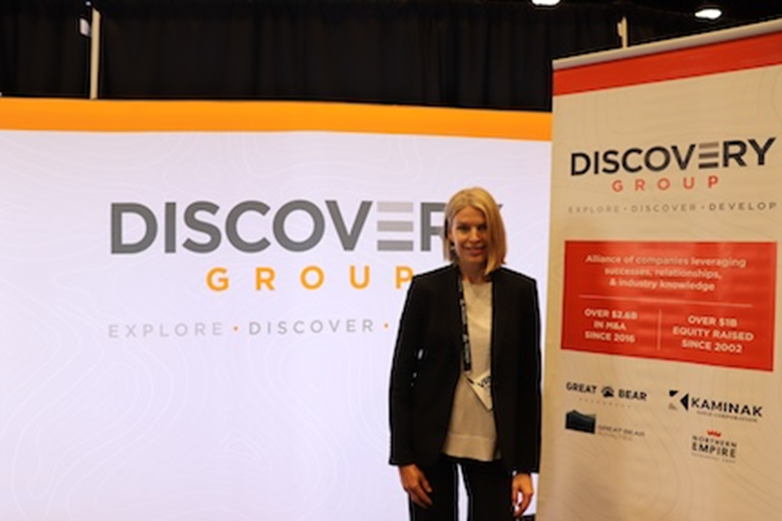
“The main message to investors is that there is still a big valuation gap between us and more advanced peers. We are now at the $100 million market cap. And companies that have already a resource, maybe already a second resource, maybe a PEA, are a year or two ahead of us and are comparable to us, they trade at valuations that are multiple of us, like Faraday Copper (TSX:FDY) or North Isle Copper and Gold (TSX.V:NCX). They are like $400, $500, $700 million market cap. And that’s really for investors and for us the upside and the potential by growing our resource.”
MPD Project: Kodiak Copper focusing on resource expansion in ‘26
Rackla Metals (TSX.V:RAK)
Simon Ridgway, CEO of Rackla Metals, acknowledged that 2025 was a tough year for Rackla, having received disappointing assays from its Grad property in the Canadian Yukon Territory. However, he pointed out that Rackla also discovered new gold targets at Calypso, Ogre and Manta, and acquired a tungsten property in the Northwest Territories with an existing resource on it. The Lened deposit is about 50 kilometers north of the past-producing Cantung mine, and Ridgway said with a high-grade resource, and lots of room to grow, it’s the company’s new focus, though Rackla is not abandoning the gold targets.
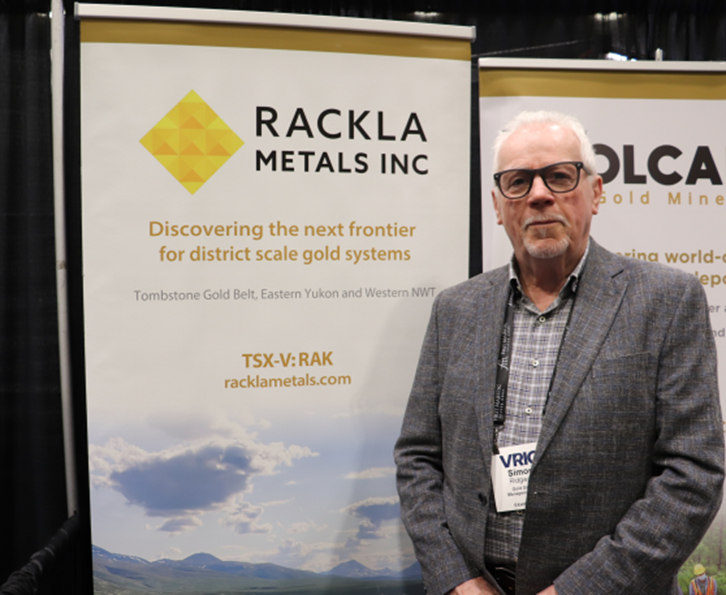
Ridgway noted the price of tungsten was only about $180 a tonne when the Cantung mine closed in 2015; today it’s close to $1,000. China produces about 88% of the critical metal, but Ridgway says that needs to change. “The Western world has got to start producing its own tungsten.”
Under the Spotlight – Simon Ridgway CEO Rackla Metals
Cassiar Gold (TSX.V:GLDC)
Marco Roque, CEO of Cassiar Gold, was rushing off for an appointment when our AOTH reporter visited the booth. Hence his brief response. When asked what his main message for investors is, Roque replied, “The main message is Cassiar Gold is one of the most exciting, undervalued opportunities in the exploration development space in gold in Canada. We’re looking to focus our strategy more on trying to get closer or faster to production, looking on the high-grade frames. I invite everyone to have a look and reach out if you have any questions.”
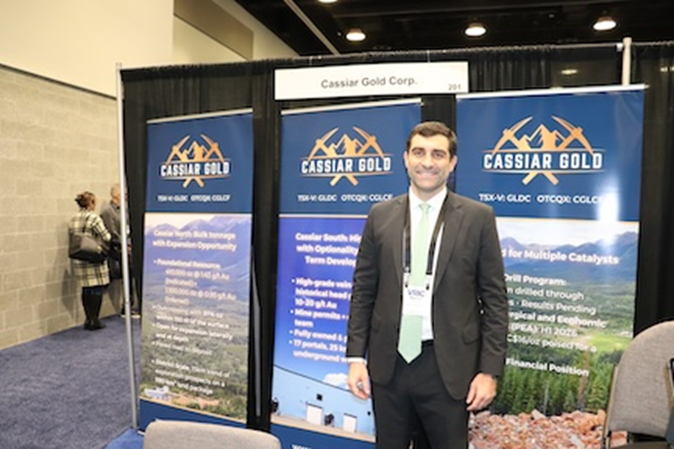
Cassiar Gold hits jewelry box gold grades at Taurus
White Gold (TSX.V:WGO)
White Gold’s CEO David D’Onofrio said renowned prospector and mine developer Shawn Ryan has already discovered over 3 million ounces in the White Gold District of the Yukon, but the district is “wide open for exploration. We are embarking upon the largest exploration program in the company’s history this year — 25,000 meters of expansion drilling — which we think will mean an immediate growth.”
D’Onofrio noted that White Gold is benefiting from the nearby Coffee discovery, also found by Shawn Ryan — the project moving towards production with a construction decision expected in early 2027.
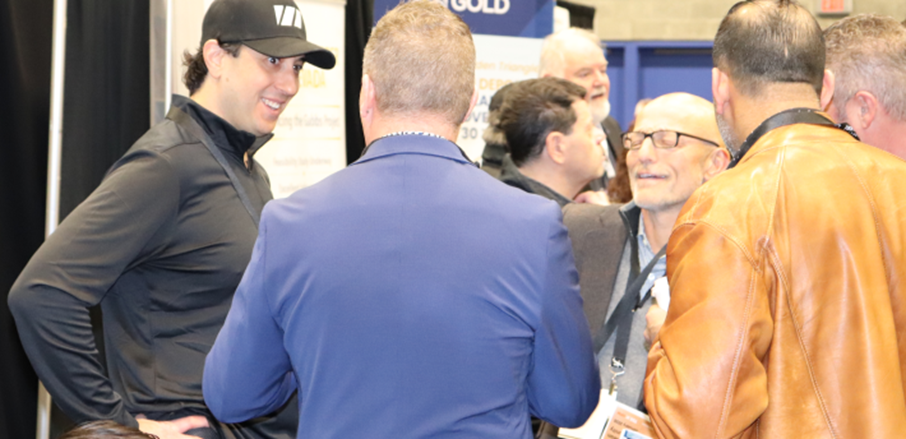
“With the development of that mine comes in all these infrastructure programs that are primarily financed by the government, including the road that comes right through our land package,” he said. “And that road is now the leverage to the rest of the district. So, between Coffee who has a mine, us who have a potential mine, you find anything else, you can truck it to any of those facilities.
“And that’s how these camps evolve and what we envisioned all along. So that’s really exciting.”
White Gold drills 6.9 g/t gold over 50.2m
Orestone Mining (TSX.V:ORS)
David Hottman, chief executive at Orestone Mining, said his main message to investors is that Orestone is a company with a solid management team that is well funded.
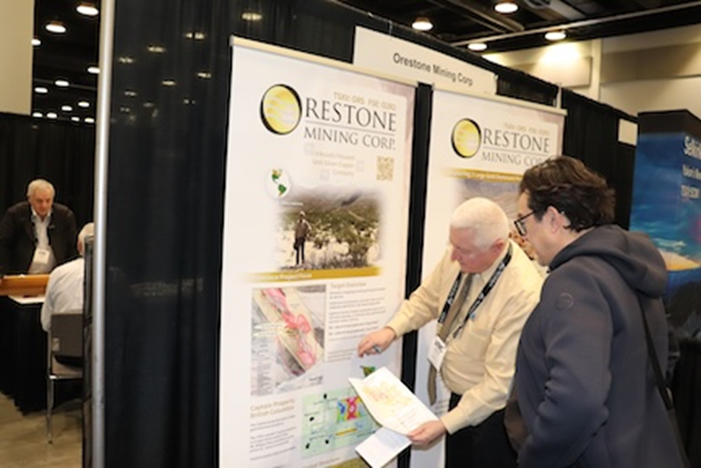
“We have several very large exploration targets in Argentina and Canada and it’s a tremendous opportunity to create wealth through discovery,” he said, adding that the main catalyst going forward is conducting a mapping and sampling program at the Francisca gold property in Argentina. The program will help to fine tune the drill program upcoming in late spring to early summer, which has the potential to be multi-million-ounce in size.
Under the Spotlight – David Hottman CEO Orestone Mining
Torr Metals (TSX.V:TMET)
Last but certainly not least, Malcolm Dorsey, CEO of Torr Metals, said the company is focused on its Kolos Copper-Gold Project in south-central British Columbia’s Quesnel Trough — BC’s and Canada’s most productive copper belt.
“We’re right in there with nine other mid-tiers and major mining companies. We’ve got a large project, three compelling large porphyry clusters that have never been drilled before. We’ve just finished drilling the first one,” Dorsey said, adding that TMET is fully financed.
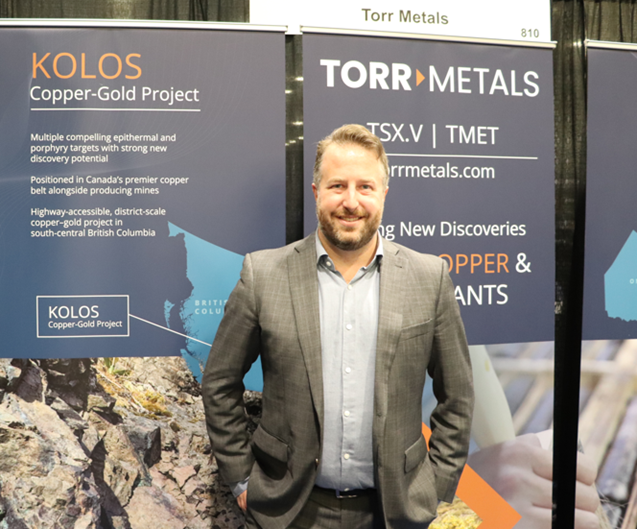
Torr Metals has completed 2,700 meters of drilling in a first phase, with plans to return for a second-phase 6,000 meters.
“After having confirmed for the first time ever a large-scale hydrothermal copper gold porphyry system on the project that is extensive up to 500 meters vertical depth, we ended up in the periphery,” he said. “We’re vectoring towards the core in the next round of drilling. And we’ll be mobilizing to do that here in spring of 2026.”
Under the Spotlight Part I – Malcolm Dorsey, CEO Torr Metals
Under the Spotlight Part II – Malcolm Dorsey CEO Torr Metals
Conclusion
The wave of M&A currently sweeping across the mining industry will trickle down the food chain and eventually reach juniors. In my opinion it’s just a matter of time until the last few miners realize they’ve locked up the last of the world’s reserves of minerals amongst themselves. When they do it’s going to be a mad scramble to lock up the world’s known resources.
After all, it’s the juniors who currently own our future mining reserves.
Major miners still, occasionally, make discoveries, but usually it’s in partnership with juniors. Juniors almost always find the early-stage, high-potential targets.
By doing so, they fulfill their role of high-risk exploration. With their bottom level, upstream role in the mining food chain they find the projects that majors then advance. Senior exploration budgets can than be more properly focused on their area of expertise, development.
It’s the juniors who currently own, and will find more of, the world’s future mining reserves; therefore, our conclusion has to be junior mining companies currently own the world’s future mines.
Richard (Rick) Mills
aheadoftheherd.com
Subscribe to AOTH’s free newsletter
Richard owns shares of Rackla Metals (TSX.V:RAK), Torr Metals (TSX.V:TMET) and Orestone mining (TSX.V:ORS).
Richard does not own shares of White Gold (TSX.V:WGO), Cassiar Gold (TSX.V:GLDC) or Kodiak Gold (TSX.V:KDK).
RAK, TMET, ORS, WGO, GLDC and KDK paid advertisers on his site aheadoftheherd.com
This article is issued on behalf of RAK, TMET, ORS, WGO, GLDC and KDK.
Legal Notice / Disclaimer
Ahead of the Herd newsletter, aheadoftheherd.com, hereafter known as AOTH.Please read the entire Disclaimer carefully before you use this website or read the newsletter. If you do not agree to all the AOTH/Richard Mills Disclaimer, do not access/read this website/newsletter/article, or any of its pages. By reading/using this AOTH/Richard Mills website/newsletter/article, and whether you actually read this Disclaimer, you are deemed to have accepted it.