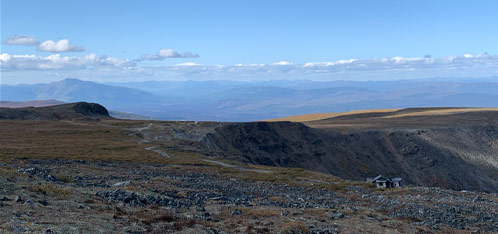
The company has a 100% interest in 1,300 sq. km. in the Sarfartoq region, near Kangerlussuaq, Greenland.


Hudson is focused on the Sarfartoq Carbonatite Project. The Sarfartoq Carbonatite Complex, in west Greenland, is one of the worlds largest carbonatite complexes having approximate dimensions of 13km X 8 km.


Hudson has recently released the results of a Preliminary Economic Assessment (PEA) for its Neodymium Mine Project. The Study shows a Net Present Value of $616M and an Internal Rate of Return of 31.2 % with a 2.7 year pay-back period. The Study was based on the Company’s 43-101 compliant inferred resource of 14.1Mt at 1.5% TREO at the ST1 Zone. 


The U.S. Department of Energy, in its Dec. 2011 report Critical Materials Strategy examined the role that rare earth metals and other key materials play in clean energy technologies such as wind turbines, electric vehicles, solar cells and energy-efficient lighting. Five rare earth metals – dysprosium, neodymium, terbium, europium and yttrium are considered to be the most critical of the elements considered in the report.


Neodymium is the key to making the highest coercivity rare earth permanent magnets – the superior high strength permanent magnets used for many energy related applications, such as wind turbines (the most efficient turbines require approximately 1,000 kg of neodymium for each megawatt of electricity to be produced) and hybrid automobiles.


Latest News Release

Hudson Resources Reports Updated Mineral Resource: Significant Grade Increases and Indicated Resources Confirmed

Hudson Resources Inc. has released an updated National Instrument 43-101-compliant mineral resource estimate for the 100-per-cent-owned Sarfartoq ST1 zone rare earth element (REE) project in Greenland. The updated resource model includes the 2011 drill program. In total, 50 holes totaling 12,700 meters of drilling has been included in the ST1 resource calculation. This resource estimate includes indicated resources of 5.9M tonnes averaging 1.8% total rare earth oxides (TREO) and inferred resources of 2.5M tonnes averaging 1.6% TREO for the ST1 zone, based on a 1.0% cut-off grade. The resource estimate was prepared by GeoSim Services Inc. of Vancouver. A Technical Report will be filed on SEDAR within 45 days.


James Tuer, Hudson's President, stated, "This updated mineral resource was successful in moving a significant number of tonnes from the inferred resource category to the indicated resource category. Using a 1.0% cut-off grade, 43% of the 2011 inferred resources were reclassified as indicated resources. The grade of the indicated resource increased by 15% to 1.8% TREO in comparison to the 2011 inferred resource.


Importantly, using a higher cut-off grade of 2.0% the resource includes over 1.6M indicated tonnes averaging 2.5% TREO. The goal of the 2012 drill program at the ST1 Zone, which will commence next month, is to increase these high-grade tonnes as these zones are still open in all directions. Based on the indicated resource, our plan is to advance the project to prefeasibility starting in the second half of 2012."


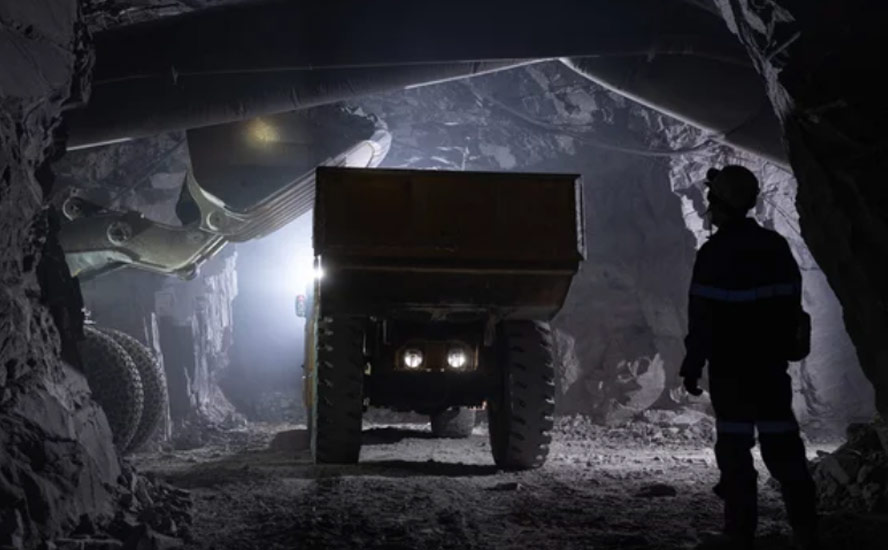
The updated resource was developed based on an underground mining scenario compared with the open pit mining method utilized for the 2011 inferred mineral resource calculation. The company has determined that an underground mine will allow the Company to focus on the high grade zones to maximize project value while minimizing the project footprint.


Key benefits of an underground mine are the elimination of the 10:1 strip ratio which will significantly reduce the tailings facility, the ability to extract much higher grade material which should generate enhanced economics and, based on a review of similar mining projects, maintain operating costs at a level similar to open pit operating costs.


Hudson plans to commence additional diamond drilling starting in May with the objective of adding additional high-grade tonnes to the indicated resource category. The Company plans to do this by targeting drilling along strike of the known high grade zones which are still open to the north, south and at depth. Two of the highest grade intercepts drilled in 2011, which are not included in the current model, include four meters of 7.2% TREO (SAR11-50) and eight meters of 6.5% TREO (SAR11-71) at the north end of the ST1 Zone.


Neodymium continues to represent the critical rare earth element on which Hudson is focusing. It, together with praseodymium, comprises 25% of the estimated total rare earth oxides. Neodymium is the key ingredient in neodymium-iron-boron (NdFeB) magnets, which is one of the most important and widely used REE applications.


The following table presents the indicated and inferred mineral resource estimate using an underground mining scenario for the ST1 Zone at a range of cut-off grades with the base case in bold face. The selected base case cut-off grade of 1.0% TREO is considered consistent with other mineral deposits of similar characteristics, scale and location. Based on internal Company analysis, the 1.0% cut off grade also maximized the project value based on a 2,000t/day mining operation when tonnage vs. grade is considered.


The mineral resource was estimated using the inverse distance squared method in two passes with incremental maximum search distances of 30 and 80 m. Samples from at least two drill holes were required to estimate block grades. Individual rare earth oxides were estimated and combined to determine the final TREO estimate. Block dimensions were 5 metres by 5 metres horizontal and 5 metres vertical. Grade estimation was based on analyses of core samples from 50 diamond drill holes (12,705 metres) completed between September 2009 and September 2011. Assays were composited in two metre down-hole intervals. It was concluded from statistical analysis of the raw sample data that grade capping or special treatment of outliers was not warranted.


Wireframe models of the major lithologies were developed to constrain the grade estimate and for assigning density values. The density values were assigned to the carbonatite and gneiss lithologies based on 1785 specific gravity measurements of drill core. Grade estimation was constrained by a solid model of the carbonatite intrusive and constrained beyond this domain by a 0.5% TREO grade shell. Hard boundaries were used between the carbonatite domain and surrounding gneiss complex.


Estimated blocks were classified as 'Indicated' if they were within the carbonatite domain gradeshell and estimated in the first pass with a maximum search distance of 30 metres and minimum of 2 drill holes. All other estimated blocks were classified as 'Inferred'.


Assumptions used to establish the base case underground cut-off grade were:


--  A weighted average bulk concentrate price of $32/kg corresponding to a

     54% discount on the three-year trailing average REO prices as of April,

     2012.

--  The three year trailing average for REE prices (per kilogram) as of

     April 2012: La2O3$46.40; Ce2O3$44.60;

--  Pr2O3$99.00; Nd2O3$112.80; Sm2O3$47.70; Gd2O3$67.70; Tb2O3$1287.60;

     Eu2O3$1586.10; Dy2O3$713.10; Y2O3$67.80.

--  TREO cut-off grades of 0.6%, 0.8%, 1.0% and 1.2% were considered

     potentially viable at break-even mining costs (General& Administration,

     Processing and Ore Mining costs) of $125/tonne, $166/tonne, $208/tonne

     and $250/tonne, respectively.

--  A recovery of 65% has been assumed and will be revised when

     metallurgical test results are available.


Positive progress continues to be made on the metallurgical flowsheet for the ST1 Zone which hosts the rare earths in bastnasite and monazite mineralization. The company has consolidated the major testwork components at SRC in Saskatoon under the direction of John Goode, P.Eng. John has extensive experience in the rare earth extractive industry in North America and China. Earlier testwork at SRC demonstrated that recoveries of over 90% were achievable utilizing acid baking and leaching. Preliminary flotation and gravity testwork to date has demonstrated the ability to upgrade the ore and more work is ongoing.

Additional beneficiation and hydrometallurgical testwork is continuing at SRC. Metallurgical updates will be provided as results become available.


Dr. Michael Druecker is a qualified person as defined by National Instrument 43-101 and reviewed the preparation of the scientific and technical information in this press release.


Ronald G. Simpson, B.Sc., P,Geo., President of Geosim Services Inc., is an independent Qualified Person as defined by NI 43-101 and is responsible for the resource estimate on the ST1 Zone and has verified the data disclosed in this release.


About Ahead of the HerdAbout Us

Aheadoftheherd.com is a community where investors trade ideas on the buying and selling of stocks


Ahead of the HerdRelated Articles


Ahead of the HerdSponsors List


Altair Ventures Inc

Canadian Int'l Minerals Inc
Cangold Ltd
Consolidated Woodjam Copper

Dajin Resources Corp

Great Panther Silver Ltd

Hudson Resources Inc
International Lithium
Kootenay Silver Inc.

New Pacific Metals Corp.
Niogold Mining Corp
North American Nickel
Northern Vertex
Ocean Park Ventures Inc
Planet Exploration Inc
Puget Ventures Inc
Sernova Corp.
Strike Graphite
Terraco Gold Corp
TNR Gold Corp.
Uranerz Energy Corp.
VMS Ventures Inc.
Western Potash Corp.


Ahead of the HerdOur Location

www.aheadoftheherd.com

Office Hours
5am - 4:30pm, M-F
9am - 12pm Saturday

No Charge  Newsletter Signup   Free Forum Signup


To contact us please email rick.mills@aheadoftheherd.com

Ahead of the Herd
www.aheadoftheherd.com